CCTV News: 6G is the sixth generation of mobile communication technology and is the next generation communication standard after 5G. The goal is to build an intelligent society in which “all things are intelligently connected and digital twins” through the deep integration of communication, perception, computing and artificial intelligence. The network architecture will also move towards the integration of air, space and ground. In what aspects will the capabilities of 6G be improved in the future? What new developments are there in related technologies at this stage?
Immersive communications, ultra-large-scale connections, extremely high reliability and low latency...these are typical scenarios proposed by the International Telecommunications Union when looking forward to the 6G vision. At a conference venue in Nanjing, Jiangsu, the reporter saw that a holographic video call technology connecting Beijing to Nanjing successfully transmitted images over thousands of kilometers with a delay of only about 300 milliseconds.
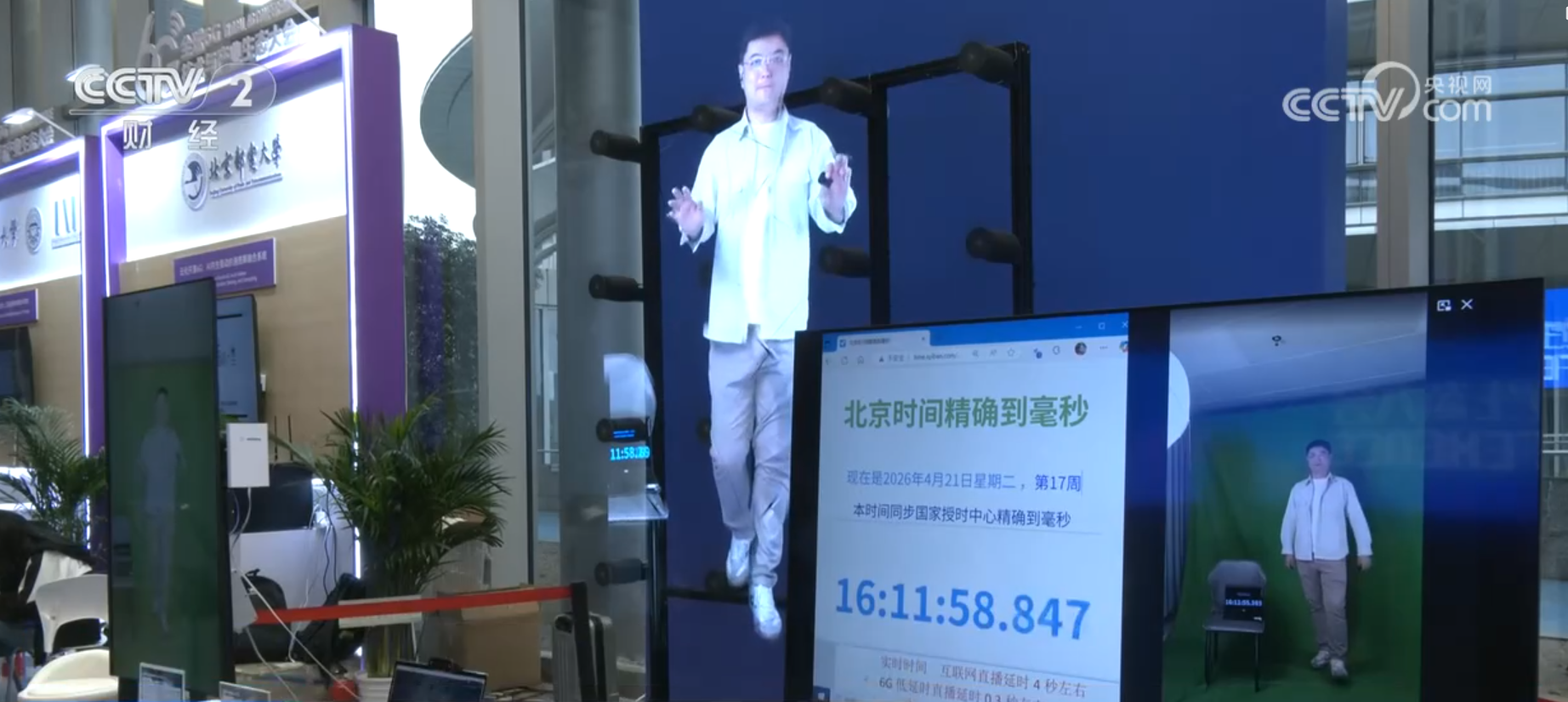
Huang Hang, technical director of Purple Mountain Group, said that the backbone network that transmits data quickly transmits the data stream from the Beijing node to the Nanjing node, and then uses the millimeter wave base stations they deployed indoors to complete the "last mile" wireless transmission.
In the Purple Mountain Laboratory not far away, a number of key 6G-related technologies are being developed and tested. In addition to having stronger communication capabilities, 6G networks will also be able to perceive the movement of objects in the future.
CCTV reporter Ning Kun: What is displayed on the screen is the capabilities of the 6G-enabled "Air Sentinel" in a low-altitude test outfield. An unreported drone in the distance just flew into the regulated airspace. The system on the ground quickly identified it and made a series of follow-up tracking and eviction operations. This process relies on the integrated synaesthesia capabilities of future 6G ground base stations.
The reporter saw in the Beijing 6G laboratory that the synaesthesia computing fusion system built using this type of base station with integrated synaesthesia capabilities can also accurately identify the digital trajectories "drawn" by engineers in the air using gestures.
Xia Liang, chief researcher of the Future Research Institute of China Mobile Research Institute: Utilizing the Doppler frequency shift characteristics of hand gestures to conduct joint analytical calculations of base stations, centimeter-level tracking accuracy can be achieved under indoor conditions.