CCTV News: On November 28 last year, the Taklamakan Desert "border lock" project was successfully merged. This year, Xinjiang plans to complete the desert control area of 7.8 million mu. The main purpose is to ensure that the locked "edge" is not broken by wind and sand, and to weave this edge tightly and thickly, developing from "border lock" to "expand edge", so that the results of ecological governance will last for a long time. So, how are the progress everywhere now?
At the wind and sand control work station in Qiemo County, cadres and the masses are planting seedlings into freshly dug tree pits in turn.
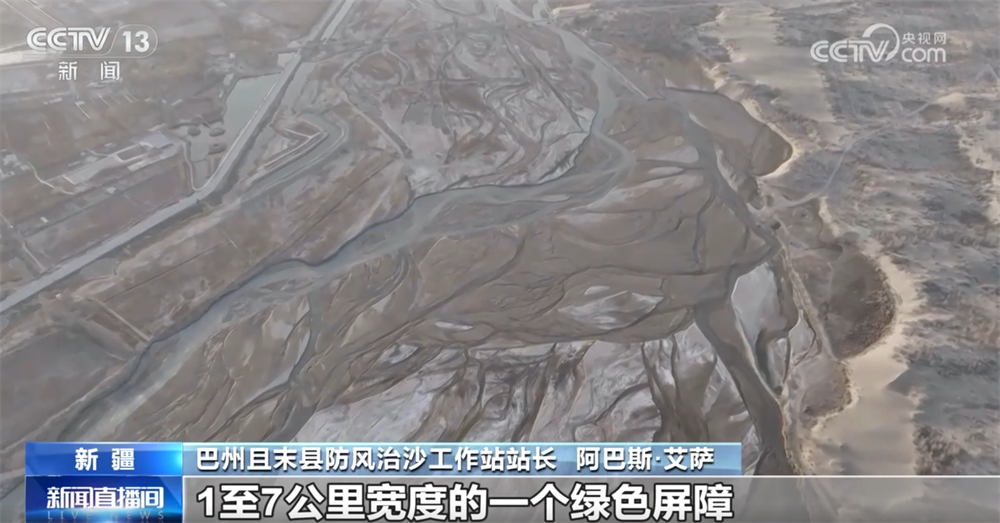
Abbas Isa, the station manager of the wind and sand control work station in Qiemo County, Bazhou, said: "Through 28 years of hard work, the area of sand control station for sand control has reached 129,000 mu, and a green barrier from 25 kilometers to south is also formed along the Cheerchen River. Through sand control, the microclimate in our county has been improved."
In Yuli County, the local area has vigorously promoted the sand control model of "engineering + biology + sand industry". At present, they are watering 900 acres of grass grids and 50,000 saxacums and tamari. These vegetation were planted in November last year, and the grass grid was laid under the photovoltaic panels and also played a role in protecting the components.
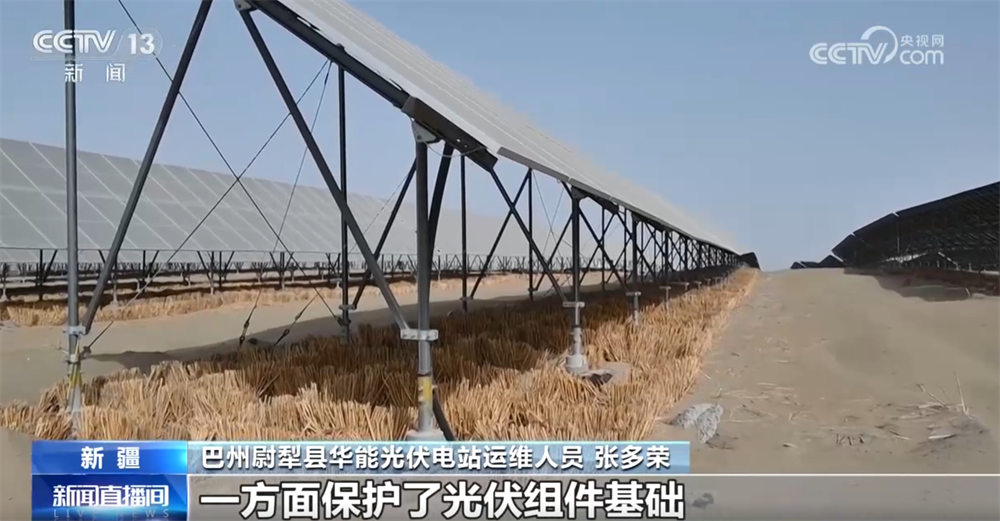
Zhang Duorong, an operation and maintenance personnel of Huaneng Photovoltaic Power Station in Yuli County, Bazhou, said: "It can be headed and sprouted in about two months. On the one hand, it protects the foundation of the photovoltaic module from being buried or hollowed out by yellow sand, and on the other hand, it improves the surrounding environment."
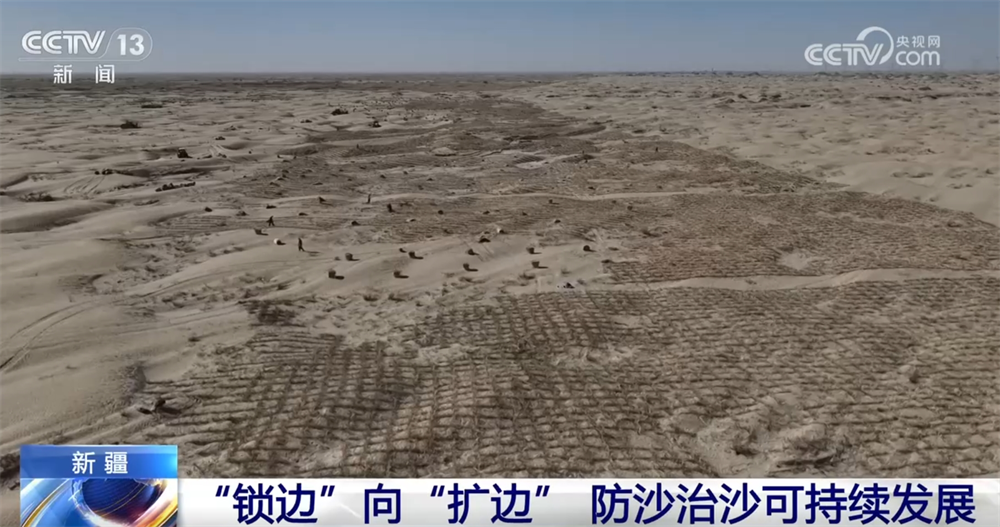
In Ruoqiang County, the local government jointly explored "interval sand control" with the Xinjiang Academy of Forestry Sciences, and packaged the grass-cage surface sand fixation and high vertical sand barrier wind and sand barrier construction, and the wind and sand fixation effect was further strengthened.
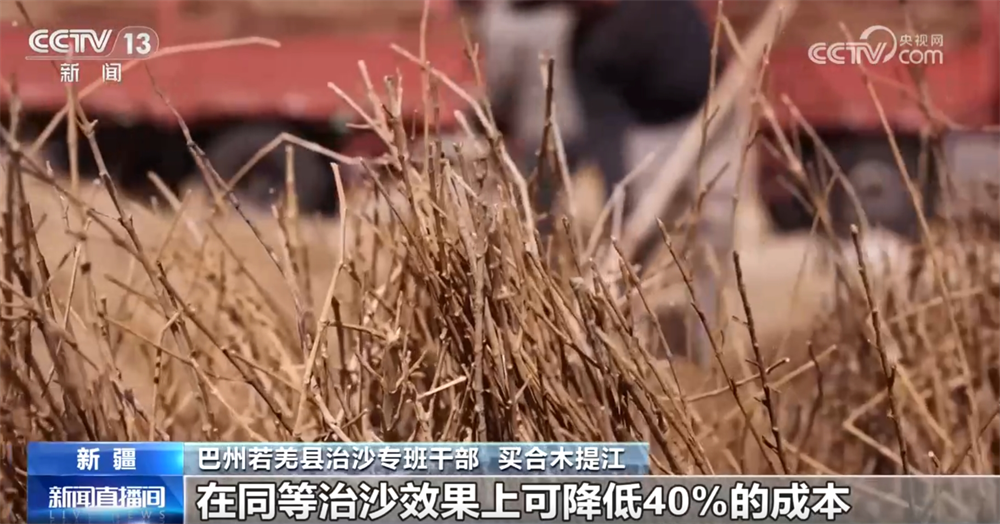
Maihemutijiang, a cadre of the desert control special team of Ruoqiang County, Bazhou, said: "For the first time, the innovative governance model of 'interval desert control' was adopted, with a control area of 78,000 mu, which can reduce the cost by 40% in the same desert control effect."
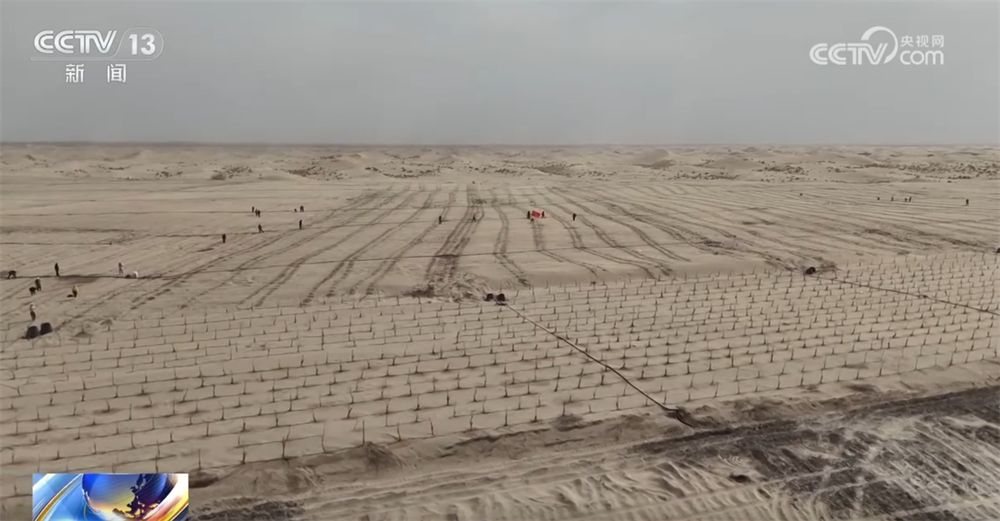
In addition to improving the desert control model according to local conditions, many places in Xinjiang are also exploring how to develop the sand industry, turning sand into sali and turning yellow sand into gold. Through government guidance, the masses can participate in sand control and sand control to increase income. At the same time, planting economic crops such as roses, red willows and saxony in the desert also brings good economic benefits, and gradually achieve sustainable development of sand control and sand control.
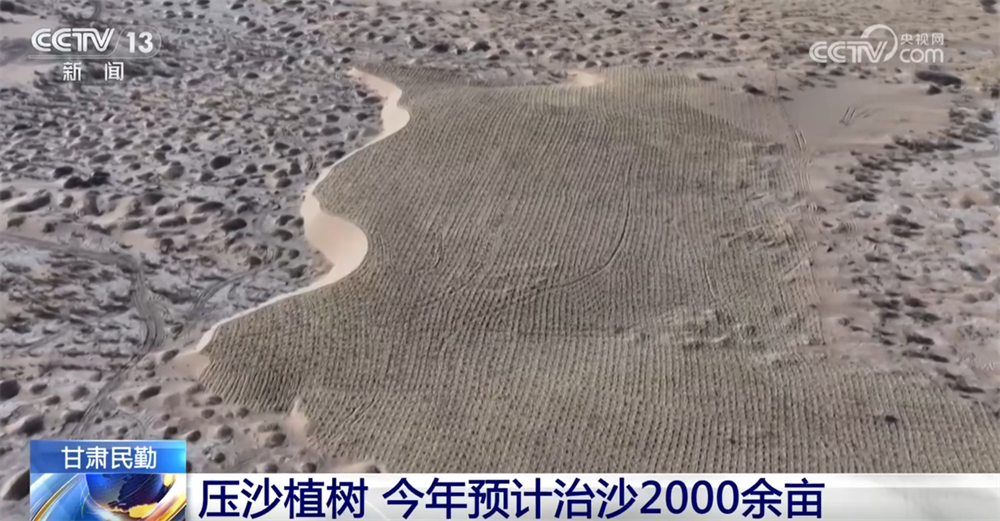
Gansu Minqin: Planting trees with sand and sand. This year, more than 2,000 mu of sand are expected to be controlled.
In the past few days, thousands of volunteers have come to Minqin County, Wuwei, Gansu to voluntarily press sand and plant trees with voluntary pressure, contributing to the solid ecological security barrier in the western region.
Early in the morning, at the desert control base in Xinglong Village, Chengcheng Town, Minqin County, volunteers were busy transporting saxal seedlings, digging sand pits, planting, and watering. Sun Hao from Chongqing has been working here for 5 days. Although the process of planting trees is not easy, he is getting more and more energetic.
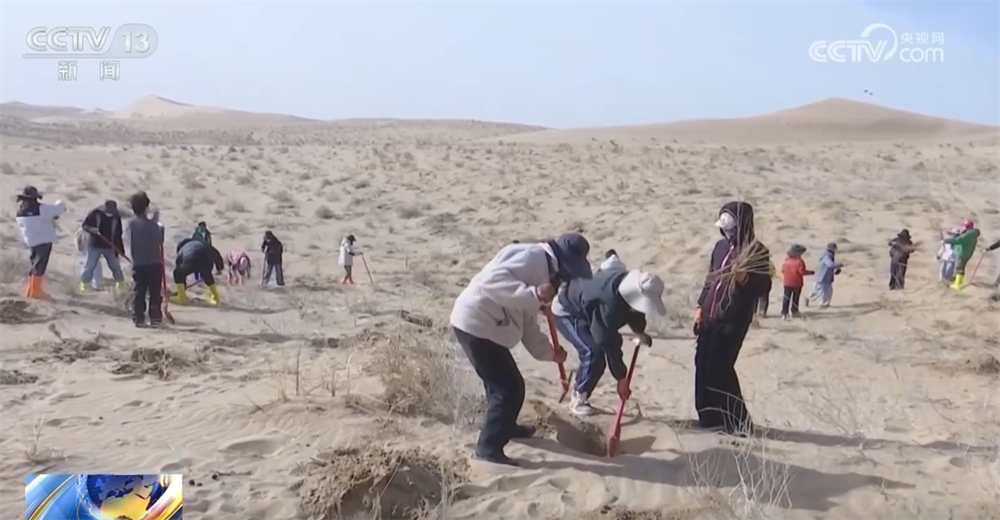
This year, 15,000 volunteers like Sun Hao have participated in Minqin's voluntary sand-pressing tree planting. The estimated area of sand control is more than 2,000 mu, and more than 800,000 sand-growing plants such as saxacum, flower sticks, and lemon strips have been planted.
Minqin County is in the national ecological security strategic pattern of "northern sand prevention belt". It is a "bridgehead" that blocks the merger of the two major deserts of Tenggeri and Badan Jilin. The ecological environment is fragile and the ecological location is important. Since the implementation of the key governance plan of the Shiyang River Basin and the "Three Norths" project, the county has achieved a "double reduction" in desertification and desertification areas.