CCTV News: With the successful application of China's "Spring Festival" to Heritage, the "intangible cultural heritage" during the Spring Festival of the Year of the Snake is stronger. At present, more than 120 representative intangible cultural heritage projects related to the Spring Festival gather in the China Intangible Cultural Heritage Museum, allowing audiences to experience the beauty of the "Spring Festival" in traditional culture.
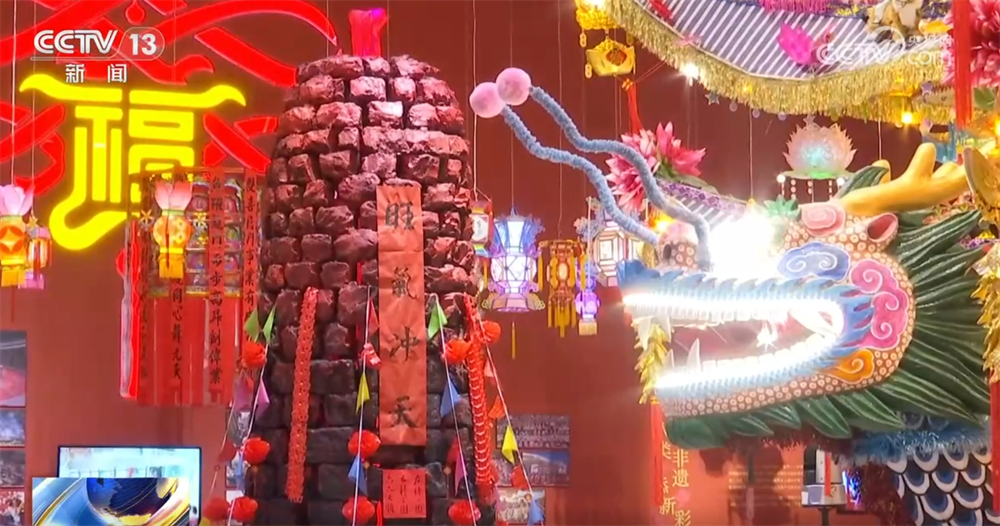
When you enter the China Intangible Cultural Heritage Museum, the first thing you see is a Qingxu Cai Gate Tower in Shanxi that integrates folk ancient architectural skills and traditional arts. As a national intangible cultural heritage, the Qing Xucai Gate Tower can be traced back to the Tang Dynasty.
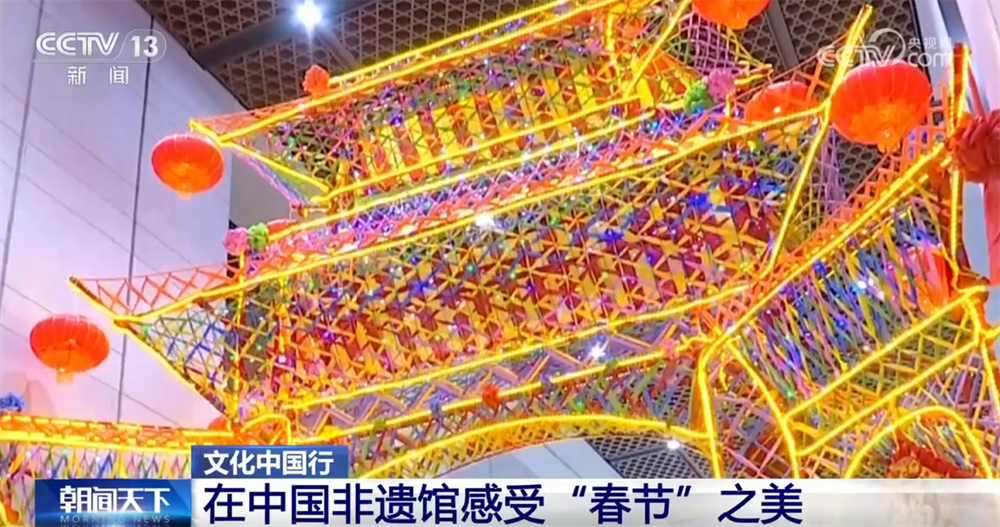
Wang Chenyang, Party Secretary of the China Intangible Cultural Heritage Museum, said: "In the local area, this Caizamen is called 'Rooming Fire', which indicates that the Spring Festival can be prosperous."
Entering the Caimen Tower, writing Spring Festival couplets, printing New Year pictures, throwing pots and other traditional New Year customs, letting the strong New Year atmosphere hit the face, and the lively rural stage and colorful lanterns are dazzling. Among them, the jewelry dragon from Yueqing, Zhejiang is the largest single lantern in the museum. During the Spring Festival, local people will carry the "jewellery dragon" to parade through the streets and alleys, carrying the beautiful meaning of praying for peace for every household.
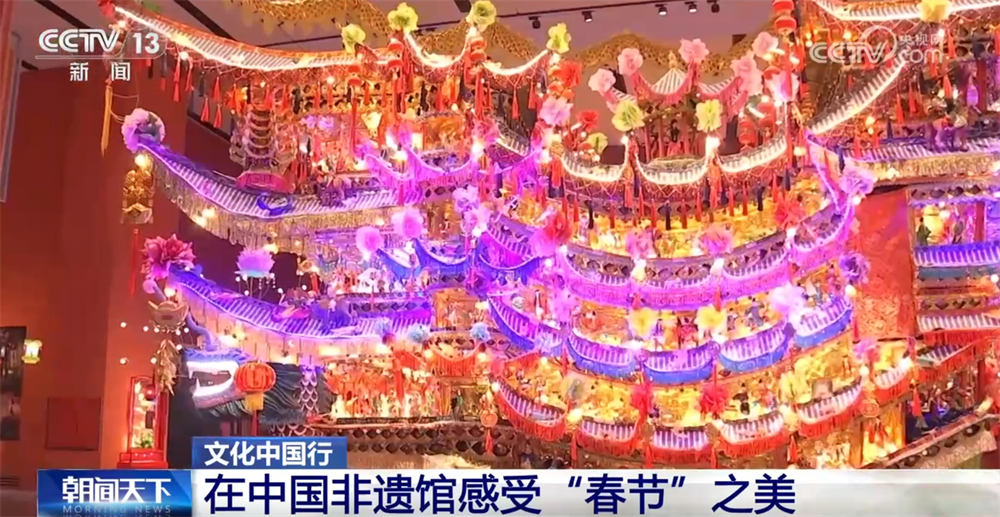
The entire jewelry dragon production process is complex, integrating carpentry, oil color, paper-making, dragon lanterns, paper carving and other processes. Driven by the internal wooden gear device, the dragon boat can shake its head and tail, and hundreds of dolls of different shapes on the boat can also move.
The noodle flower work "Dragon and Phoenix Date Mountain" produced by local intangible cultural heritage inheritors and is both traditional and innovative, is produced by combining more than 10 processes such as rubbing, kneading, and editing, attracting many viewers to stop and watch.
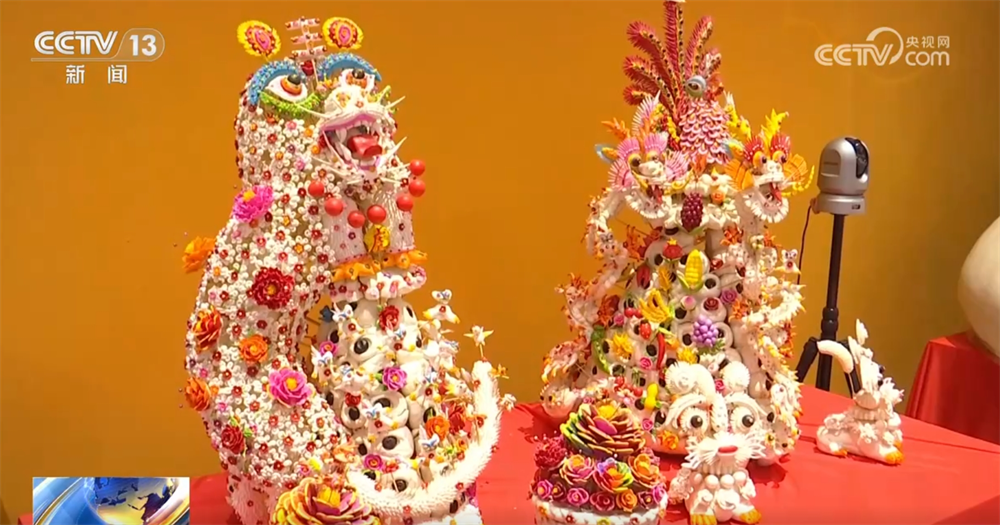
Research librarians of the China Intangible Cultural Heritage Museum said: "Facial flowers mainly reflect some of the production and life styles of the people along the Yellow River, and are mainly used in traditional festivals, such as the Spring Festival."
The various forms and rich content of the Spring Festival customs in various places, such as Yangjiabu woodblock New Year pictures, Suzhou lanterns, Huairen Bright Fire, etc., depict a vivid picture of the Chinese celebrating the New Year and show the timeless charm of the excellent traditional Chinese culture.