CCTV News: This year's "Government Work Report" proposes to accelerate the organization and implementation of major scientific and technological projects and advance the layout. Sun Zezhou, a member of the National People's Congress and from China Aerospace Science and Technology Corporation, recently introduced in an interview with reporters that my country will implement Mars sampling and return around 2030.
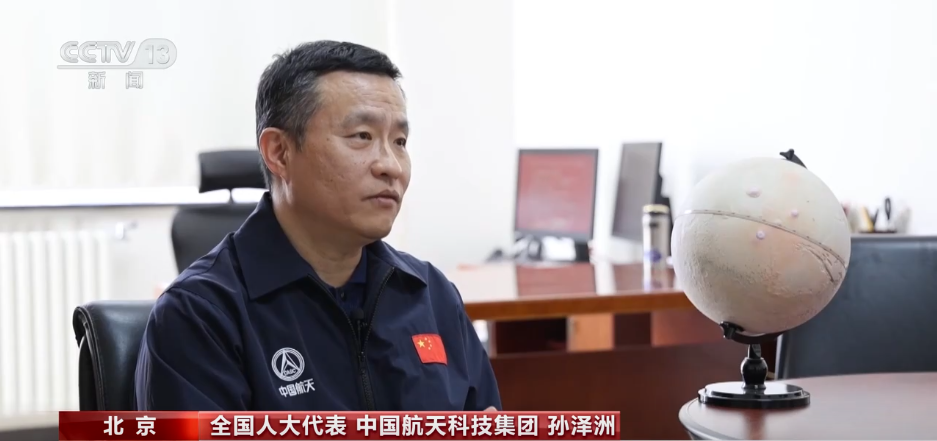
Sun Zezhou introduced that Mars is the closest planet in the solar system to Earth. Previously, my country has achieved orbiting, landing, and patrol exploration of Mars through the Tianwen-1 mission, and will carry out Mars sampling and return through the Tianwen-3 mission. Sun Zezhou said that the Tianwen-3 mission may be concentrated around 2030, and the season on Mars will basically be in the autumn and winter of Mars. In order to achieve Mars landing and sampling return missions, design and selection may be made in orbit design or in Mars orbital stay schemes.
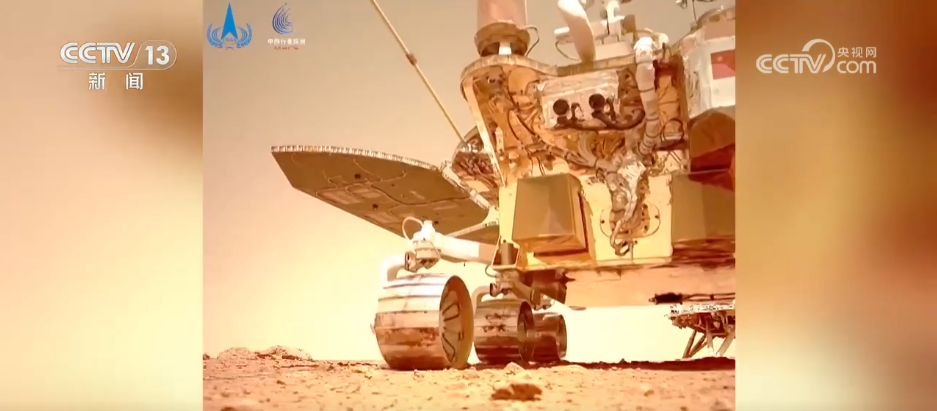
Sun Zezhou said that my country has accumulated experience in four landings on the moon, one landing on Mars, and two sampling and return of extraterrestrial celestial bodies, laying the foundation for implementing Mars sampling and return. But since Mars is far away from the Earth and Mars and the moon are very different after all, it still faces many challenges.
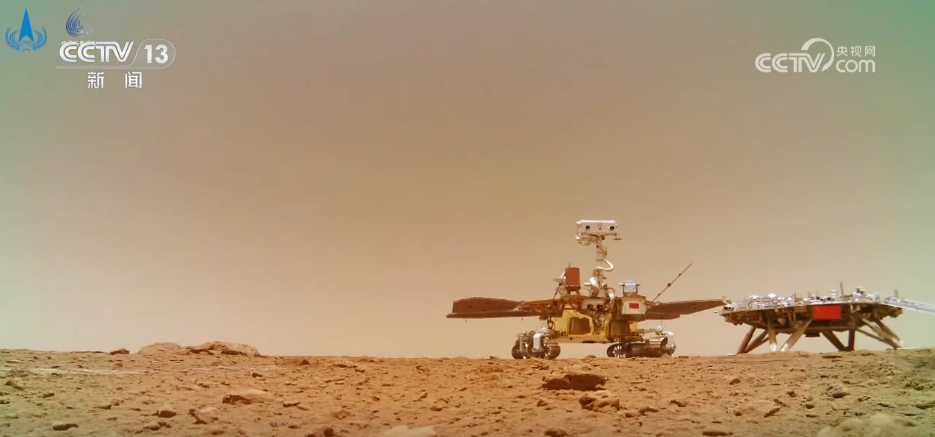
Sun Zezhou said in an interview: "Take off on the moon to overcome the influence of 1/6 of the earth's gravity, while on Mars, it is necessary to overcome the impact of 1/3 of the earth's gravity. At the same time, the aerodynamics of the fire surface takeoff on the probe's resistance effect and the constraints of the aerodynamic appearance, etc. It is necessary to consider the load of the same mass from the surface of Mars to the orbit of Mars, which also brings many new constraints and challenges to the mission."
Mars is the planet that is most similar to Earth, so countries around the world hope to explore Mars, which will enrich our understanding of Earth-like planets and understand the formation and evolution of the solar system.
The development of multi-type reusable rockets will be successfully developed this year.
This year's Government Work Report also proposes to promote the safe and healthy development of emerging industries such as commercial aerospace. Reusable rocket technology is a core technology in the field of commercial aerospace, which can greatly reduce the launch cost and improve efficiency. Member of the National Committee of the Chinese People's Political Consultative Conference and from China Aerospace Science and Technology Corporation recently said that this year, my country will have multiple reusable rockets unveiled one after another to carry out its first flight.
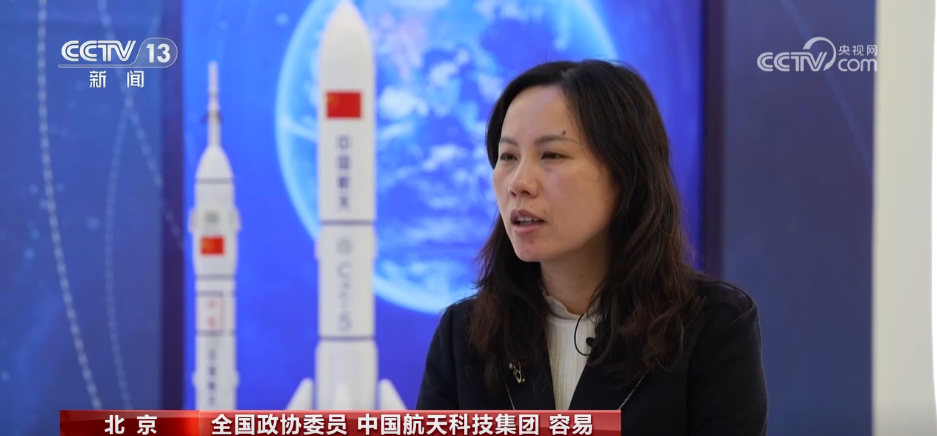
Reused rockets are rockets that can complete or partially return to Earth and land safely after completing the scheduled launch mission. After maintenance and fuel recharge, they can perform the launch mission again. It is easy to introduce that this kind of rocket can significantly reduce the cost of space launch and increase the launch frequency. It is easy to say that after rocket recycling and reuse, the changes that can be seen are mainly the faster launch frequency and the decrease in launch cost, which will gradually approach reality on a large scale and fast and free space. From the perspective of technological development, after recycling technology is applied, it will promote technological upgrading.
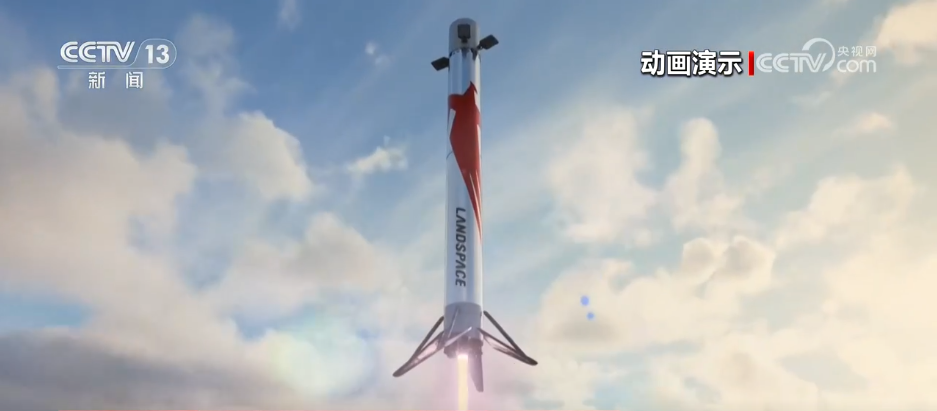
At present, my country is actively promoting breakthroughs in reusable rocket technology. Last year, both Aerospace Science and Technology Corporation and Blue Arrow Aerospace completed a 10-km-stage vertical take-off and landing flight test for reusable rockets. This year, there will also be a number of reusable rockets including Zhuque III and Tianlong III to carry out their first flights or conduct corresponding tests. In addition, the new generation of manned rockets under development in my country also include a reusable rocket.
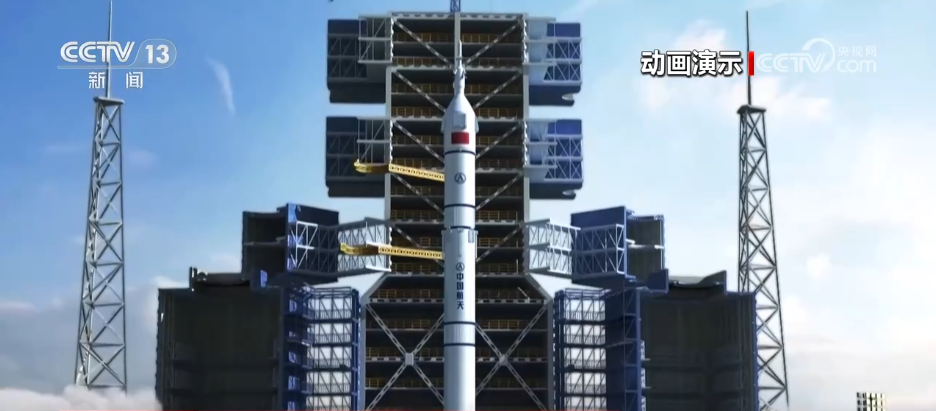
It is easy to express that, in a strict sense, the new generation of manned launch vehicles is a series that includes at least two configurations. One is the Long March 10, which is more familiar to everyone. There is another configuration that is smaller in scale, mainly to upgrade the rockets that transport people and cargo on space stations in the future. Due to the characteristics of the configuration itself, it is more suitable for recycling and reuse, so it is given a mission to design related to reuse and recycling. At present, the overall progress of these two rockets is relatively smooth. I will definitely meet you as soon as possible.