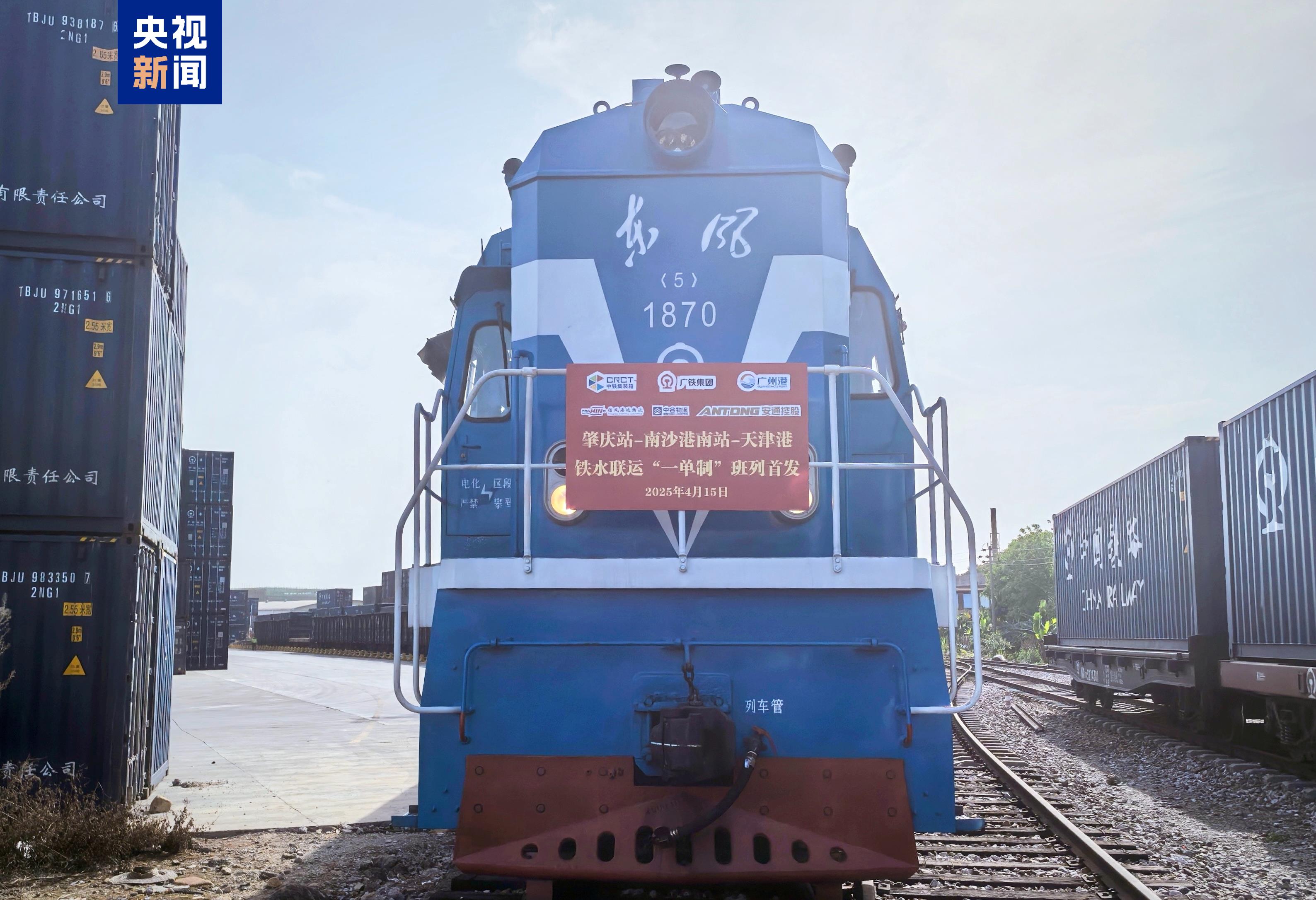
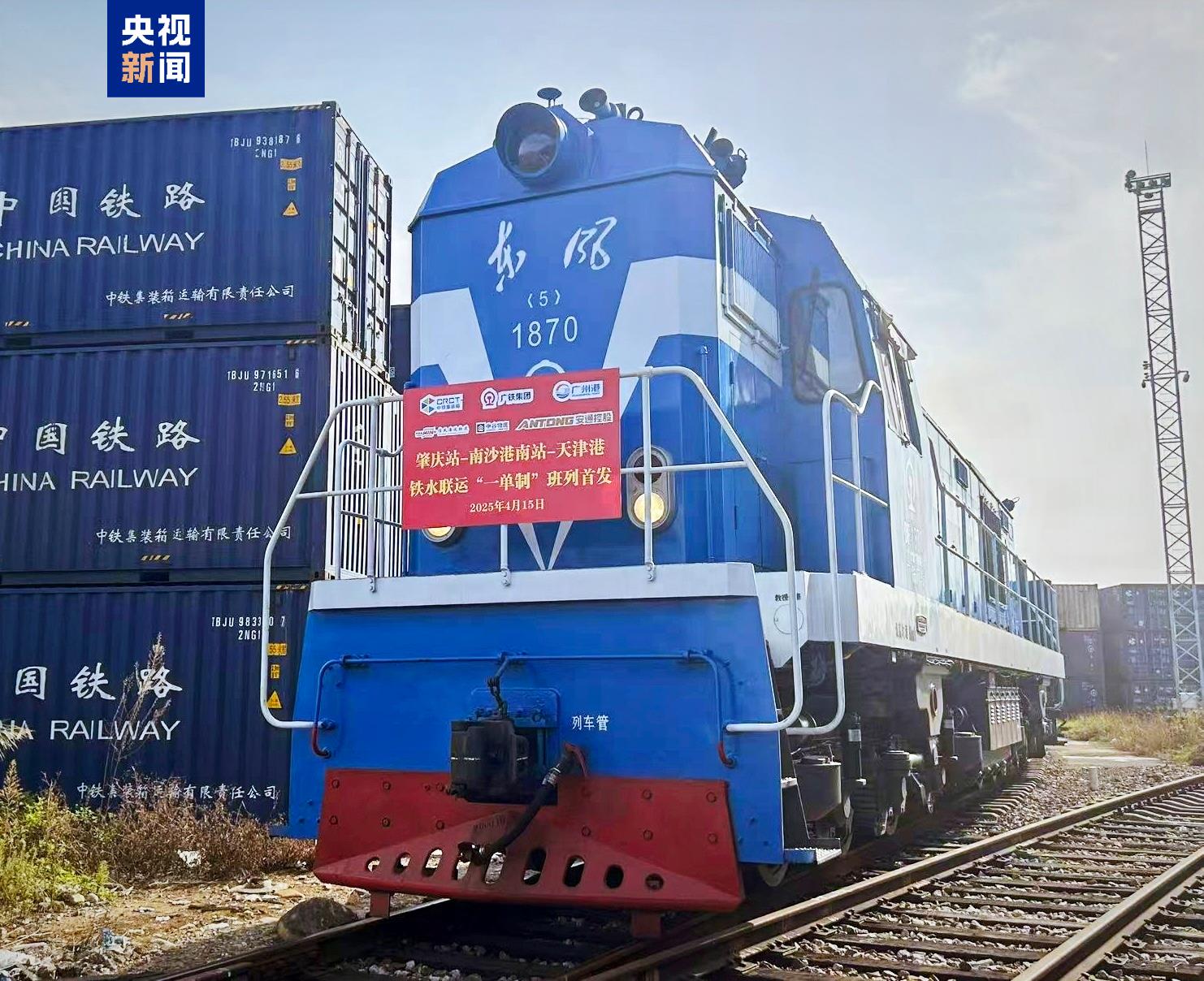
At 15:30 on April 15, a "one-single" rail-water transport train full of ceramic tiles set off from Zhaoqing Station in the Guangdong-Hong Kong-Macao Greater Bay Area. After changing and shipping through Guangzhou Nansha Port, it will directly arrive at Tianjin Port, the core hub of the Beijing-Tianjin-Hebei Economic Circle. This marks the official opening of my country's first "one-order" rail-water transport logistics channel connecting the Guangdong-Hong Kong-Macao Greater Bay Area and the Beijing-Tianjin-Hebei region, injecting strong momentum into serving the construction of a new development pattern and promoting regional economic coordination.
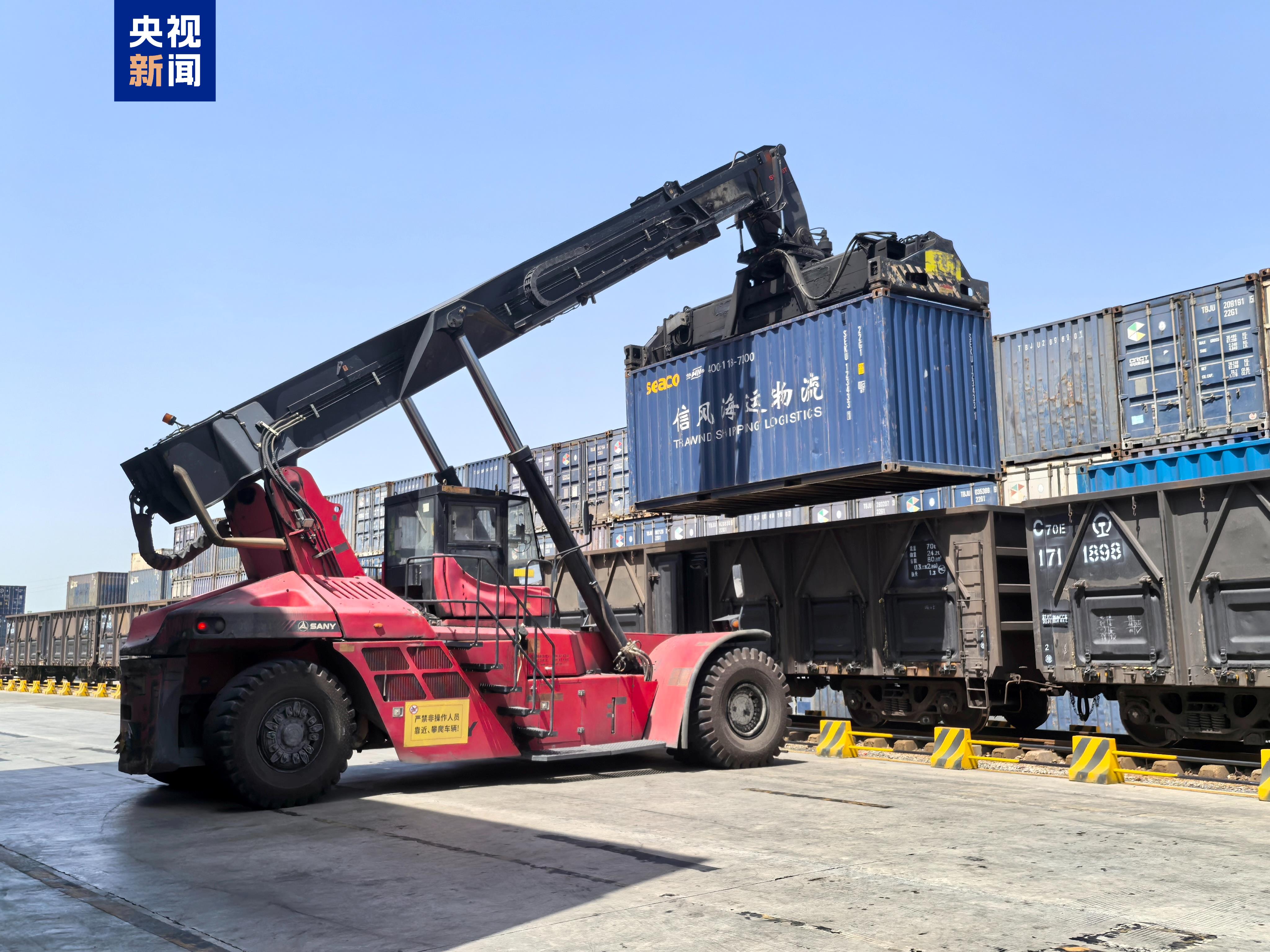
The "one-order" rail-water transport train launched this time is an innovative practice of the market-oriented reform of railway freight. The new model uses integrated services of "one commission, one order to the end, one box direct delivery, and one settlement". By integrating multiple resources from railways, ports and sea transportation, it opens up the "last mile" of multimodal transport. Customers only need to submit electronic applications through the 95306 platform to enjoy the "door-to-door" full-process logistics service, eliminating the cumbersome links such as repeated communication and multiple settlements in segmented transportation.
"The full transportation time of the train is one-third shorter than the traditional model, and it takes only 8 days to arrive in Tianjin." He Tao, manager of the Zhaoqing Business Department of Guangzhou Railway Logistics Center of Guangzhou Railway Group, introduced.
It is understood that in order to promote the implementation of the new model of "one-order" rail-water transport, the railway department and four shipping companies have deepened strategic cooperation and jointly built a cross-regional logistics service network. The person in charge of the relevant company said that based on the successful launch of the "one-order" rail-water transport, with the Zhaoqing Railway Freight Site as the fulcrum, it will focus on developing supply sources of building materials, furniture, fast-moving consumer goods and other categories.
The innovative practice of "one-order" rail-water transport has effectively reduced logistics costs across the society by breaking industry barriers and optimizing resource allocation, and building a "high-speed bridge" for industrial cooperation between the Greater Bay Area and the two major growth poles of Beijing, Tianjin and Hebei. Industry experts pointed out that the new channel not only strengthens the flow of economic factors between regions, but also drives industrial upgrading with logistics upgrades, providing strong support for accelerating the formation of a unified national market and promoting high-quality development. With the replication and promotion of the experience of reform pilots, the "one-order system" of multimodal transport is expected to become a key engine for smoothing the circulation of the national economy and serving the new development pattern.
(Reporter Wei Xing and Wu Meimiao of the General Station)