CCTV News: Drinking a cup of coffee in leisure experiences slow life, making a cup of coffee at work makes the brain work quickly, and coffee has become a necessity in many people's lives. In 2023, the scale of China's coffee industry reached 265.4 billion yuan, an increase of more than 30% over the previous year. The total number of coffee consumers nationwide is close to 400 million, with an annual coffee consumption of 280,000 tons, achieving double growth in the scale of consumer groups and per capita consumption.
Shanghai: There are 1.5 cafes per square kilometer on average
How popular is the coffee market? Let’s take a look at Shanghai, the city with the most densely populated coffee shops in the country. In the whole of Shanghai, there are 1.5 cafes per square kilometer on average. It can be said that there are cafes in the vegetable market, cafes in the park, and even cafes in the alleys. So what is the experience of drinking coffee in Shanghai? Let the reporter take us to experience it.
When the morning light spreads across the Huangpu River, the first mellow fragrance has been steamed in more than 9,500 cafes in Shanghai. This city with the most densely populated cafés in the country consumes nearly 2 million cups of coffee every day.
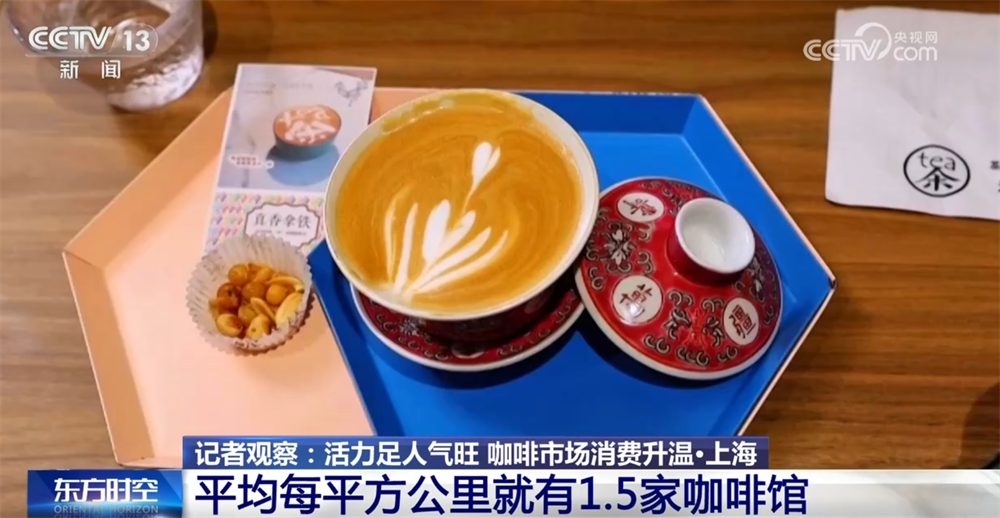
Coffee has never been just a cup of coffee. It is the "life-sustaining artifact" of eight people early, the daily life of the neighborhood of the grandparents and uncles, the "companion" of young people, and the "poetry and distant places" in the city.

How popular is coffee in Shanghai? The delivery guy has something to say: "I don't pick up food in the cafe, I'm on the way to deliver coffee." Platform data shows that in 2024, the per capita coffee takeaway consumption in Shanghai is 8.5 cups, with an average of about 320 yuan.
"Village cafes" have become a check-in point, giving birth to new consumption scenes
Now, drinking coffee is no longer a unique consumption picture in the city. In recent years, more and more rural cafes have "grown" out of the fields. Order a cup of coffee, look at the rural scenery, and taste a different taste. In Anji, Zhejiang, "village cafe" has not only become the "traffic code" of rural cultural and tourism, but also created a new consumption scenario for urban and rural areas. The countryside is also quietly changing due to the enthusiasm of "village cafe". Let's go and have a look together.
Holding a cup of coffee in your hand, watching the undulating mountains and forests and the ripples of the lake. You may not have imagined that the reporter is now in a "village cafe" in Hongmiao Village, Anji, Zhejiang. As the saying goes, wine is not afraid of deep alleys, especially during holidays, where it is particularly lively. On the first day of this year's Qingming Festival holiday, the coffee shop sold more than 4,000 cups of coffee. What is the unique charm here that can attract so many people to come from the city? Next, follow our camera to find out.

During the just-passed Qingming Festival holiday, this coffee shop was open from 9 a.m. to 7 p.m. every day. More than 10 clerks operated 4 coffee machines and kept running. On average, nearly 10 cups of coffee are produced per minute, and the number of receptions per day is up to 11,000 people.

Here, coffee culture is perfectly integrated with rural elements, but what many people don’t know is that such a place where you can get a movie by picking up your phone was an abandoned mine. Three years ago, a "post-90s" entrepreneurial team came here. With the support of the local government, the entrepreneurial team took the naturally formed azure blue love lake as the core, retaining the original style of the exposed cliffs of the mine, transforming the original houses in the mine into a cafe, forming a scenic spot that perfectly integrates the sense of industrial ruins and beautiful natural scenery. In addition, a creative model of "tourism + coffee" has been launched here. As long as tourists purchase tickets to the scenic spot, they can redeem a cup of coffee for free, so that every tourist who comes here can taste the strong aroma of coffee and find their own leisure.
A cup of coffee activates new momentum in the rural economy and leverages the large rural tourism market. In Anji Hongmiao Village, this place is rejuvenated by the fragrance of coffee. The popularity of the scenic spot not only increases the village’s annual income by 2 million yuan, but also adds many new jobs in the surrounding area.
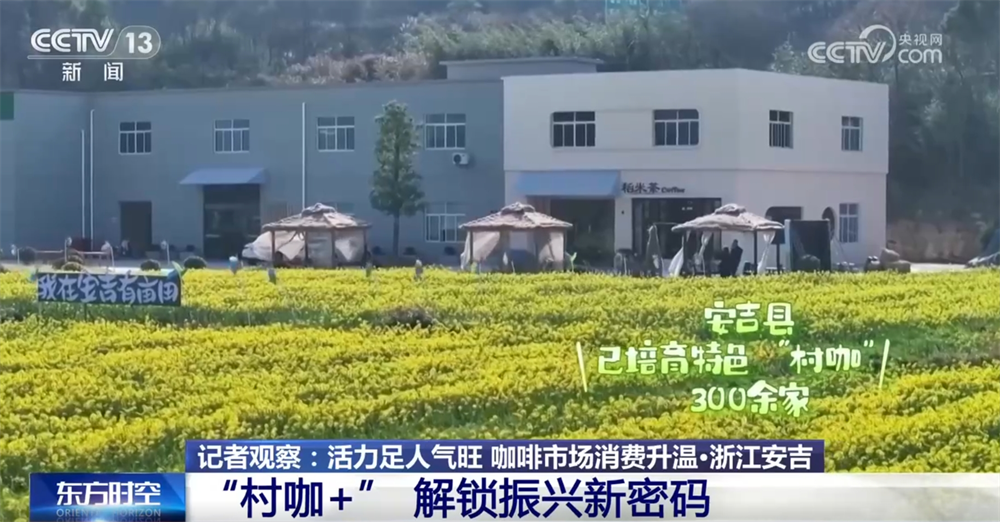
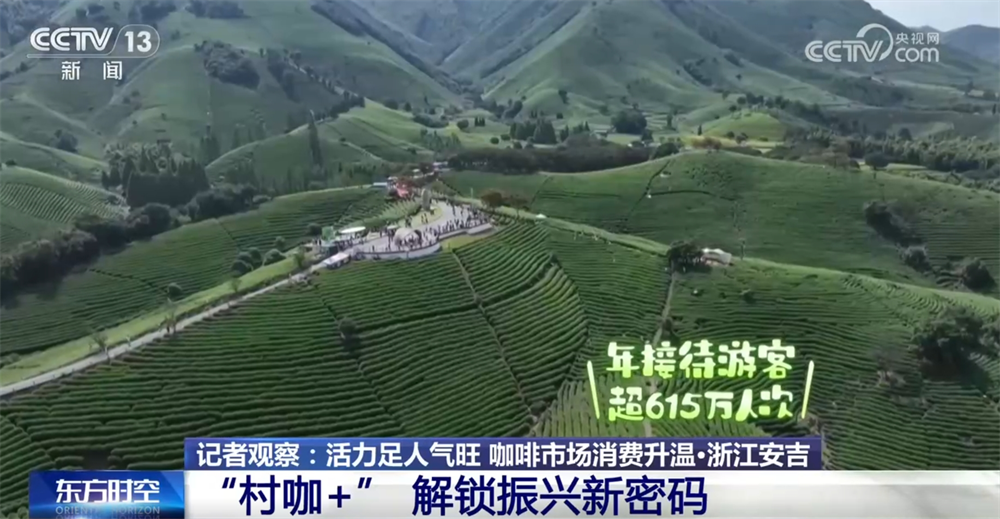
As of now, Anji County has cultivated more than 300 characteristic "village coffee" and received more than 6.15 million tourists annually, forming an industry that enriches the people with 121 million yuan. Nowadays, diverse business formats such as "coffee + music" and "coffee + cultural and creative" are booming here, which not only reshapes the rural landscape, but also enriches the lives of villagers and injects new vitality into rural development.