
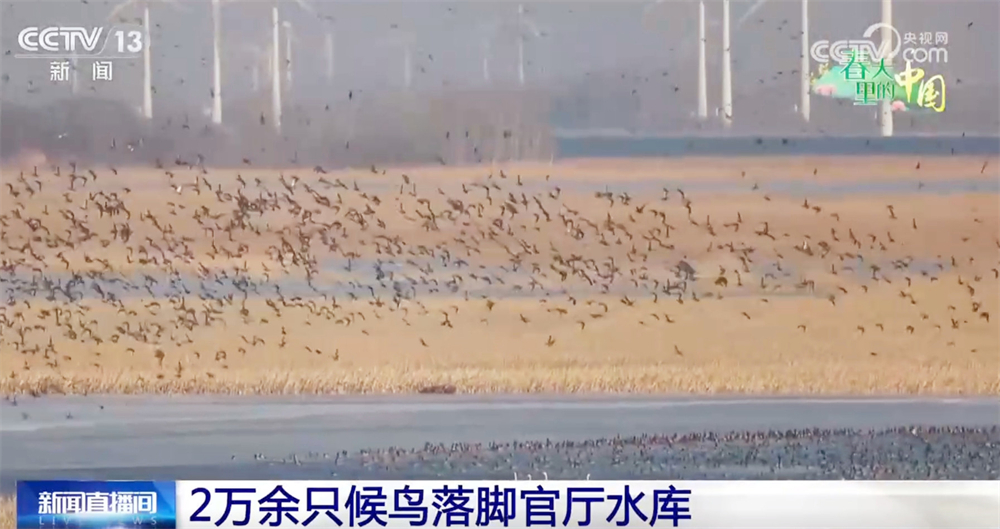
CCTV News: In the past two days, Guanting Reservoir located in Zhangjiakou City, Hebei and Yanqing District, Beijing has become a paradise for migratory birds. More than 20,000 migratory birds from afar rest here. In the reed fields and on the unmelted ice surface, they bow their heads to feed and rest in groups.
According to observations, more than 20,000 migratory birds have soared into Jiguanting Reservoir. Among them, the number of migratory birds of geese and ducks is the largest.
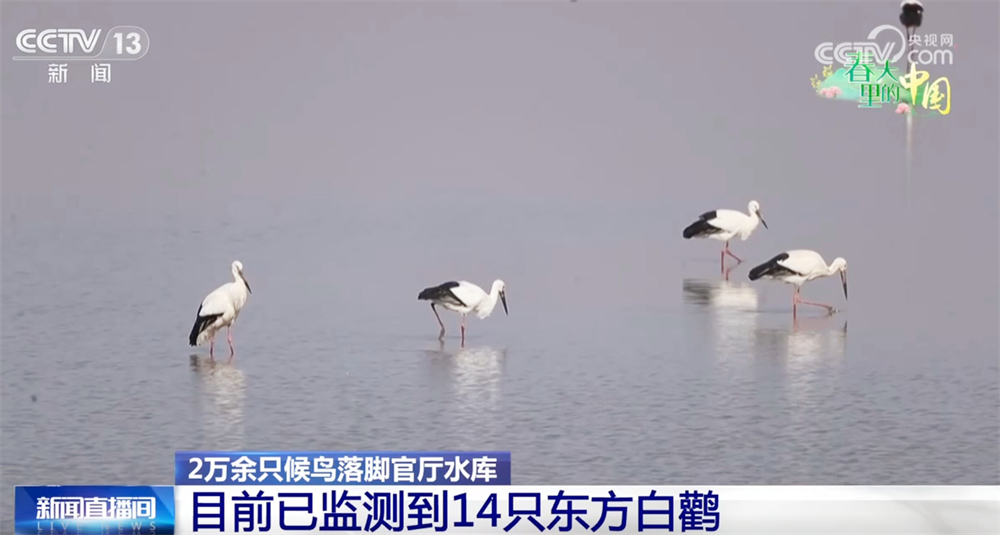
The most eye-catching of these migratory birds is the national first-class key protected wild animal Oriental White Stork. This is a rare type of traveling bird. They generally migrate along the coastline, but the Guanting Reservoir has enough food and water, so some oriental White Storks that deviate from the route will stay here to rest. So far, 14 have been monitored, which has also refreshed the observation records in the Guanting Reservoir area in recent years.
This spring, the peak of migratory bird migration in Guanting Reservoir is expected to last until early April, and the entire migration season will end in mid-April, during which the total number of migratory birds transiting here is expected to exceed 70,000.
Qinghai Delingha: Flocks of rock sheep appear on the snow-hind plateau
Recently, on Cypress Mountain near Delingha City, Haixi Prefecture, Qinghai, flocks of rock sheep appear on the snow-hind plateau. In the picture, groups of rock sheep are walking on a hillside, running freely, and walking leisurely for a while, stopping on a hillside for a while.
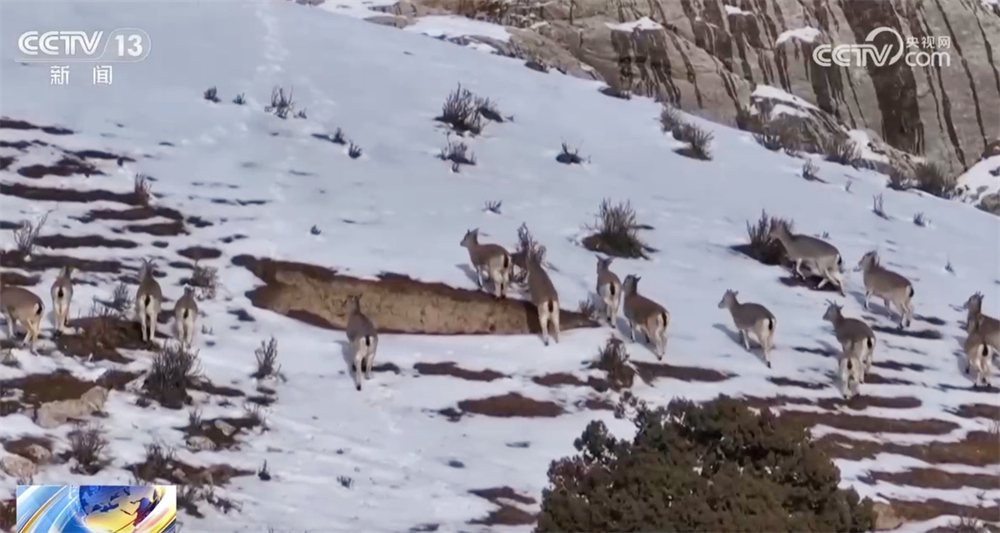
Stone sheep, also known as stone sheep and green sheep, is a national second-level key protected wild animal. It often moves in the alpine bare rock area. It likes to live in groups, with several or dozens of them moving together, and sometimes forms a large group of hundreds.
Pingluo, Ningxia: The Big-mouthed King of Birds in the Bird World appeared in the Shave of the Yellow River
Recently, on the shallows of the Yellow River in Pingluo County, Shizui Mountain, Ningxia, photography enthusiasts photographed the national first-class key protected wildlife - the Shave of the Wind Pelican. Several pelicans with feathers gather in the shallow wetlands. The curly pelican is huge in size and has a width of more than 3 meters when spreading its wings. It is named after the curly feathers on its head. It often lives in inland lakes, rivers, swamps and coastal areas. The global number is about 10,000 to 20,000.
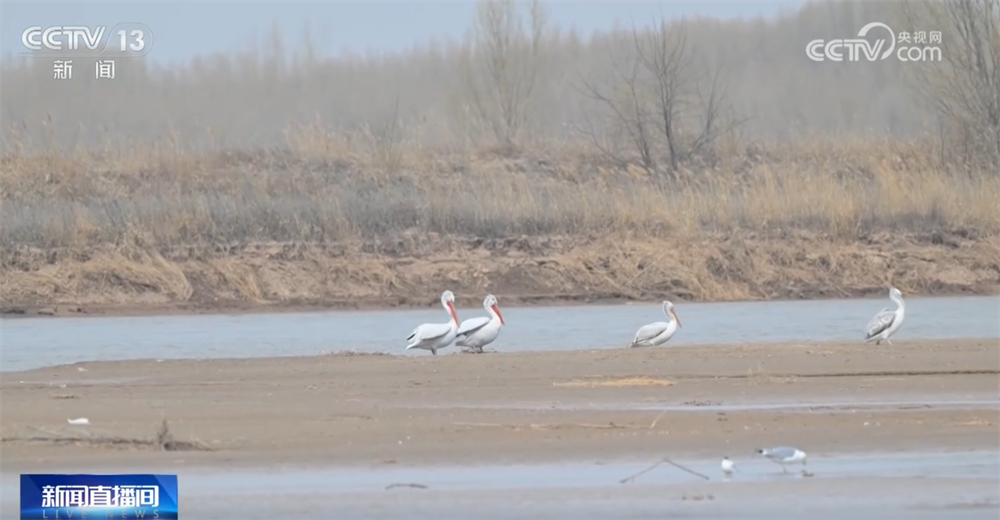
In recent years, with the continuous improvement of the ecological environment, the tidal flats and wetlands on both sides of the Yellow River in Ningxia have become important supply stations and habitats for migratory birds, and rare birds like the curly pelican will also come here to stop.