CCTV News: At present, the uncertainty of the external environment is increasing, and my country faces multiple difficulties and challenges to attracting foreign investment. To stabilize foreign investment, how to keep high-quality existing foreign investment and attract more high-quality foreign investment? The "Action Plan for Stabilizing Foreign Investment in 2025" was recently released, and 20 measures were proposed from four aspects. In what specific areas do these measures point to? What problems are being solved in a targeted manner? "News 1+1" invites Pan Yuanyuan, deputy director of the International Investment Office of the Institute of World Economics and Politics of the Chinese Academy of Social Sciences, to interpret the relevant issues.
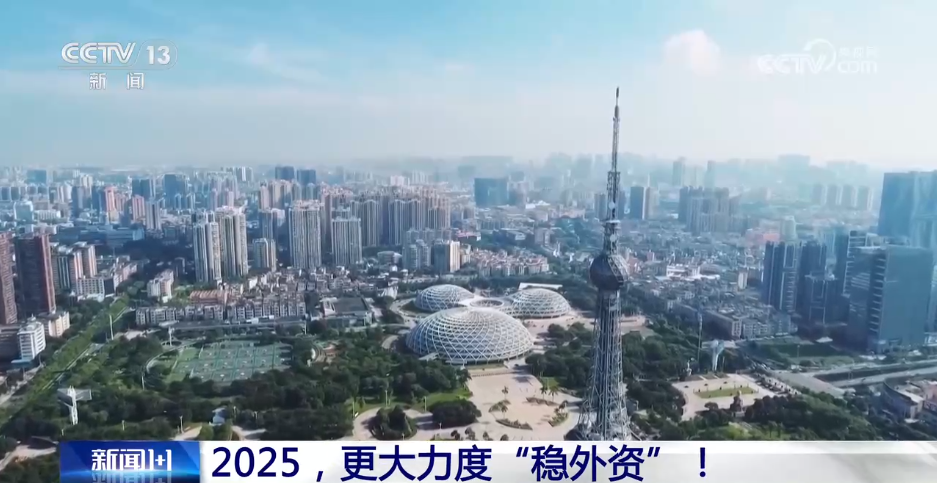
Why choose to launch this plan at the moment?
Pan Yuanyuan: Foreign investment occupies an important share of China's economy. During the reform and opening up, foreign investment played an important role in promoting China's economic growth. The current uncertainty of the external environment, including the economic and political environment, poses a challenge to China's attracting foreign investment. For example, some countries' investment policy adjustments have had a significant impact on China's foreign capital inflows. In terms of the global economic environment, since 2017, global foreign capital inflows have been stagnant and have declined significantly. Against this background, China has actively expanded its opening up, demonstrating China's commitment and strength to the international market.
Where are the "subtraction" and "addition" reflected in the 20 measures of this action plan?
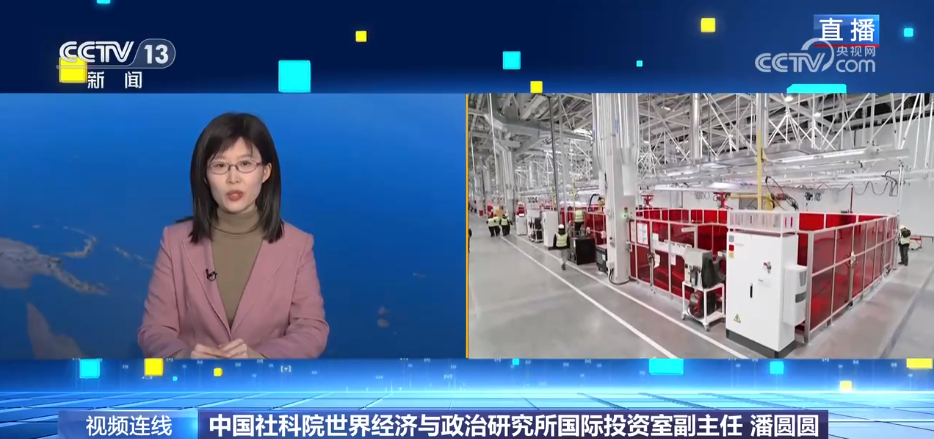
Pan Yuanyuan: "Subtraction" and "addition" are two very sharp contrasts. "Subtraction" is reflected in the relaxation of access restrictions, such as zeroing in manufacturing access and increasing opening-up efforts in various fields. In terms of optimization and opening up of the business environment, a series of measures to promote capital inflows reflect "addition".
There are many financial measures in this plan. What problems have these measures solved in a targeted manner? What real changes may be brought about?
Pan Yuanyuan: Although we usually believe that direct investment is equity investment, the statistical scope of foreign capital is the statistics on capital flows, including long-term equity entity investments and medium- and short-term intra-company debt flows. This plan encourages long-term capital inflows, as well as medium- and short-term funds. There are a series of data that have proved the contribution of long-term investment to China's economy. For example, foreign-invested enterprises contribute about 30% to imports and exports, and about 20% to China's total tax revenue. Medium and short-term funds also have an important impact on the balance of payments and the corporate financing environment, which can reduce financing costs and enhance corporate investment confidence.
The role of the inflow of medium and short-term funds that is particularly emphasized this time can be explained from the macro and micro dimensions.
From the macro perspective, this type of capital flow plays a key role in regulating international capital flows and maintaining the balance of payments;
From the micro perspective, it is very important to both enterprises and individuals. Specifically, short-term foreign capital inflows can effectively improve the financing environment of enterprises, reduce financing costs, and thus enhance the confidence of enterprises in investment decision-making. For individuals, asset price fluctuations caused by capital flows will also affect individual consumption, and corporate investment will also affect individual income. These factors ultimately work together to the overall economic operation.