Zhongmu County, Henan Province, Wanbang Agricultural Products Wholesale Market, trucks of all sizes are busy. The cold chain car driver Lu Lin was very familiar with it and sent 5 tons of tomatoes to the market.
"In the past, I had to queue up when entering the market." Lu Lin said, "Now there is automatic scanning, and the entry verification will be done in the blink of an eye, which is efficient!"
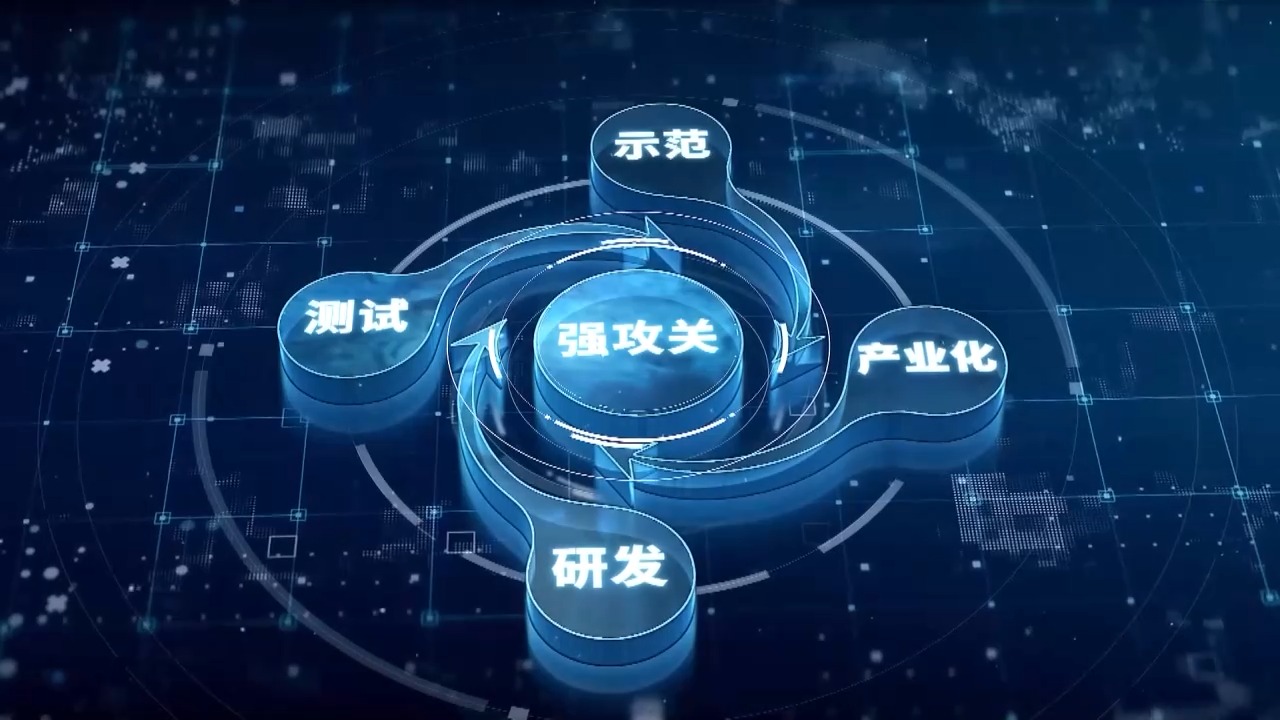
The upgrade of market facilities and the introduction of smart management, and Wanbang's smart transformation are vivid footnotes for the improvement of logistics efficiency in new quality productivity.
The planting process of the tomatoes in Lulin car is also inseparable from the help of new quality productivity.
In a greenhouse in Linying County, Luohe City, Henan Province, soilless tomatoes are covered with branches. Tomato grower Gao Jiahui was busy greeting the villagers, picking, sorting, and packing...
In the past, growing tomatoes depended on the weather. The temperature was high and the growth was not fast. Nowadays, Gaojiapai's greenhouse is equipped with new equipment - smart sensors. The temperature and humidity can be automatically adjusted, and fertilization and irrigation can be accurately controlled to ensure that tomatoes are always in the most suitable growth environment.
"Weather forecast says that there has been a cold wave these two days. Look at my smart greenhouse, I am not afraid of hot and cold, so I don't have to worry too much!" Gao Jiahui calculated the calculation: With the help of new technologies such as the Internet of Things and sensors, the tomatoes have good color and sufficient moisture, and the yield of planting in ordinary greenhouses is at least 20% higher. The fruits are of higher quality and sales are greatly improved.
From the greenhouse and taking a cold chain car, less than 2 hours on the road, the tomatoes painted in Gaojia arrived at the stall of Zhao Jun, the operator of Wanbang Market. Open the packaging box, the tomatoes are evenly sized, and the roots are also covered with green fruit stems left when they are picked. "Although the tomatoes are small, they have an exclusive 'identity code'. From the field to the market, the entire supply chain can be traced in real time. The product source, production process, and transportation conditions can be checked by scanning the code," said Zhao Jun.
Selling vegetables also uses the "wisdom brain". Just two days ago, Zhao Jun received a service reminder from the market to increase supply. It turned out that the backend inspectors of Wanbang Smart Park system compared the data of the past period and combined with weather information to determine that the supply of tomato products is less than the purchase volume, so they issued a reminder.
"The smart park system we independently developed can not only monitor supply in real time, but also predict market demand through big data analysis and provide intelligent adjustment solutions." Yu Baojian, a staff member of Wanbang Market, introduced that vegetable prices and supply are often affected by factors such as climate and transportation. With the "smart brain", real-time monitoring of big data can better regulate supply and demand, and help ensure supply and stabilize prices during holidays such as the Spring Festival.
In the afternoon, a supermarket buyer in Zhengzhou could come to Zhao Jun's stall and purchase bags of tomatoes. "This year there are many online orders. Bags of tomatoes are accurate in measuring and easy to deliver, and they are very popular." Only in this trip can 136 boxes of tomatoes be purchased.
The vegetable market is connected to farmers on one end and consumers on the other.
In the evening, in Rui Road Street, Zhengzhou City, resident Zhang Yousheng placed an order on his mobile phone. In less than half an hour, a fresh tomato was delivered to your door.
"Give me a scrambled egg with tomatoes!" Zhang Yousheng began to prepare dinner with his hands ready. "Smart" shopping for groceries adds a sense of happiness to this fireworks.