
On January 20, China's all-superconducting Tokamak nuclear fusion experimental device (EAST), known as the "artificial sun", set a new world record in Hefei, Anhui Province, achieving a high-constrained mode plasma operation of 1066 seconds for the first time, marking a major leap from basic science to engineering practice in my country's fusion energy research.
What is the "artificial sun"? How to understand this breakthrough? What else do we need to continue to realize applicable nuclear fusion power generation in the future?
What does it mean to break through 1066 seconds with 100 million degrees Celsius?
More than 100 million degrees Celsius can operate stably for 1066 seconds. What does this matter itself mean? How far are we from real nuclear fusion power generation?
At the same time, many countries are conducting similar research. So, at present, what is the level of my country's EAST device in the world?
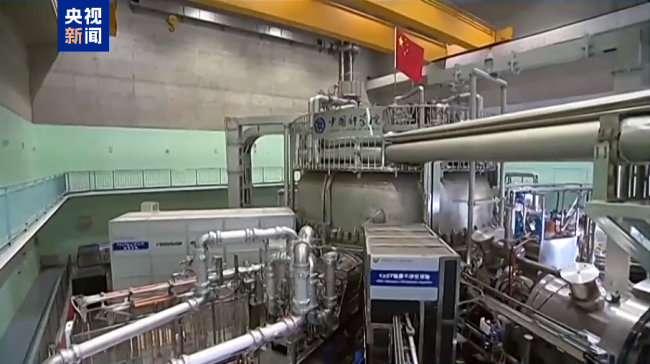
Song Yuntao, deputy director of the Hefei Institute of Material Science, Chinese Academy of Sciences, said that this is a very important milestone, and from then on, it will shift from cutting-edge basic research to engineering practice and take a big step towards the application of fusion energy. The difficulty of "100 million degrees of kiloseconds" is that we need to turn this ball of fire, equivalent to 6 to 7 times the surface temperature of the sun, and the speed of plasma like a fireball to more than 1,000 seconds, is very difficult. This should be a solid step taken from physical research to engineering practice in more than 50 years of research.
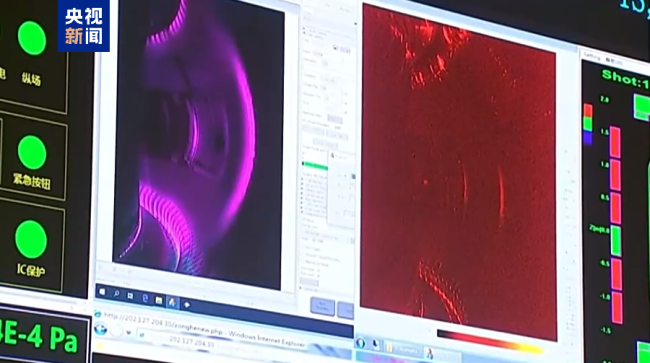
Song Yuntao said that the EAST device is what is called the Chinese artificial sun. It is the world's first fully superconducting tokamak device built in my country. There are many core technologies and many technical challenges here, including ultra-high vacuum, ultra-large current, super-strong magnetic field and many other technical challenges. Through this experiment, over the past few years, it has been from 100 seconds to 400 seconds and then to 1,000 seconds. This is entirely the world record maintained by China's magnetically constrained nuclear fusion team. The second-ranked array in the world is currently in 70 seconds to 100 seconds, so this time it can achieve 1,000 seconds, which marks that my country has reached the forefront of the world in research on high-temperature plasma, high-constraint mode plasma, and magnetic constraints.