Xinhua News Agency, Changsha, May 16 (Reporters Zhang Yujie and Dai Bin) The reporter learned from a press conference held by the Hunan Museum on the 16th that after research by experts from the Hunan Museum, it was found that the "Carrying Cloud Embroidery" that had been considered as a "pillow scarf" is actually a "Yin mat", which is commonly known as a seat cushion, which is also the earliest silk seat cushion discovered in archaeological times.
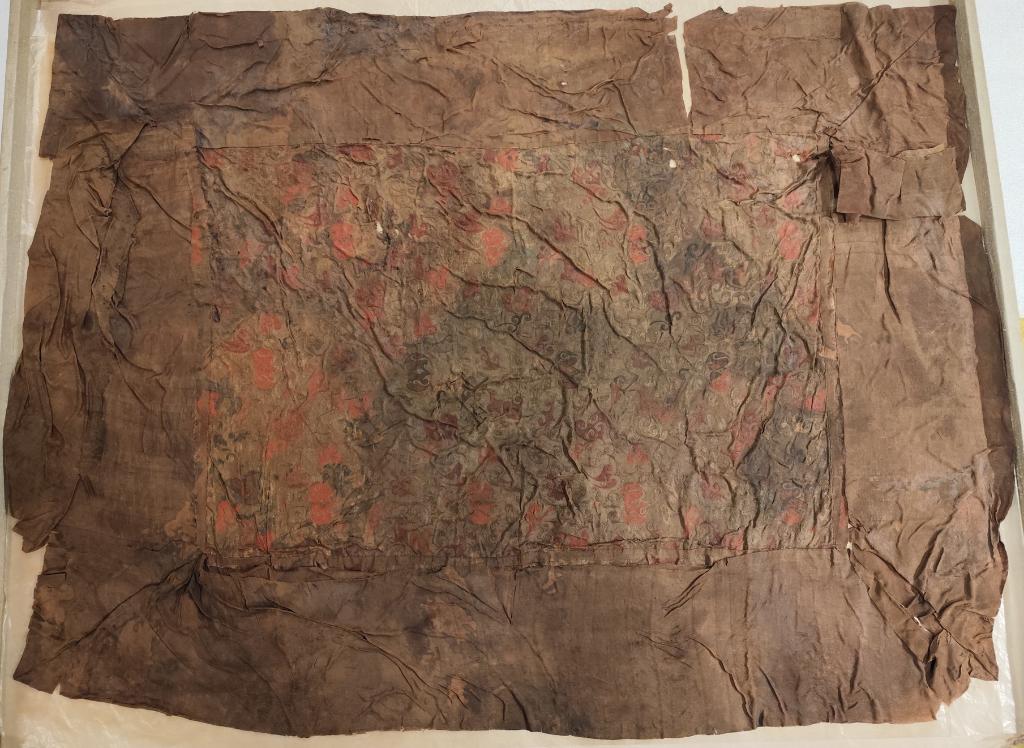
The picture shows the "Zheyun Embroidery" cushion unearthed from the No. 1 Tomb of Mawangdui. Xinhua News Agency reported that the Qidi "Chengyun Embroidery" cushion was 100 cm long and 74 cm wide. It was unearthed from the No. 1 Tomb of Mawangdui. The owner of the tomb is Xin Zhui, the wife of Li Cang, the prime minister of Changsha. The silk "Chengyun Embroidery" pillowcase was unearthed together with the "Chengyun Embroidery" cushion, and the shape is similar. The silk "Chengyun Embroidery" pillowcase with a length of 87.5 cm and a width of 65 cm. Both objects were unearthed from the north of Xinzhu's tomb.
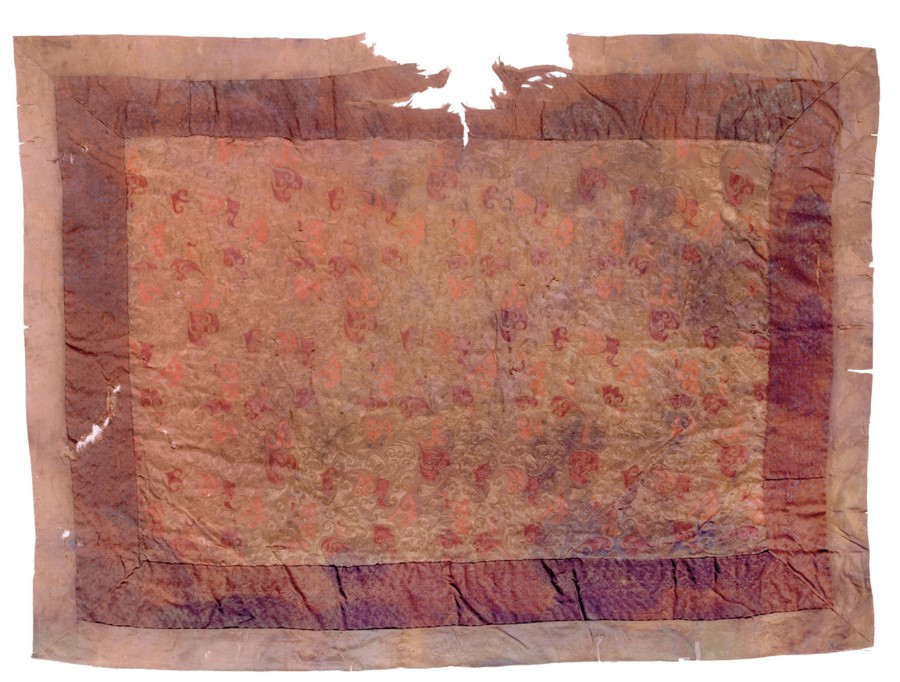
The picture shows a silk "Zheyun embroidered" pillow scarf unearthed from Tomb No. 1, Mawangdui. Xinhua News Agency reported that Yu Yanjiao, director of the Mawangdui Han Tomb and Collection Research and Exhibition Center and research and librarian of the Hunan Museum, introduced that some of the burial objects unearthed in Xin Zhui’s tomb have booklets or wooden plaques registered. The pillow towel on the silk "Chengyun Embroidery" was unearthed on the medicinal pillow. It was a double-layered silk "Chengyun Embroidery" surface. The surrounding edge was inlaid with geometric velvet circles and light yellow silk, and the inner layer was plain silk. There is a book that records it as "Embroidered pillow scarf by riding clouds". When the "Zheyun Embroidery" was discovered, it was pressed under a robe.
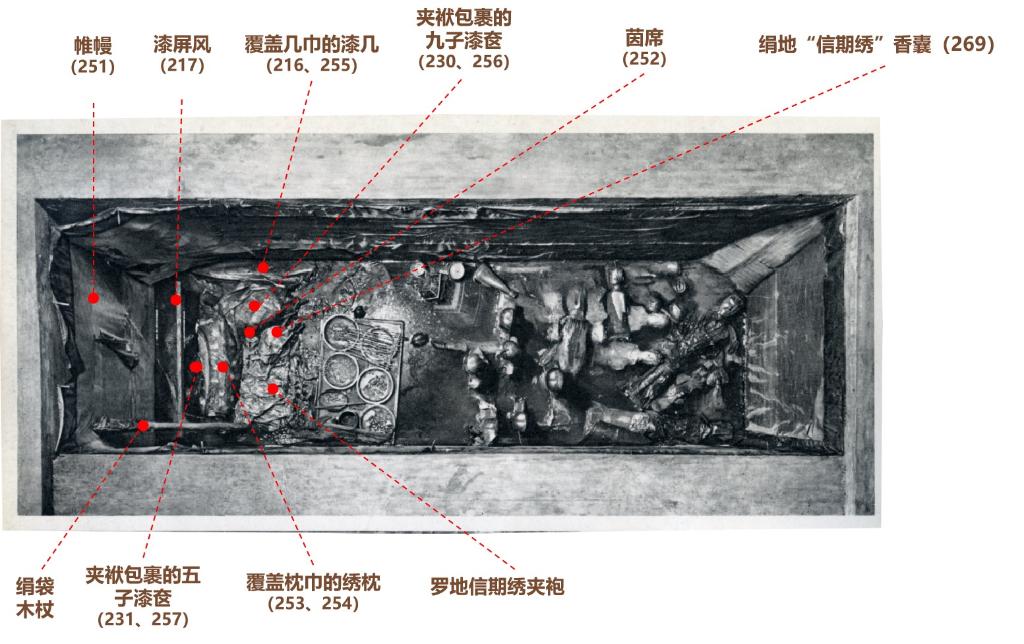
This is a schematic diagram of the artifacts unearthed on the north wing of the Tomb No. 1 of Mawangdui. Xinhua News Agency issued a report by "'Qi' refers to jacquard fabric with plain twill patterns, which is thinner than brocade. At that time, because experts have never found the corresponding book of the "Chengyun Embroidery", and the appearance and shape of the two objects are similar. Therefore, although the embroidery of the silk "Chengyun Embroidery" is exquisite, while the embroidery of the silk "Chengyun Embroidery" is rough, and the materials of the two are different, everyone also believes that the "Chengyun Embroidery" should be a pillow towel." Yu Yanjiao said.
But why are there two "pillow towels"? This question lingers in Yu Yanjiao's heart until one day, Yu Yanjiao suddenly "light of inspiration" when looking through old photos of the unearthed furnishings in the north box - would the "cloth embroidery" of the Qidi "Checking Cloud Embroidery" that has always been mistaken for a "pillow scarf" be a "cushion"?

The picture shows a book titled "White Ching Yungui Guo Zhongdao Yi, Red Deal". Xinhua News Agency issued a
Yu Yanjiao quickly read the resignation book and found a resignation book that had no corresponding object before, called "Bai Zhui Cheng Yun Zhui Guo Zhongyi, and the Red Detective". "Yin is a mattress, which is the same as '结', and mattresses are consent words, so they are called '结'. The white silk recorded in the book can also correspond to the original appearance of the '结果有'." Yu Yanjiao said that in fact, experts also found many "typos" in the process of sorting out the book. "So we believe that the 'Indu' recorded in this paragraph is likely to be a typo that the 'Shi' is written as 'Du'."
This discovery also corrected the earliest experts' excavation reports. Yu Yanjiao said that the number of the excavation report at that time reversed the "several towels" covering the painted table and the "pillow towels" under the robe. This time, the discovery of the "embroidery embroidery" of the Qidi is actually a "green mat", which further improved the excavation report.
According to reports, the north wing of Xin Zhui’s tomb is equipped with various furniture, dressing utensils, diet utensils, singing, dancing, musical and female attendants, etc., showing the scene of Mrs. Xin Zhui sitting on the ground while tasting delicious food while enjoying the singing and dancing performance. Yu Yanjiao said that from the pre-Qin Dynasty to the Han Dynasty, the customs of rituals formed by the ground-based daily life were still inherited. Low furniture was placed according to etiquette, and seats, mats, curtains, screens, and tables were common combinations. "The unearthed scene here vividly reproduces the interior furnishings pattern of the Han Dynasty," said Yu Yanjiao.
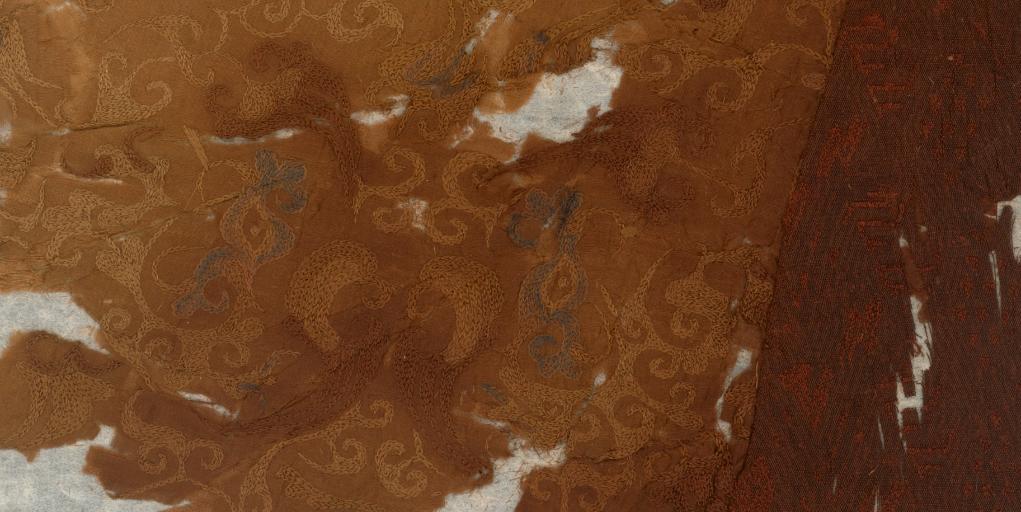
The picture shows the double phoenix "Embroidered by the clouds". At the press conference of Xinhua News Agency, experts also announced another newly discovered embroidery pattern - the double phoenix "Crossing Cloud Embroidery", filling the gap in related research fields. According to experts, the pattern was found on a robe of Chengyun embroidered silk robe unearthed from Tomb No. 3 of Mawangdui. The owner of the tomb is Li Feng, the son of "Madam Xin Zhui".
It is reported that the Mawangdui Han Tomb excavated from 1972 to 1974 is a tomb of the three of the Prime Minister of Changsha State of the Western Han Dynasty, Li Cang, a family of three. A total of tens of thousands of precious cultural relics such as complex craftsmanship and exquisite embroidered silk and clothing were unearthed. It is one of the major archaeological discoveries in the world in the 20th century. Among them, the body of "Madam Xin Zhui" unearthed from Tomb No. 1 is the longest-preserved wet corpse found in the world.