China Radio International Beijing May 4th News (Reporter Luo Shiwei) As night falls, many museums in Nanjing "light up" the night: the ancient music in the garden is melodious, and the dance posture of "Jinling Nichang" flows between the flower windows; on the lawn of the Dabaoen Temple Ruins Museum, the tower shadows are slanted, and a lighthouse concert is slowly played; the immersive exhibition of Jiangning Weaving Museum "The Great Dream·Red Building" is fragrant step by step... The audience lingers between the lights and the exhibition, and the night in cities is warmer due to cultural and cultural relics.
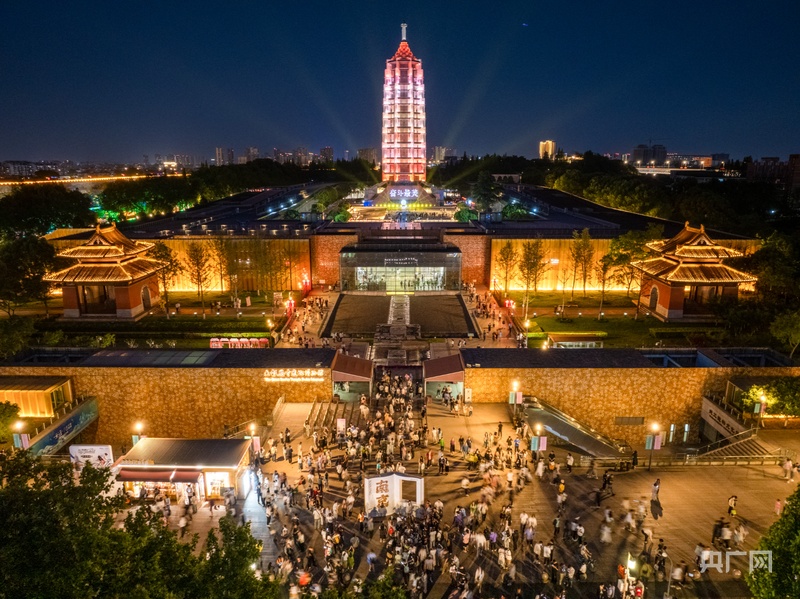
Night tour of Nanjing Dabaoen Temple Ruins Museum (photo by Zhong Yi, China Radio and Television)
Delay service lights up the new experience of night cultural and museum
This year's "May Day", such night tour scenes have been frequently staged across the country. The Hubei Provincial Museum held four nightclubs in a row; the Shaanxi History Museum was "super long standby" and opened until 21:30; the Yangzhou China Grand Canal Museum delayed the time to 21:00, and launched hundreds of social education and intangible cultural heritage activities in one go.
During the holiday, the popularity of museum visits continued to rise, becoming the first stop for many tourists to "check in" the city. Anhui Museum has newly presented "Anhui during the Xia, Shang and Zhou dynasties", exhibiting more than 900 cultural relics and more than 180 first-class cultural relics. The number of visitors reached 25,500 per day during the holiday, setting a new record in the history of the museum; the Tianjin Museum's "Together Cast Mountains and Rivers - Northern Dynasties Historical Relics Theme Exhibition" brings together more than 220 pieces (sets) of cultural relics from 14 cultural and museum units, and connects the Northern Dynasties culture integration with four groups; the Hebei Museum and Zhoukoudian Ruins Museum jointly planned the "'I' Come From Ancient" exhibition, and then superimposed the "Colourful Blue - Hebei Enamel Art Exhibition", which made the audience dizzy; the Nanjing Museum arranged multiple dance performances in the exhibition hall, and the dancers turned into "cultural elves", bringing an immersive exhibition experience in the collision between art and history.
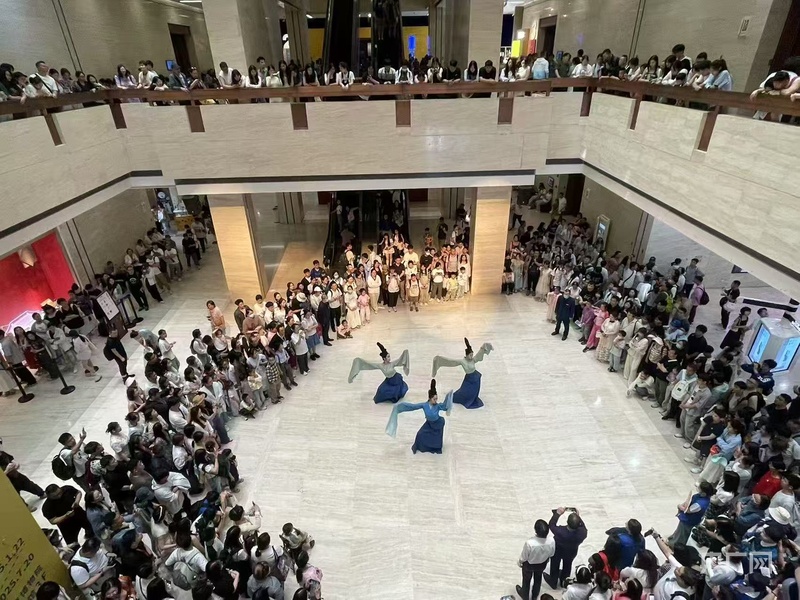
南京博物院艺术馆中庭舞剧表演(央广网记者 栾永胜 摄)
在各地展览“上新”中,四川博物院“五一”推出的“纹脉绵长——四川各民族文物上的吉祥图案特展”吸引众多观众驻足。 The exhibition takes patterns as clues, and through five units including "Nature in All Things" and "Dancing with Life", more than 130 cultural relics of various ethnic groups are exhibited, covering multiple categories such as jade, porcelain, lacquerware, etc., from mountain patterns and frog patterns to "fortune, wealth, longevity and happiness" and "dragons soar into the world", linking the common wishes of people of all ethnic groups for a better life.
"Most of these porcelain cups are usually hidden in the warehouse. This time it is rare to show, and the audience can see the elegant style." Li Yuan, deputy director of the Collection Department of Sichuan Museum, told the reporter of China Radio and Television that a set of blue and white colorful December flower pattern porcelain cups from the Kangxi period of the Qing Dynasty in the exhibition hall became the "star exhibit" of this exhibition. She hopes that through the poetic world behind the objects, more audiences can feel the beauty of traditional Chinese craftsmanship.
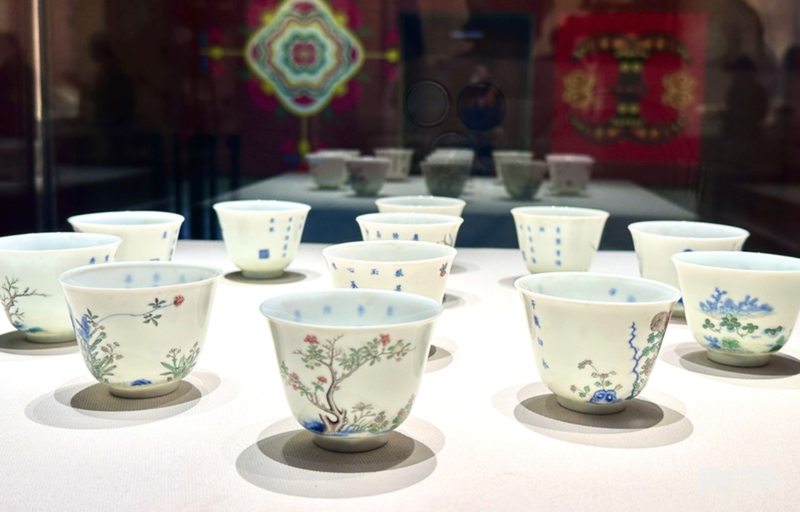
Kangxi blue and white colorful December flower porcelain cup (photo, China Radio and Television reporter Wang Ying)
From cultural creation to interactive museums, the interactive experience makes cultural relics more amiable and sensible. Jinan Museum has launched an AR rotating refrigerator sticker, which can "open to speak" with just one scan; Gansu Bamboo Slips Museum has moved the throwing pot and Cuju into the exhibition hall, and the audience can experience the life of the border in the Han Dynasty in the "Guards Experience"; Henan Yinxu Museum copied the original appearance of the bronze hand-shaped instrument, and tourists can "shake hands" and check in on the spot. For children, such a holiday is like an immersive history lesson.
Cultural and creative consumption adds another fire. The reporter saw at the Hubei Provincial Museum that cultural and creative products such as chime pattern refrigerator stickers, Yue Wang Jian U disk, and "Phoenix Yu Fei" hairpin are popular among tourists. Wang Liang, director of the Cultural and Creative Development Department of Hubei Provincial Museum, introduced that the museum develops products based on the "three treasures of the museum" of King Goujian of Yue, the Chime Bell of Zeng Houyi, and the Jinwei of Liangzhuang Wang, focusing on combining cultural core and modern aesthetics, "I hope that cultural relics can tell stories." For example, the popular "A tie of black hair and phoenix flying hairpin" simplifies the phoenix wing pattern into a flexible shape, which is both vivid and suitable for daily wear. At present, the Hubei Provincial Museum has developed more than 5,000 cultural and creative products, with about 600 types on sale, accounting for 70% of the young consumer groups.
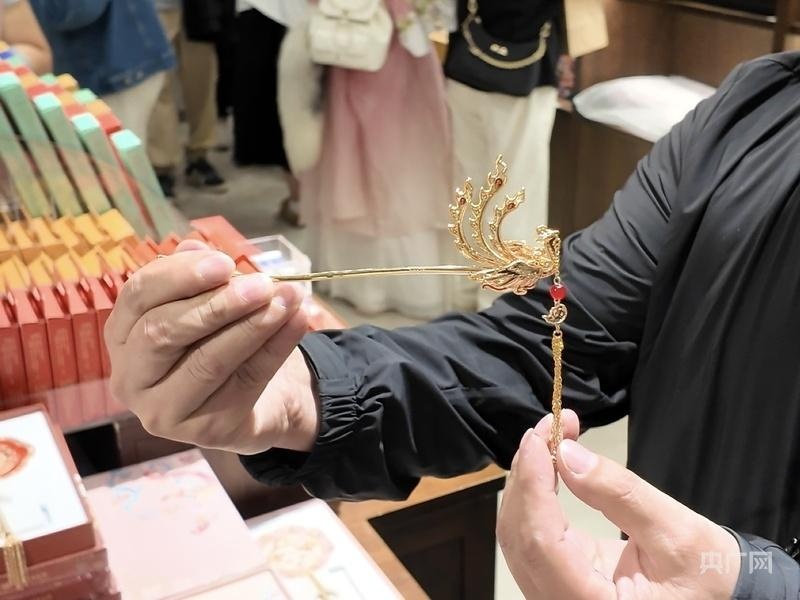
Staff at Hubei Provincial Museum showed reporters "a tie of black hair·Phoenix flying hairpin" (CNR.com) Intern reporter Chen Yanru Photo)
The Chengdu Museum has made the stone rhinoceros in the town into a multi-flavored mousse, and has launched Sichuan-style coffee such as green pepper American and chili Dirty; Jiangsu "See Suyun at the doorstep and watch the exhibition" and entered the tenth stop of the Suzhou Bay Museum during the May Day holiday. The first nine stops have welcomed more than 1.44 million visitors, and the sales of cultural and creative products have exceeded 10 million yuan.
Museums on campus New classrooms during holidays
From the ancient capital to the frontier, from the large museums to the campus, university museums are also still popular. Museums in universities such as Peking University, Tsinghua University, and China Agricultural University will be open as usual. Through AR interaction, theme exhibitions, youth courses and other activities, they will provide the public with another type of cultural space. Projects such as printing experience, aerospace display, and live insect observation have allowed many young people to touch the boundaries of knowledge during exploration.
The museum is not just a window that seds cultural relics, but a spiritual living room that weaves tradition and modernity, history and life together. During this holiday, whether it is wandering in the exhibition hall during the day or roaming at night, the encounter between tourists and history is more vivid and profound. Museums that are more "understand people's hearts" have made the "cultural flavor" more mellow during the May Day holiday, and also made the pulse of Chinese culture beating closer and louder.