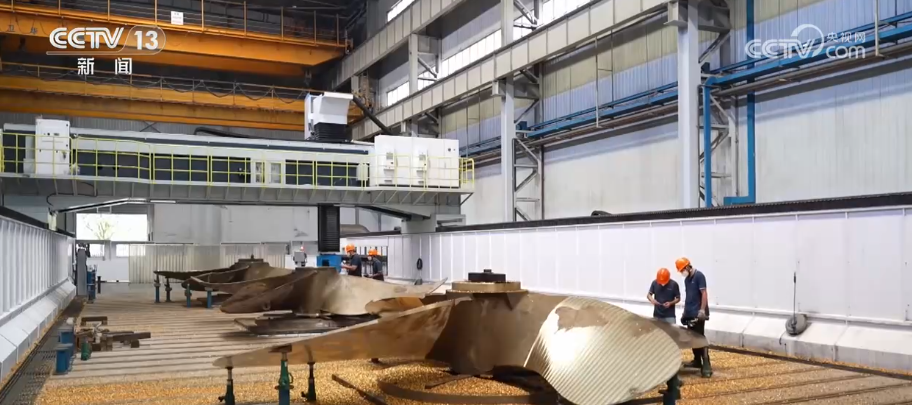
CCTV News: Starting from May 1, the new national standard "Residential Project Standards" will be officially implemented. This means that standards such as "the height of residential floors shall not be less than 3 meters" and "the installation of elevators on residential floors 4 and above" have become rigid requirements and entry thresholds for newly built housing. The new standards are implemented, what changes will happen to the real estate market in various places on May Day? What are the highlights of "good houses" under the new regulations? Let's go to Beijing to take a look first.

During the May Day holiday, many commercial housing projects in Beijing ushered in a large number of tenants watching. In a new house sales office on the South Fifth Ring Road, the reporter saw that there were endless citizens coming to choose houses to view houses, and the reception area was almost full.
When asked how to understand "good houses", home buyers generally mentioned indicators such as housing yield rate and floor height.
The implementation of the "good house" policy has also improved the functionality of many small-scale residential products. In Yizhuang, Beijing, a three-bedroom apartment of about 90 square meters has a smallest indoor living area of up to 10 square meters. It can not only be used as a study, but also more than enough to place a double bed of a normal size in the bedroom.
The improvement of residential quality has also promoted housing sales. The reporter learned that in many areas of Beijing, the top sales are often some "good house" projects with high quality.
Data shows that from April 1 to 29 this year, 3,010 newly built commercial residential units were signed and sold online, up 30% year-on-year, and the average online transaction price was 65,178 yuan/㎡, up 15% year-on-year and 0.3% month-on-month. Industry insiders believe that the entry of high-quality and improved housing projects has led to structural fluctuations in the average online signing and transaction price of new houses.
The evolution of "good houses": overcoming the problem of noise leakage, the level of intelligence is constantly improving
Not only the hard indicators of house acquisition rate have been significantly improved, but today's "good house" project has proposed solutions to some pain points in residential use, and in terms of house intelligence, it will also meet more expectations of home buyers.
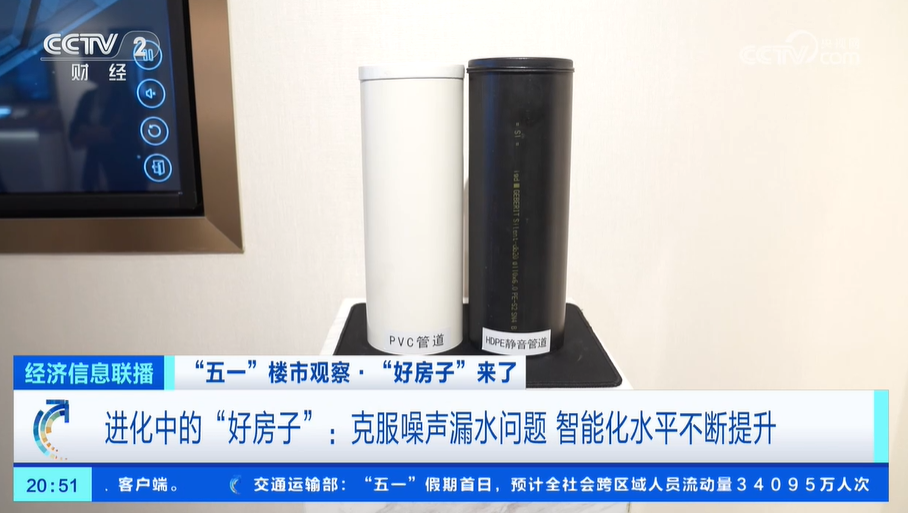
In a "good house" technology exhibition hall in Chaoyang District, Beijing, common pain points in the use of residential buildings such as noise, water leakage, and reodor, have corresponding solutions. Compared with the widely used white polyethylene pipes, this black high-density polyethylene pipe has improved the noise isolation effect a lot, and can significantly reduce the noise caused by flushing in kitchen and bathroom pipes.
At present, these technical measures have been applied in some commercial housing projects.

In another model room for commercial housing project, new technology applications make houses smarter. A screen at the entrance door integrates a good house physical examination system built through digital twin technology. Just click on the screen to monitor the operating status of each device such as air conditioner and fresh air in real time. If the device fails, you can also view the device instructions, repair or replace the consumables through the screen. In the future, other types of home appliances and home appliances are also expected to be connected to the system.
In addition, the standard system related to "good houses" is also being improved. At present, the first "good house" construction system in China has been released. Based on 172 common problems in residential use, this system benchmarks more than 80 current residential construction standards and specifications such as the "Residential Project Code", and proposes specific and operational solutions to each problem.