CCTV News: The reporter learned from the Ministry of Finance on the 31st that the Ministry of Finance will issue the first batch of special treasury bonds this year, actively supporting Bank of China, China Construction Bank, Bank of Communications, and China Postal Savings Bank to supplement core tier 1 capital.
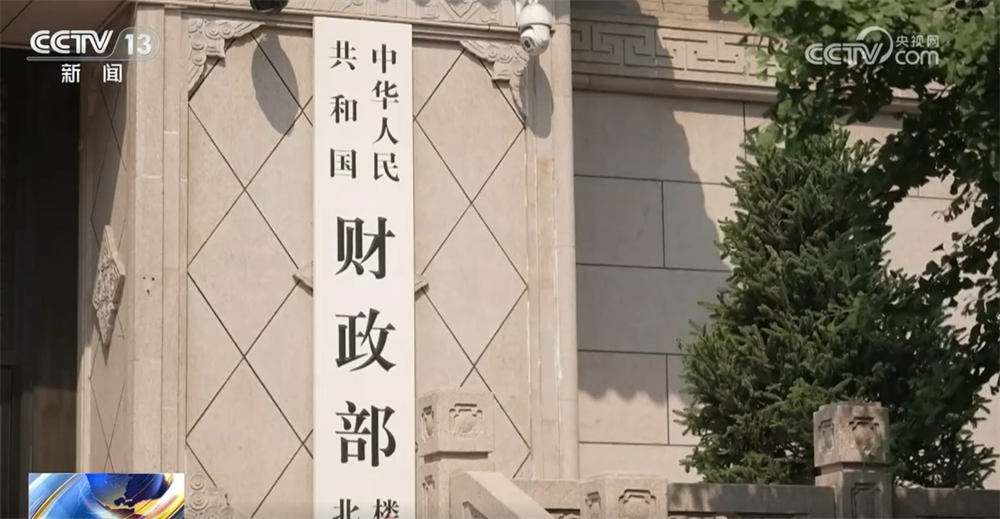
At present, large state-owned commercial banks have stable operations and stable asset quality, and the main regulatory indicators are all in the "healthy range". Supporting relevant large state-owned commercial banks to supplement core tier 1 capital by issuing special treasury bonds will help further consolidate and enhance banks' stable operating capabilities, create greater value for investors and bring long-term and stable returns, and help banks better play the role of the "main force" serving the real economy.
Four banks issued plans for private placement to supplement core tier 1 capital
On March 30, Bank of China, China Construction Bank, Bank of Communications, and China Postal Savings Bank issued announcements on the Shanghai Stock Exchange, disclosing plans to issue A-shares to specific targets, with a total of 520 billion yuan planned to raise funds.
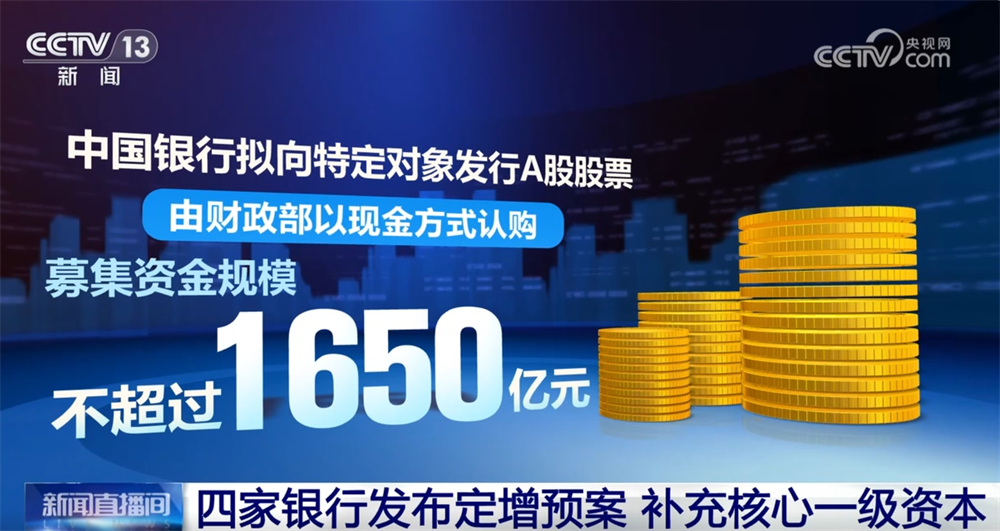

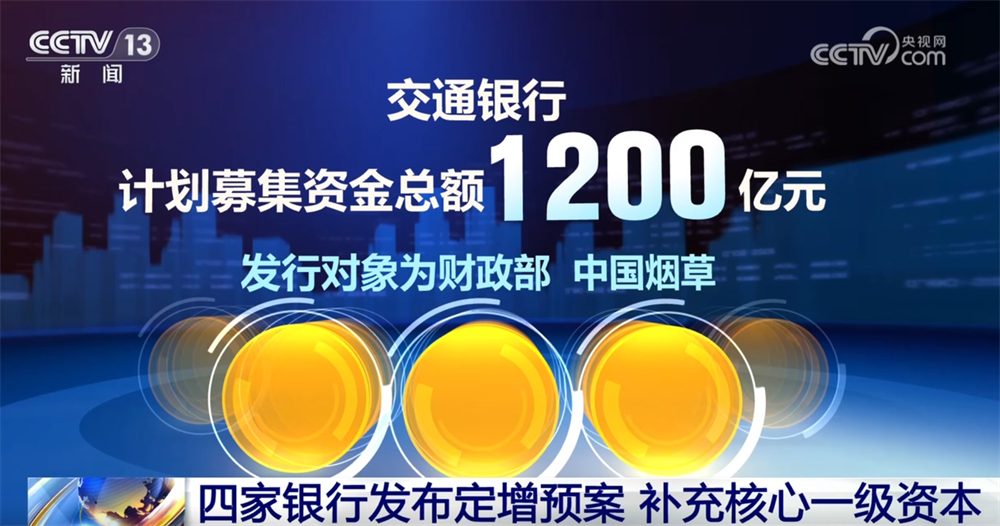
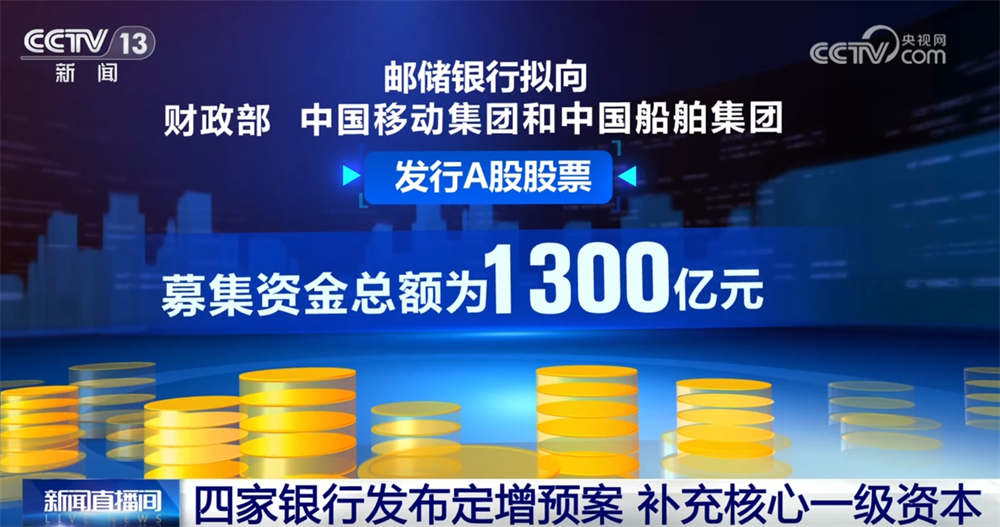
According to the announcements of each bank: Bank of China plans to issue A-shares to specific targets, which will be subscribed by the Ministry of Finance in cash, and the scale of funds raised will not exceed 165 billion yuan. China Construction Bank plans to introduce strategic investment from the Ministry of Finance, with the total amount of funds raised no more than 105 billion yuan. The Bank of Communications plans to raise a total of 120 billion yuan, and the issuance targets are the Ministry of Finance and China Tobacco. Postal Savings Bank of China plans to issue A-shares to the Ministry of Finance, China Mobile Group and China Shipbuilding Corporation, with a total amount of funds raised to 130 billion yuan.
The funds raised by each bank will be used to supplement core tier 1 capital after deducting the relevant issuance fees. Judging from the announcements of the above four banks, the total upper limit of the subscription amount of the Ministry of Finance plans to be 500 billion yuan.
The four banks all stated that the Ministry of Finance’s investment in supplementing the capital of large banks is an important measure for the state to support the stable operation and development of large state-owned banks, reflecting its firm confidence and strong support for large state-owned banks.
The reporter learned that the issuance plans of the four major banks still need to be reviewed and approved by the shareholders' meeting, approved by the State Administration of Financial Regulation, reviewed by the Shanghai Stock Exchange, and approved by the China Securities Regulatory Commission before they can be implemented.
Four banks supplement core tier 1 capital: improve capital adequacy ratio and enhance loan issuance capabilities
So why do these four state-owned banks supplement capital? Is the bank short of money? Actually not! The latest core Tier 1 capital adequacy ratios of these four banks are significantly higher than regulatory requirements, and the total net profit of these four banks exceeded 750 billion yuan last year, so they are not short of money and do not have operating risks.
The reason why new shares are issued to supplement capital is to increase the capital adequacy ratio of banks. The higher the capital adequacy ratio, the safer the bank will be, and more loans can be issued, and more financial support will be obtained by enterprises and individuals. Industry insiders believe that this round of capital supplement is a forward-looking arrangement of "preparing for the future".
Ministry of Finance: The national issuance of local government bonds exceeded 1.86 trillion yuan in the first two months
The latest data released by the Ministry of Finance shows that from January to February this year, 1863.3 billion yuan of local government bonds were issued nationwide, including 235.5 billion yuan of general bonds and 162.78 billion yuan of special bonds; the average issuance period is 17.1 years, and the average issuance rate is 1.91%.