CCTV News: Before catching the plane, after getting off the plane, do you want to have an encounter with history in the T5 terminal of Xi'an Airport? Recently, the topic of "Xi'an built a museum in the airport" has sparked heated discussion. What kind of museum is this? What exhibits will be exhibited? Today, when the cultural industry continues to heat up, what can we rely on to meet the needs of different groups and thus better activate consumption potential?
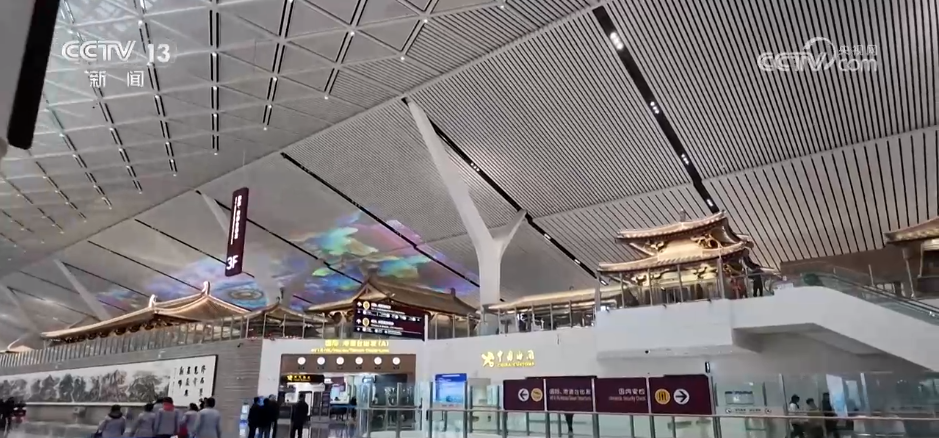
Is the creativity of the airport museum born out of the discovery of the ancient tomb group during the construction process, or is there a plan already?
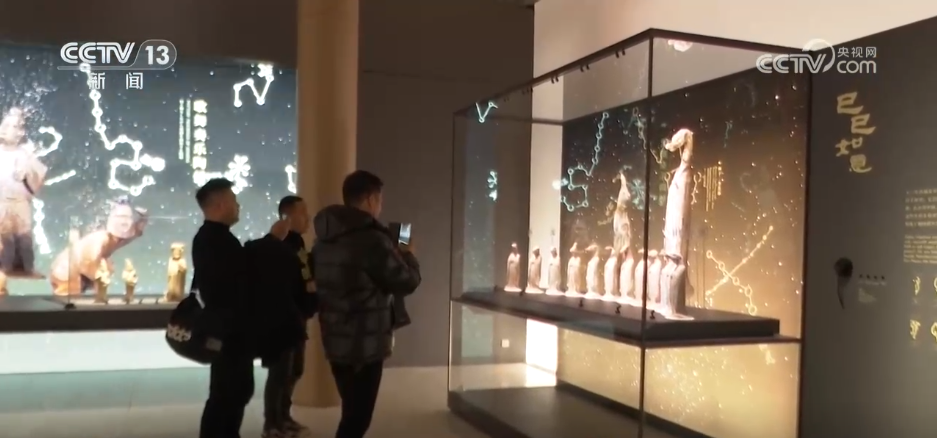
Chen Yao, project leader of the Western Airport Museum: This concept has gone through a process of exploration from concept to implementation. When planning the third phase of the airport in 2016, the "Humanities Airport" section was proposed, aiming to build characteristic projects based on Xi'an's rich resources. In February 2021, the news that "Xi'an Airport Construction Site instantly became an archaeological site" caused heated discussion, and a large number of people left messages calling for the construction of a museum. We included it in the research topic. After four years of hard work, we finally displayed unearthed cultural relics in the airport for tourists to visit.
The museum has extremely high requirements for temperature, humidity, security, etc., so how can the airport ensure the safety of cultural relics?

Chen Yao: We invite the expert team to formulate a multi-level protection plan. For example, combining the semi-closed environment of the airport and the real-name reservation system, the museum adopts explosion-proof facilities and is equipped with infrared facilities; the independent display cabinet is also equipped with thermohydraulic monitors, and a regular tour mechanism is established with the Provincial Archaeology Institute to ensure the safety of cultural relics.
How to evaluate the "Airport + Museum" model? Can its experience be promoted to other cities?
Di Bin, Director of China Tourism Research Institute: Contemporary airports are no longer completely a place for aircraft to take off and land, nor are they completely a place for tourists to enter and exit the port. They are also a comprehensive tourism consumption scenario and a new cultural space. From the perspective of a museum, the airport has the most realistic and basic passenger flow, which can provide the museum's cultural dissemination with an audience market. This can be done in many places across the country. There is no need to limit local cultural relics unearthed. They can explore "airport + museum" based on special exhibitions and intangible cultural heritage.
How to use cultural and cultural hot to promote consumption upgrades?
Dai Bin: First of all, we need to find the characteristics of some local cultural museums, such as the Tea-Horse Road in Ya'an and the bronzes in Ningxia. Not far from Shijiazhuang Zhengding Airport, there are Zhongshan Mountain tools from the Hebei Provincial Museum. These are all very culturally profound. I hope these cultural museums can enrich the cultural heritage of these small airport cities and hub airport cities and increase the cultural connotation of tourism image. In this process, these scenarios should be promoted in a special way so that more travel merchants, tourism promotion departments and promotion agencies should participate in the "Cultural and Museum + Airport" project.
Does airport museums reveal a new path to "put cultural relics close to the crowd"?

Dai Bin: In the past, when talking about tourism, it was more about guiding high-quality supply to high-level demand. But on the other hand, high-quality supply will also bring more high-level demand. As the mass tourism market enters a new stage of comprehensive development, especially the inbound tourism market enters a new era of recovery and development beyond expectations, more tourists not only need to see the traditional mountains and rivers, but also need to experience culture. An important carrying space for excellent traditional culture is museums, so I hope that more museums can actively enter tourism scenes and cultural spaces and actively connect with the tourism market.