CCTV News: On February 23, the 2025 Central Document No. 1, which is the "Opinions of the Central Committee of the Communist Party of China and the State Council on Further Deepening Rural Reform and Solidly Promoting the Comprehensive Revitalization of Rural Areas". This is the 13th Central Document No. 1 to guide the "Three Rural Issues" work since the 18th National Congress of the Communist Party of China.
The Central Document No. 1 of 2025 proposes to anchor the goal of promoting the comprehensive revitalization of rural areas and building an agricultural power, take reform and opening up and scientific and technological innovation as the driving force, and do everything possible to promote agricultural efficiency, rural vitality, and farmers' income.
Zhang Zhaoxin, a second-level researcher at the Rural Economic Research Center of the Ministry of Agriculture and Rural Affairs, said that this document further deepened reform and innovation, accelerated the comprehensive revitalization of rural areas, and systematically deployed around ensuring national food security and preventing large-scale poverty relapse, plus the three tasks of rural revitalization (rural development, rural construction and rural governance).
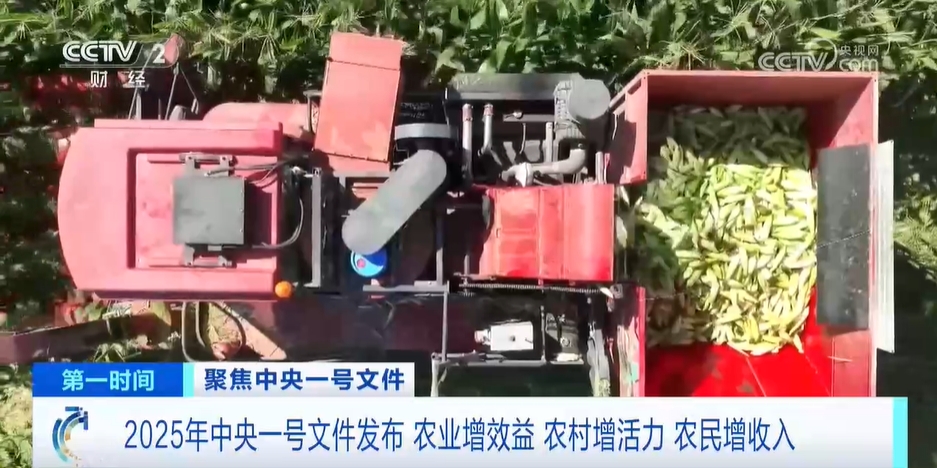
The document proposes that it is necessary to continuously enhance the supply guarantee capacity of important agricultural products such as grain, deepen the large-scale yield improvement action for grain and oil crops, stabilize the grain planting area, focus on yield and quality improvement, and ensure stable and bumper grain yields. Strengthen the protection and quality improvement of arable land, promote the coordinated research of agricultural science and technology forces, and accelerate the conquest of a number of breakthrough varieties. In terms of continuously consolidating and expanding the results of poverty alleviation, we must firmly maintain the bottom line of preventing large-scale relapse into poverty. The document also proposes to focus on strengthening the county-level industries to enrich the people, develop rural characteristic industries, promote the transformation and upgrading of agricultural product processing industry, and improve the level of agricultural industrialization. At the same time, improve the mechanism for connecting farmers to lead farmers to increase their income, broaden farmers' channels for increasing their income, guide farmers to develop industrial projects suitable for family operations, and develop courtyard economy, forest economy, and homestay economy according to local conditions. The document also proposes that rural resource assets should be managed and used well, and the real estate integrated homestead rights confirmation, registration and issuance of certificates should be made. Urban residents are not allowed to buy rural houses or homesteads in rural areas, and retired cadres are not allowed to occupy land to build houses in rural areas.
Deepen rural reform this year, with the focus on land, funds and talents
The Central Document No. 1 proposes that this year's rural reform will focus on improving factor guarantees and optimizing the allocation system and mechanism. Experts believe that this mainly includes land, funds, talents, and various resources for rural revitalization.
Kong Xiangzhi, a second-level professor at the School of Agriculture and Rural Development, Renmin University of China, said that on land, most areas in the country will enter the second round of contract extension starting next year. This year's Central Document No. 1 emphasizes the stability of contracting relations, large-scale stability and minor adjustments, and most farmers continue to contract the original contracted land. In terms of talent, the Central Document No. 1 proposes to absorb urban residents, college graduates and migrant workers returning to their hometowns to start businesses and find jobs in rural areas.
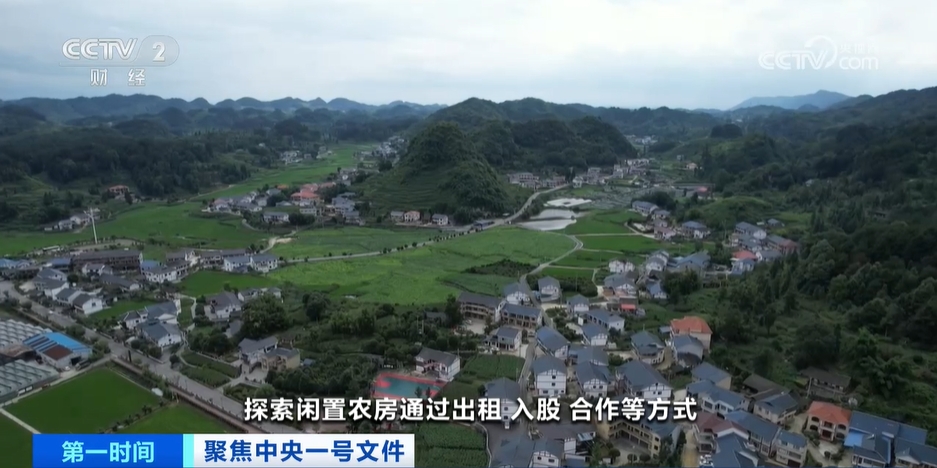
Xie Linghong, a researcher at the Institute of Agricultural Economics and Development, Chinese Academy of Agricultural Sciences, said that we should explore effective forms of revitalizing and utilizing idle rural houses through rental, equity investment, cooperation and other methods.
Experts also said that accelerating the comprehensive revitalization of rural areas is an important task in 2025. In terms of industrial development, we must deeply integrate rural culture and tourism, carry out pilot projects for empowering rural revitalization in cultural industries, and promote the characteristic, quality and standardization of rural tourism. In addition, we must focus on urban-rural integration and promote the comprehensive revitalization of rural areas.
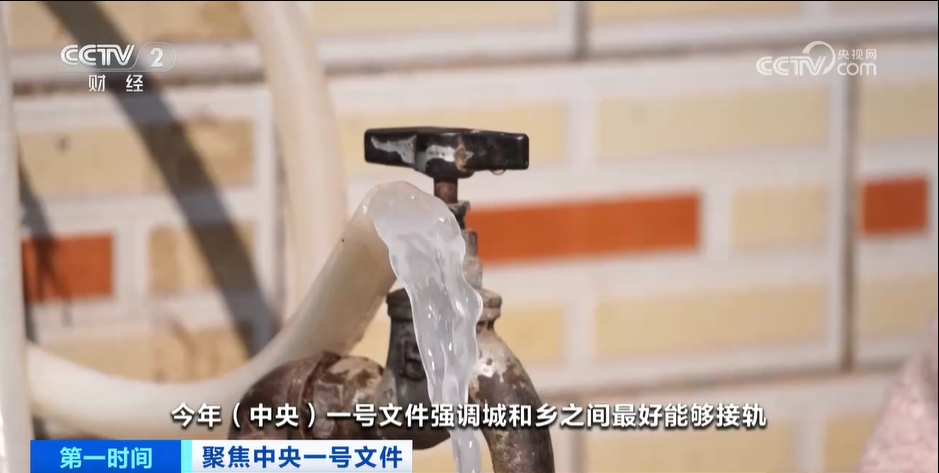
Kong Xiangzhi, a second-level professor at the School of Agriculture and Rural Development, Renmin University of China, said that it is emphasized that cities and rural areas should drive rural areas, and infrastructure extends from county towns to rural areas. For water, roads and electricity, the integration, especially water, this year's Central Document No. 1 emphasizes that cities and rural areas should be integrated, and for basic public services in rural areas, county towns and rural areas should be basically integrated.
Zhang Zhaoxin, a second-level researcher at the Rural Economic Research Center of the Ministry of Agriculture and Rural Affairs, said that a prominent highlight of this year's Central Document No. 1 is the proposal to improve the urbanization mechanism for farmers entering cities, that is, farmers entering cities must register their household registration according to their permanent residence and enjoy various public services, such as housing being included in the scope of affordable housing.