CCTV News: On February 21, the State Council Executive Meeting reviewed and passed the "Action Plan for Improving the Recycling and Utilization System of Power Battery in New Energy Vehicles". The meeting pointed out that my country's new energy vehicle power batteries have entered the stage of large-scale decommissioning, and it is particularly important to comprehensively improve the recycling and utilization capacity of power batteries. We must strengthen the management of the entire chain, focus on clearing the bottlenecks and jams, build a standardized, safe and efficient recycling system, use digital technology to strengthen the monitoring of the entire life cycle of power batteries, and realize the traceability of the entire production, sales, dismantling and utilization. We must use legal means to standardize recycling and utilization, formulate and improve relevant administrative regulations, and strengthen supervision and management. We must speed up the formulation and revision of relevant standards such as green design of power batteries, product carbon footprint accounting, etc., and use standards to lead and drive recycling.
How big is the market size of the power battery recycling?
Is retirement equal to scrapping? How to turn old power batteries of new energy vehicles into treasures? Next, let’s enter today’s “Ask to the End”. Let’s first take a look at how big the market size of this power battery recycling is? In recent years, my country's new energy vehicle industry has developed rapidly. Data shows that as of the end of 2024, my country's new energy vehicle ownership reached 31.4 million, and the number of power batteries installed has been leading the world for many years. As the retirement volume of power batteries increases year by year, its recycling has attracted much attention. A report predicts that by 2030, the market size of the power battery recycling market will exceed 100 billion yuan.
What methods are included in the recycling and utilization of power batteries?
How can such a large-scale "decommissioned" battery be recycled safely and efficiently? Experts said that the current recycling and utilization of power batteries mainly includes two major categories: cascade utilization and recycling. Experts point out that when the battery capacity is attenuated below 80% of the rated capacity, power batteries are not suitable for electric vehicles and need to be recycled and processed. Among them, when the battery power is between 50% and 80%, it will be used in a cascade, that is, after dismantling and reorganizing the retired power battery, it will be made into emergency power supplies, energy storage equipment, etc., and will continue to serve. If the battery capacity decays below 40%, disassembly and crush them will be performed, and metal raw materials such as cobalt, nickel, and lithium in the battery will be extracted, and the new battery will be recycled.
Reporter visited the scrapped new energy vehicle dismantling production line
In Shanghai Laogang Industrial Park, the reporter came to the first intelligent new energy vehicle dismantling line independently developed in China. Here, every vehicle will be automatically transported through the slide rail after entering the factory and will be automatically positioned through the sensor.
These removed power batteries will be sent to the battery recycling company for resource recycling. Here, the power batteries can be extracted from recycled materials through chemical methods. Among them, the recovery rate of nickel, cobalt and manganese reaches 99.6%, and the recovery rate of lithium reaches 91%. These recycled materials can be remade into the positive electrode material of the power battery and applied to the new battery, truly realizing where the battery resources come from.
Recycling and utilization of power batteries How to "eat and squeeze it out"?
How to "eat and squeeze out" the recycling of used power batteries? Are there any standards and specifications in this regard? In December last year, the Ministry of Industry and Information Technology released a new version of the comprehensive utilization industry standards for the waste power batteries of new energy vehicles, improving the recycling and comprehensive utilization system, and promoting safe and efficient recycling.
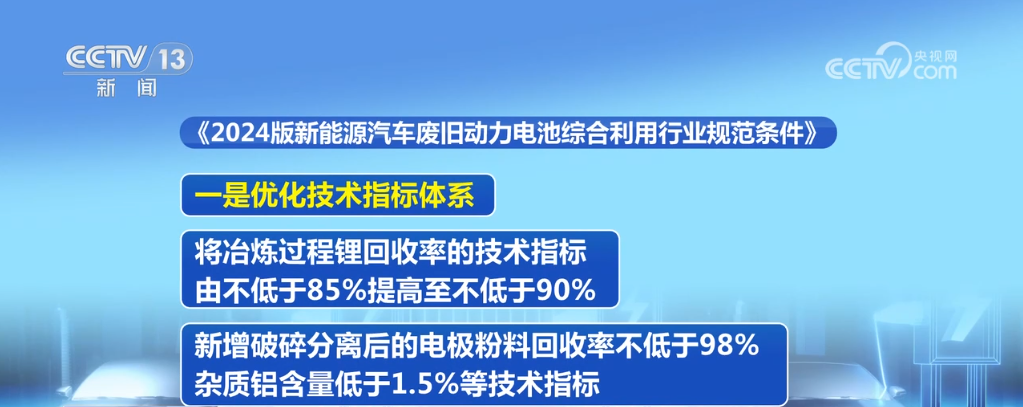
In the new specification conditions, the focus is on four aspects: First, optimize the technical indicator system. The technical indicators of lithium recovery rate in the smelting process are increased from no less than 85% to no less than 90%, and the recovery rate of electrode powder after crushing and separation is not less than 98%, and the impurity aluminum content is less than 1.5%. The second is to update and improve the standards and specifications. Added the disassembly and coding standards for waste power batteries for new energy vehicles, such as "Regulations on Recycling and Disassembly of Vehicle Power Batteries" and "Coding Rules for Automotive Power Batteries". Third, new requirements for electric bicycle lithium-ion batteries are added. It is clear that the cascade-used batteries shall not be used in electric bicycles, and recycling enterprises shall take into account the requirements for handling waste lithium-ion batteries of electric bicycles. Fourth, strengthen product quality management and enterprise site selection requirements.
Is it possible to repair the used power batteries?
With the development of technology, is it possible to repair used batteries in the future? It's really possible. Recently, the research team of Fudan University released research results that can provide precise treatment of lithium batteries and regain waste batteries.
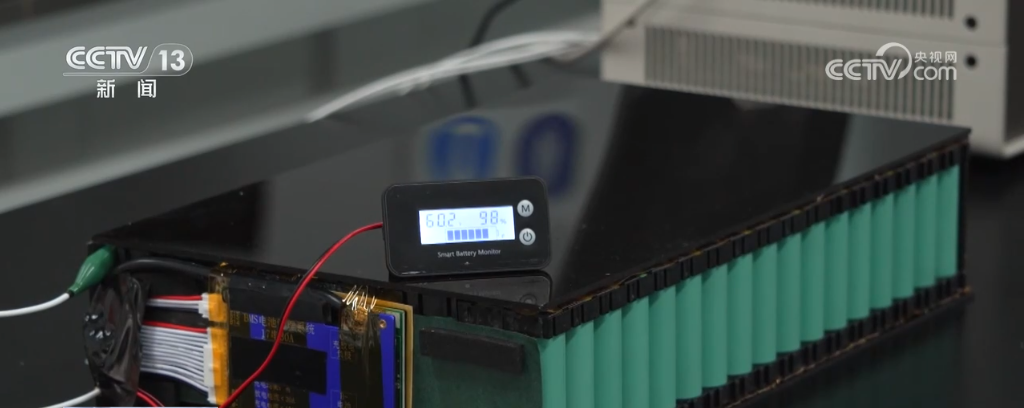
In order to deal with problems such as aging and decay of lithium batteries, the research team of Fudan University found through research that the "lifetime" of batteries is actually similar to human health, and the problems are often concentrated on a core component, that is, active lithium ions. If the lost lithium ions can be accurately replenished, the battery life time can be greatly extended. Based on this idea, the team developed a lithium carrier molecule like a "drug" that can replenish lithium ions in the battery by injection.
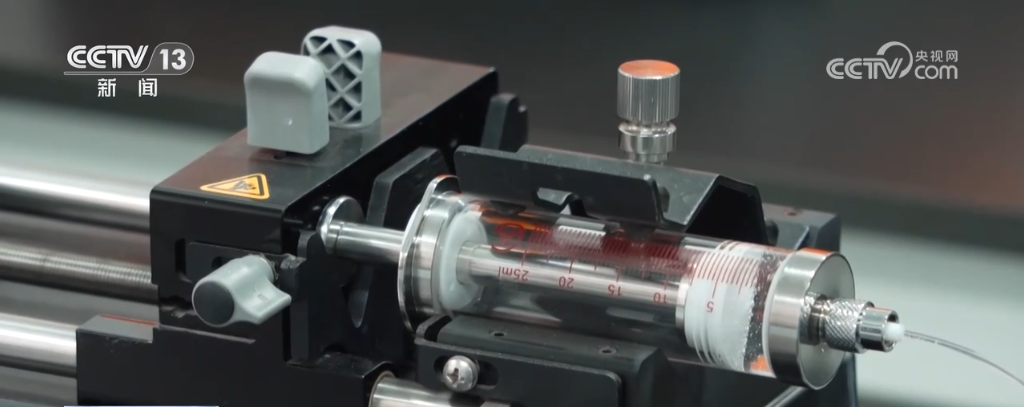
So, how did this lithium carrier molecule like "drug" be found? The scientific research team used artificial intelligence technology to combine chemical knowledge to digitize molecular structure and properties. By introducing a large amount of related knowledge in organic chemistry, material engineering technology, etc., to build a database, and obtained this new lithium-ion carrier molecule after multiple experiments.
At present, this technology has passed the testing of multiple batteries and has cooperated with top international battery companies, hoping to be applied to real life as soon as possible.