At present, artificial intelligence is penetrating all areas of scientific research at an unprecedented speed. What kind of changes will artificial intelligence be deeply integrated into scientific research? What new exploration spaces will be opened?
AI×Disease Premature Screening Technology
A few drops of blood can predict hundreds of diseases
Only a few drops of blood can you predict the potential risks of hundreds of diseases in advance?
In 2024, the scientific research team of Fudan University, with the breakthrough research results of the "Human Health and Disease Proteome Map" - with the help of artificial intelligence algorithms, doctors can diagnose and predict diseases in advance through simple plasma proteome testing.
It is understood that this study was initially only targeting Alzheimer's disease and other types of dementia. Previously, the scientific research team used big data and artificial intelligence algorithms to screen and analyze nearly 1,500 plasma proteins and found 11 plasma proteins that can predict the risk of future dementia.
Yu Jintai, deputy director of the Institute of Science and Technology of Fudan University and deputy director of the Department of Neurology at Huashan Hospital Affiliated to Fudan University, said that by detecting changes in proteins through blood tests and using AI to calculate the signs of disease, the earliest signs of Alzheimer's disease can be found 15 years in advance.
If the protein map can be drawn more comprehensively, can we analyze the relationship between more diseases and proteins?
With this idea, the scientific research team analyzed blood samples from more than 50,000 people and medical and health data that spanned 14 years of follow-up, successfully drew the world's first "Human Health and Disease Proteome Map", and also developed a set of artificial intelligence algorithm models.
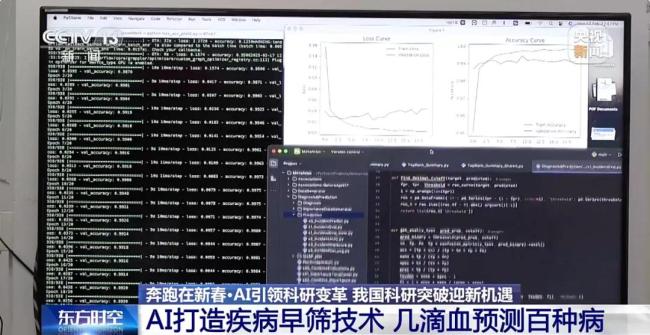
Experts introduced that the biggest feature of this technology is "early discovery, spend less money". By detecting the changes in nearly 3,000 proteins in the human blood, combined with artificial intelligence technology, it can predict the risk of hundreds of diseases such as heart disease, diabetes, and Alzheimer's disease more than ten years in advance.