
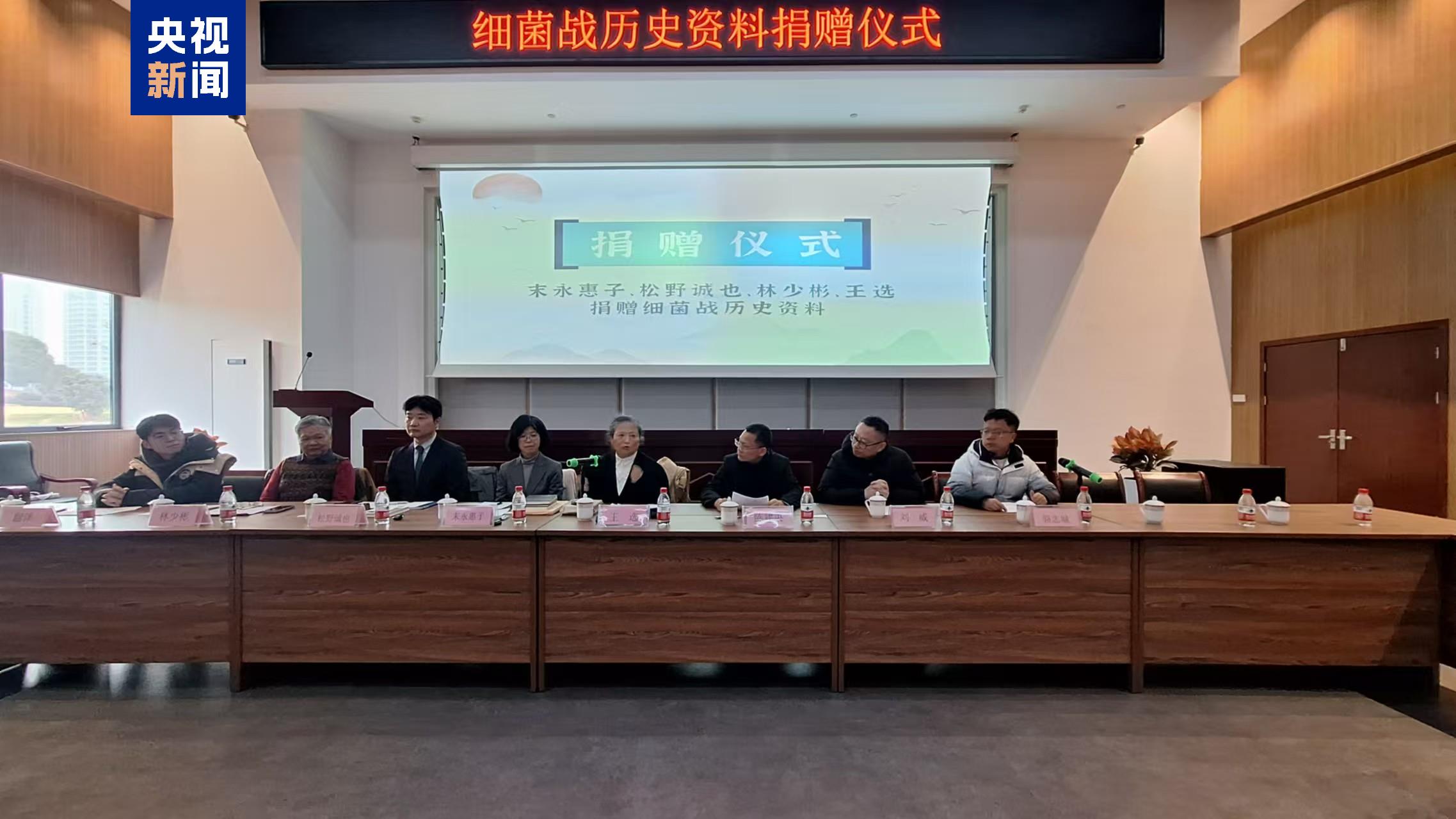
On the morning of January 8, a bacterial war historical data donation activity was held at the Exhibition Hall of the Bacterial War Historical Facts of the Japanese Invaders in Yiwu, Zhejiang (Yiwu) . Scholars from China, Japan and Singapore donated a large number of precious historical materials, providing new evidence for exposing the Japanese military's bacterial war crimes and restoring the historical truth.
These donations cover multilingual books, magazines, picture albums and other publications published in different periods by countries such as East Asia and Southeast Asia. They are precious historical materials of the world anti-fascist warfare. They not only enrich the database of bacterial warfare research, but also remember history and protect peace.
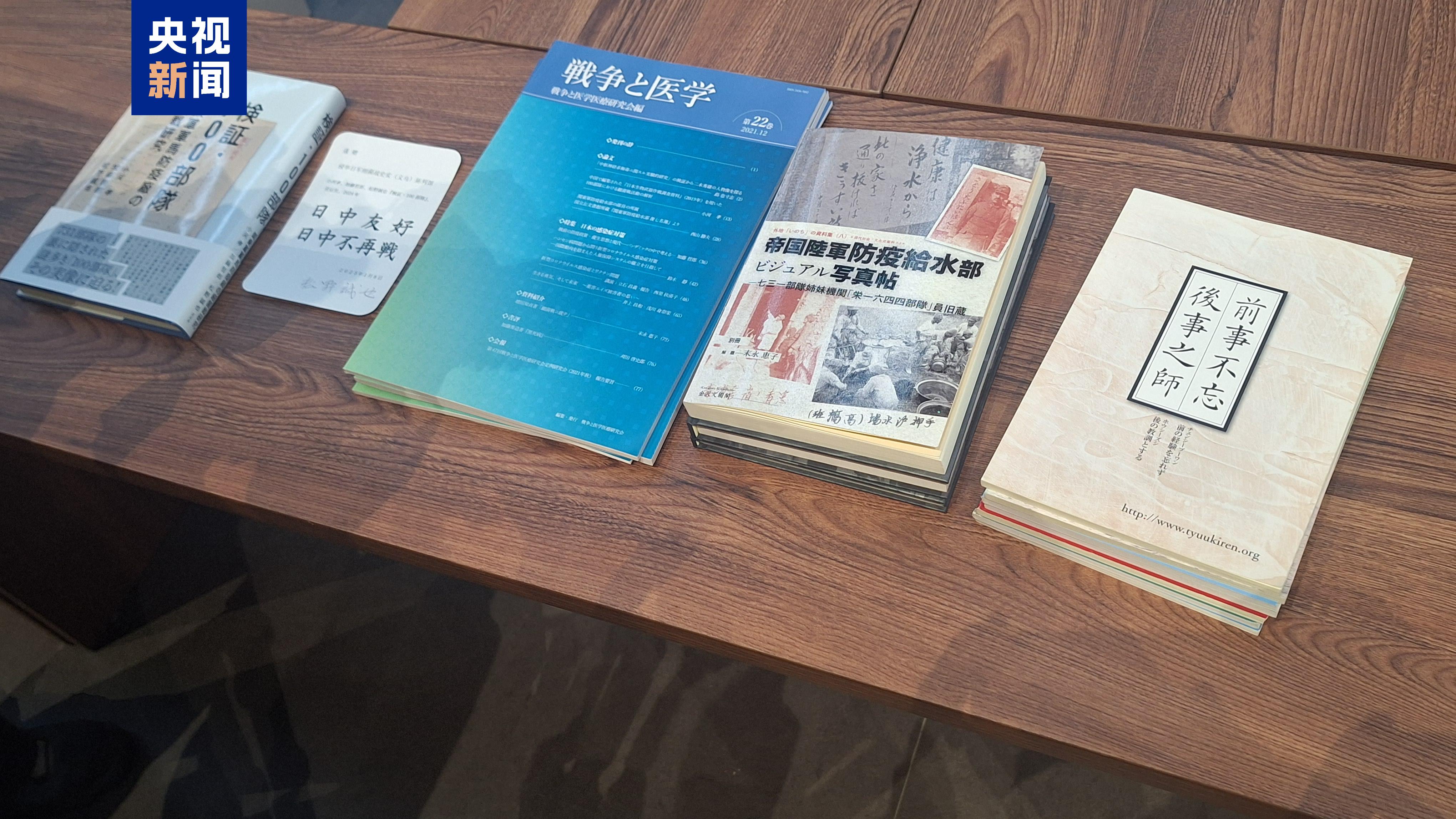
Shi Nagaoko, lecturer at the School of Medicine of Fukushima Prefectural Medical University in Japan, donated the newly published "Imperial Army Epidemic Prevention and Water Supply Image Collection" and the Journal of the War and Medical Research Association published by the Japan War and Medical Research Association.
The Imperial Army's Epidemic Prevention and Water Supply Department Image Collection is the first collection of Bacterial Force personnel of Rongzi 1644. It comes from the old collection of the 1644 members of the 731 sister organization. It truly records the activities and related research of the Japanese bacterial warfare troops at that time. It is ironclad evidence of the Japanese bacterial warfare crimes. Compared with the well-known Unit 731, the truth of Unit 1644 is far from uncovered, so it is very precious.
The Journal of the Association for War and Medical Medical Research provides an important reference for a deep understanding of the Japanese army's relationship in bacterial warfare and medical care at that time, which helps further reveal the ugly behavior of the Japanese army in using medicine for bacterial warfare.
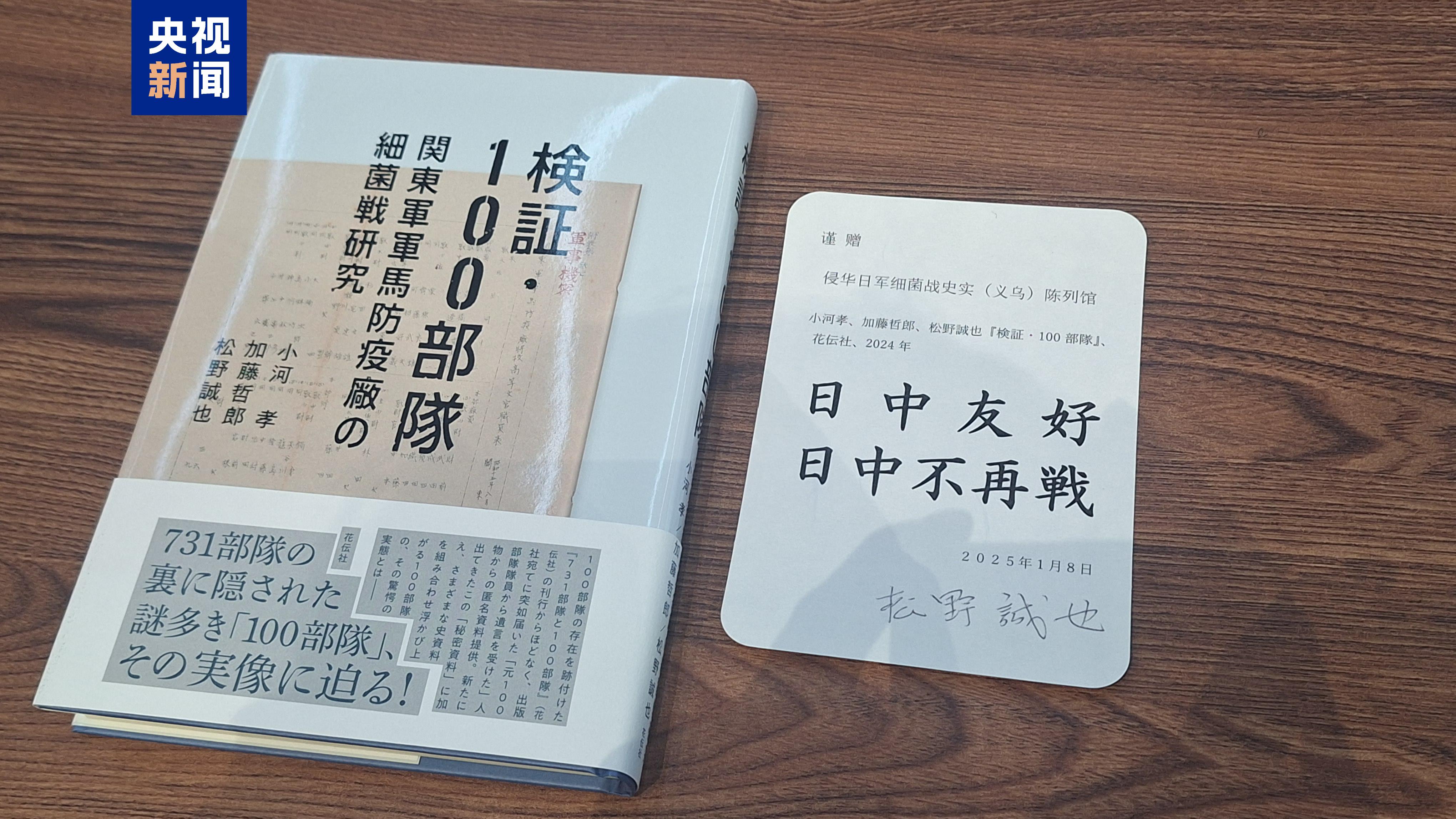
Makoto Matsuno, a researcher at the Institute of International Peace at Meiji College, Japan donated this time "Verification 100 Units - Research on Bacterial Warfare at the Kanto Army Military and Horse Epidemic Prevention Factory". The 100 troops are engaged in artificial injecting bacteria into animals and extracting viruses to make biological weapons, which is related to the investigation and research of a large number of foot rotten cases left in Zhejiang Province during the War of Resistance Against Japan that has attracted long-term attention.
This research result plays a key role in exposing the crimes of the Kwantung Army Military Horse Epidemic Prevention Factory, a bacterial warfare agency, and provides important puzzle pieces for a comprehensive and in-depth study of the entire Japanese bacterial warfare system. It also once again proves that the historical facts of Japanese militarism launching bacterial warfare are unquestionable.
Lin Shaobin, an independent scholar from Singapore, donated 10 boxes of related books and magazine materials, and the shipping fee for shipping from Singapore to Yiwu was paid by a Chinese entrepreneur. These materials are rich and diverse, including books, magazines, and picture albums published by people from the West, Japan, Southeast Asia and other places in Chinese, Japanese, and English, covering all aspects of the world anti-fascist war, including China, Southeast Asia and other places.
As the organizer of this event, Wang Xuan, the leader of the plaintiff's group of the Chinese Bacterial War Victim Litigation, who is 73 years old this year, also donated the journal "Zhongguilian" and thus filled in the complete set of volumes of the journal "Zhongguilian" collected by the Japanese Invaders' Bacterial War Historical Facts (Yiwu) Exhibition Hall.
The authors of this magazine are all Japanese soldiers invading China. After the war, they received transformation at the Fushun War Criminals Management Office and reflected on their crimes in the war. After returning to China, they wrote articles and history to expose the war of aggression. The journal contains a large number of war details and related research articles, especially the truth about the 731 unit and the content of the Japanese plague operations, providing precious first-hand information for bacterial warfare research and reflecting Ms. Wang Xuan's determination and efforts to pursue bacterial warfare research and historical truth for many years.
It is understood that the donation activity will also be held at the Quzhou Exhibition Hall of the Bacterial War of the Japanese Invaders in Quzhou, Zhejiang tomorrow morning. The trip was specially arranged to donate in Yiwu and Quzhou, Jinhua, because both places were the victims of the Bacterial War.
(Reporter Chen Xiaoyang and Hu Congbo of the Central Station)