
CCTV News: On January 8, the State Council Information Office held a regular policy briefing, and many departments introduced the situation of increasing efforts to expand the implementation of the "two new", that is, the large-scale equipment update and the policy of ex-new consumer goods. A relevant person in charge of the National Development and Reform Commission said that in 2025, a series of new measures will be introduced to expand the scope of supporting consumer goods for old-for-new products.

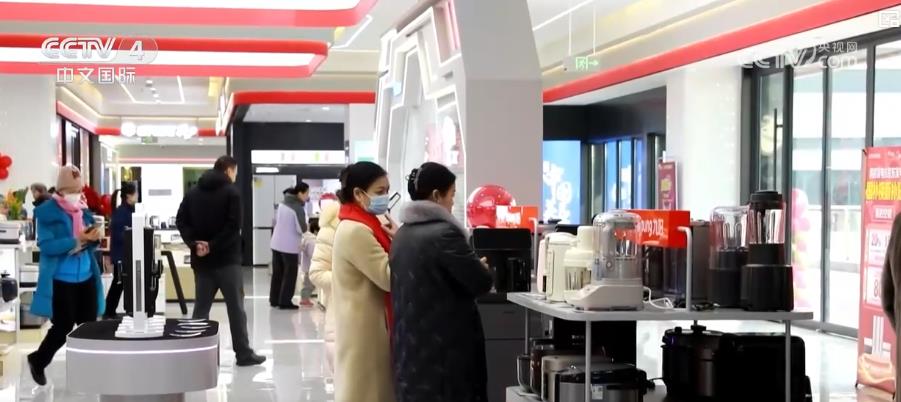
Zhao Chenxin, deputy director of the National Development and Reform Commission, introduced that home appliances that enjoy old-for-new subsidies will be increased from 8 categories in 2024 to 12 categories in 2025, and a maximum subsidy of 20% of the sales price per piece can be enjoyed. Taking into account the actual needs of residents' families, each consumer will increase the maximum subsidy of 1 piece to 3 pieces for purchasing air conditioning products. In particular, in line with the expectations of the people, new subsidies for purchasing digital products such as mobile phones are implemented.
In addition, the expansion of the scope of supporting consumption of old-for-new in 2025 also includes including the inclusion of qualified National IV emission standards fuel vehicles in the scope of scrapping and renewal subsidy, and unified standardization of the national maximum subsidy limit for automobile replacement and renewal; and continue to vigorously support home improvement consumer goods exchange and electric bicycles exchange.
The National Development and Reform Commission stated that the implementation of the "two new" policies plays an important role and significant effect in expanding effective investment, boosting consumer demand, promoting green transformation, and improving social and people's livelihood. Continuing the good experience and practices in 2024, the implementation of the "two new" policies in 2025 will focus on increasing the scale of funds, expanding the scope of support, optimizing the implementation mechanism, and amplifying the leverage effect.