The seventh day of the first lunar month is the last day of the Spring Festival holiday. There was no staff member at the Lei Er Measuring Station of Gaosheng Oil Production Plant in Liaohe Oilfield, only the sound of equipment operation.
When passing by this small station after returning from maintenance, Gong Dewei told reporters: "In the past, there were four or five people on duty here during the New Year. Now the monitoring system checks the door and the Internet of Things wells. This year's Spring Festival, the Gaosheng Oilfield Oilfield Plant is my country's first heavy oil production base, and now it has taken the pace of digital transformation. Gong Dewei, who has worked in the oil field for 23 years, personally experiences the "New Year's look" given by digital technology to this small station.
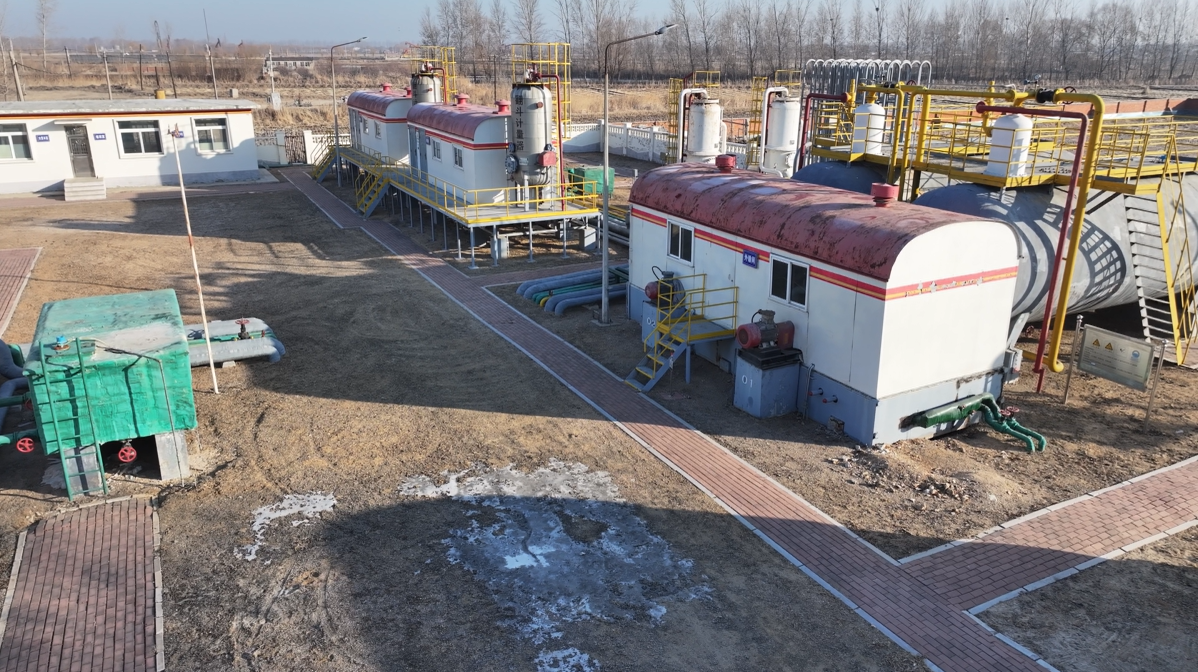
Through digital construction, the Lei Er Measuring Station of Gaosheng Oilfield, Liaohe Oilfield has now been unattended. Photo by Liu Hailin
The staff of the front-line factory station are "not on duty", which does not mean that no one is in charge of production operations. On the contrary, nowadays, we manage better and more efficiently.
The reporter came to the central control room, and several technicians were staring at the screen - various data from oil field production were collected by sensors on the screen, and each production area was monitored in real time through the camera. A few large screens allow you to see the production dynamics, and "more data to run errands" has achieved "feeding less running away".
The use of digital technology has greatly improved management efficiency.
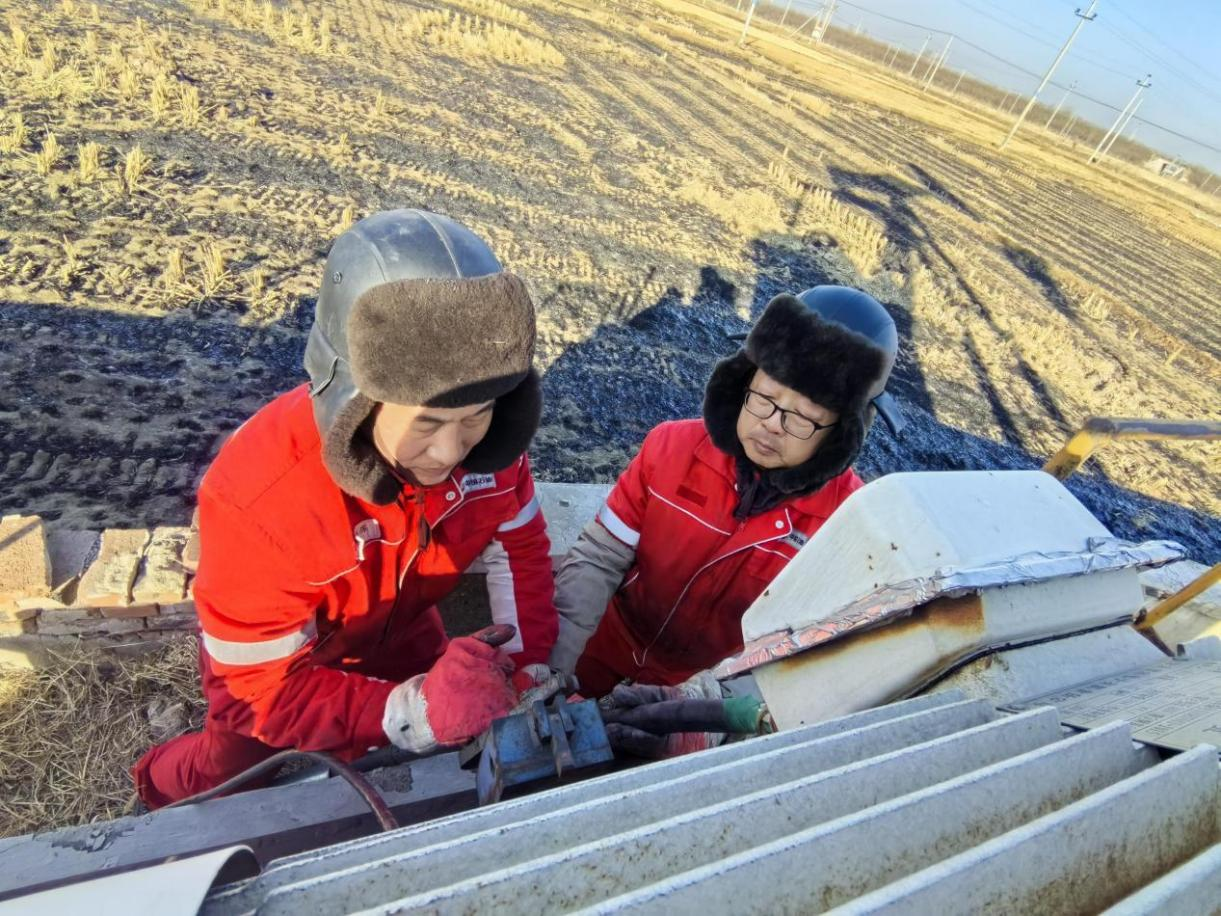
Liaohe Oilfield employees Ma Yahui (first from left) and Gong Dewei (second from left) are tightening the belt for the Gao2042 well. Photo by Wang Lili
"A few days ago, the central control room found that a well stopped working, so we rushed over and restarted the well, accurately solving the problem of this 'stolen stop'." Ma Yahui, who was patrolling the well with Gong Dewei, said, "If this were the case, I could only find that when patrolling the well again in the afternoon, I would find that one minute later when restarting, and one minute less oil would be harvested."
After the snow, the sea of reeds was vast, and the gas pipelines passing through it appeared and disappeared, and a drone hovered over it.
"In the past, these pipes that could not be approached were blind spots in manual line patrols, thanks to the drone." Yan Yanfei, captain of the female patrol team of the drone pipeline, told reporters while skillfully controlling them. Seeing that the pipeline was intact and the surrounding situation was normal, Yan Yanfei's brows stretched out.
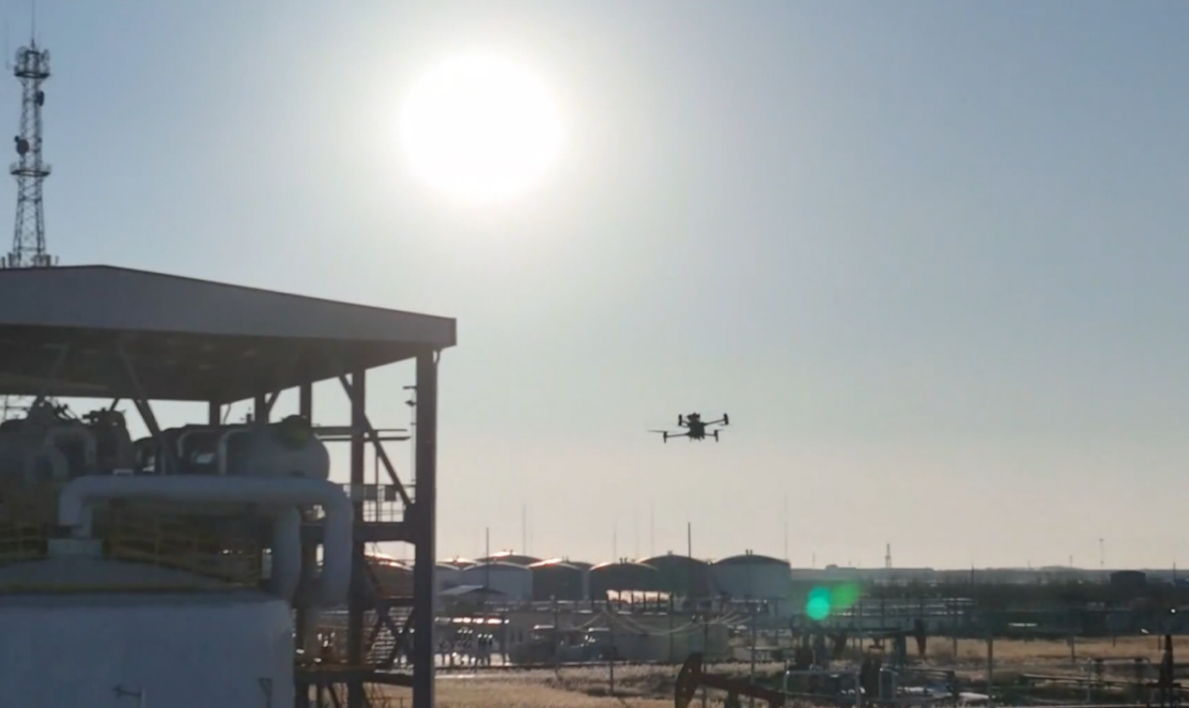
At the Huanxiling Oil Production Plant in Liaohe Oilfield, the drone is patrolling the electric thermal molten salt energy storage steam injection test station according to the predetermined route. Photo by Zhang Zihan
The Huanxiling Oil Production Plant has a wide production area, many pipelines and long distances. Some areas are close to reed ponds and rice fields, making it very difficult to manage. With the development of digital and intelligent oil fields, Huanxiling Oil Production Plant uses the advantages of drones' "aerial perspective" to use thermal imaging detection, laser ranging, night vision and other functions to intelligently identify hidden dangers such as perforation and oil pollution.
The 20-kilometer pipeline, a traditional manual patrol, takes half a day to go, and now the drone patrols only take more than ten minutes at a time, and the efficiency has been increased by 10 times.
"Now, the construction of four drone automatic airports has achieved full coverage of production areas, allowing oilfield production management to move from 'underground' to 'cloud'." said Gao Gang, director of the Science and Information Department of Huanxiling Oil Production Plant.
In the Shuba Substation Station of Liaohe Oilfield New Energy Department (Power Branch), the reporter saw a 40-meter-long U-shaped track in front of the distribution room cabinet, a patrol robot slides freely, accurately finds the monitoring point, records changes in equipment parameters, and transmits the data directly to the background to automatically generate reports and images. The integration of the existing electrical system and the inspection robot system has realized the real-time linkage between inspection robots and electrical operations.
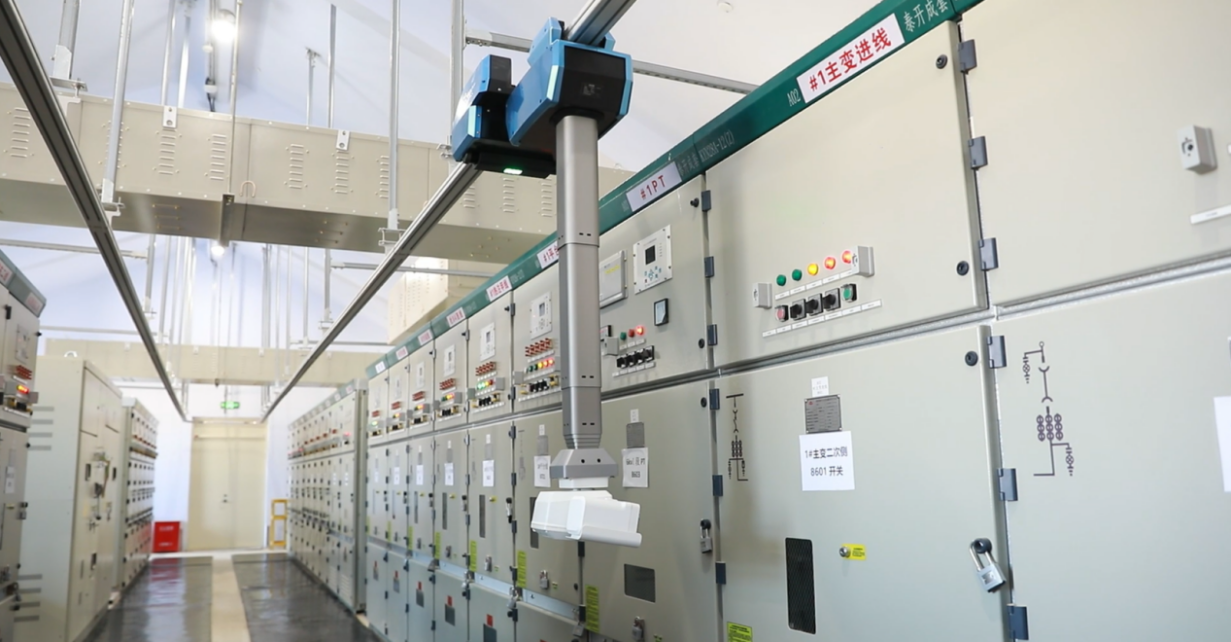
The power distribution room of Shuba Power Station in Liaohe Oilfield, the inspection robot reads data through infrared cameras and thermal imaging cameras to record the operating status of the equipment. Photo by Wang Dan
Wang Fang, director of the substation, told reporters that this new technology is the first "unveiling" in the Liaohe Oilfield Power Grid. It will also be equipped with effective fire monitoring and fire extinguishing operation components in the future, and will be promoted and applied one after another.
As an old oil field that has been developed and built for nearly 55 years, Liaohe Oilfield has undergone digital transformation, and more than 70% of well stations have achieved digital coverage, and hundreds of shift stations and key equipment have been automated.
Liaohe Oilfield is overlooked from the air, and the production areas scattered on the Liaohe Beach are like modules of large and small on integrated circuit boards. Various data are intensively exchanged and summarized, weaving a new page of the old oilfield.