China's innovative development is not only reflected in the continuous accumulation of technological breakthroughs, but also in the coordinated linkage of long-term planning, institutional guarantees, talent training and industrial upgrading
In recent years, more and more Indonesian young people have gone to China to study in China, and I am one of them.I am currently studying for a doctorate in public finance in China. My experience of studying and living in China has enabled me to closely observe the true face of China’s economic and social development. It has also given me a deep understanding that China’s innovative development is not only reflected in the continuous accumulation of technological breakthroughs, but also in the coordinated linkage of long-term planning, institutional guarantees, talent training and industrial upgrading.It is this systematic layout that keeps China's innovation vitality surging.
Long-term planning guidance and efficient overall coordination are distinctive features of China’s innovative development.At present, the international environment is complex and volatile, with increasing uncertainty.Enhancing economic resilience and innovation capabilities not only requires stimulating market vitality, but also requires a stable policy environment and efficient governance system.China's "15th Five-Year Plan" outline puts scientific and technological innovation in a prominent position in the overall development of the country, and anchors the direction of innovation and development with top-level design.At the same time, based on the resource conditions, industrial foundation and development stage of each region, China promotes regional development to align with national strategies through effective coordination mechanisms, and guides local policies to serve the overall development of the country.This development model of overall coordination and linkage between top and bottom levels provides a strong institutional guarantee for China to actively promote innovation.
Continuous and stable R&D investment is an important foundation for the continuous improvement of China’s innovation capabilities.In 2025, China's entire society will invest more than 3.92 trillion yuan in R&D, and the intensity of R&D investment will reach 2.8%, an increase of 0.11 percentage points from the previous year.Long-term, stable and continuously growing investment in R&D provides solid support for scientific and technological research and industrial upgrading, and promotes China to continuously make new progress in the export of high-tech products, patent applications, and the cultivation of emerging industries.What deserves more attention is that China not only strengthens financial guarantees, but also promotes the concentration of innovation resources in key core areas, accelerates the implementation and transformation of scientific and technological achievements, and continuously cultivates new industrial growth points.
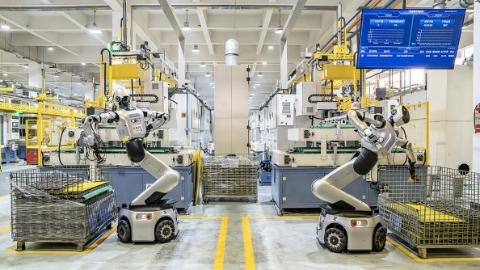
In-depth collaboration between the government, enterprises, and universities is the key to the continued bursting of China's innovative vitality.Not long ago, I participated in an artificial intelligence development seminar in Haidian District, Beijing. Government department heads, corporate technical representatives, and university researchers had in-depth exchanges around technological research, achievement transformation, and industrial application, which made me truly understand the important role of collaborative innovation.Innovation never only happens in the laboratory, but runs through real application scenarios such as production lines and industrial parks.Only by opening up the links between scientific research, education and industry and promoting the deep integration of technological innovation and industrial innovation can the achievements of technological innovation be quickly transformed into real productivity.
Indonesia and China will join hands to promote strategic alignment and deepen development cooperation, which will bring tangible benefits to the people of the two countries.As the core carrier of the construction of "two countries, two parks" between Indonesia and China, Indonesia's Batang Industrial City Special Economic Zone has attracted 27 companies to settle in, absorbing about 7,000 employees, and is expected to create about 58,000 jobs in the future, injecting new impetus into Indonesia's industrial upgrading and technological progress.Currently, the number of Indonesian students studying in China has exceeded 17,000, many of whom have chosen majors such as engineering and information technology.As cooperation between the two countries continues to deepen, this group of young talents who understand both China's development experience and Indonesia's national conditions will not only become a bridge for industrial docking and investment cooperation, but also play an active role in policy research, public governance, technological innovation and other fields, helping Indonesia better learn from China's development experience and contribute more wisdom to innovation exchanges and cooperation between the two countries.
China’s innovation and development practice shows that only by realizing the integration of talents, innovation and industry can the endogenous power of development be continuously released.For Indonesia, which is promoting modernization, this is a valuable experience worth learning from, and it is also an important starting point for deepening cooperation between the two countries in the future.The two sides adhere to the concept of mutual benefit and win-win, promote technological exchanges, talent interaction, and mutual learning of experience, and will continue to improve their independent development capabilities, inject continuous impetus into the modernization construction of the two countries, and better benefit the two peoples.