Market competition is the most effective mechanism to prevent disorderly expansion of production capacity.In a fully competitive market environment, price, consumer demand, quality standards, etc. together form a natural screening system. Inefficient and backward production capacity will naturally be cleared by the market, while high-end, high-quality, and innovative production capacity will be expanded and upgraded in line with market demand.This is a universal law of industrial development and the underlying logic of the operation of the global division of labor system.
However, in recent years, unilateralism and protectionism have risen, and individual economies have adopted discriminatory measures, undermining a fair competitive environment and disrupting global industrial division of labor and cooperation.They put local priority above international rules, practice protectionism in the name of fair competition, and abuse unfair means.This not only violates the laws of market economy, but also harms global common interests.
Take the United States as an example. It has illegally imposed tariffs, implemented targeted investment restrictions, abused export controls and sanctions, and seriously undermined fair competition.Looking at the European Union, it has intensively introduced economic and trade restrictions. For example, the Industrial Accelerator Act sets restrictive requirements for foreign investment in four emerging strategic industries: batteries, electric vehicles, photovoltaics, and key raw materials, which constitute substantial investment barriers.Ironically, these economies engage in industrial subsidies and distort market order, but in turn label China "unfair competition" and "non-market policies."This naked double standard just shows who is the real destroyer of the principle of fairness.
In fact, China's industry adheres to open development and competitive development, creating development opportunities shared by the world, rather than so-called "market shocks."
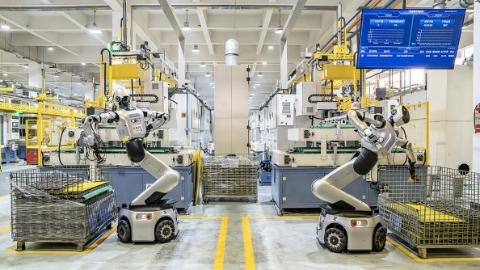
In today's world, the global industrial structure is undergoing profound adjustments, and green transformation and digital upgrades have created massive new demands.Relying on economies of scale, cost advantages and ever-increasing technological iteration capabilities, China has deeply integrated into the global division of labor with an attitude of open competition, and has steadily provided cost-effective, high-tech, high-quality products and solutions to countries around the world.
Full market competition forces China's enterprises in new energy, high-end equipment, digital industries and other fields to continue to carry out technology iteration, process optimization and cost reduction and quality improvement, actively adapt to the huge market demand generated by domestic consumption upgrades and global green transformation and industrial upgrading, and effectively fill the global high-end supply gap.In the past 10 years, the average LCOE of global wind power and photovoltaic power generation projects has dropped by more than 60% and 80% respectively.China has played a key role in this process.China provides developing countries with high-quality, affordable production equipment and parts, and at the same time expands imports of superior products from various countries to help developing countries achieve industrialization and expand exports.This is a vivid embodiment of the concept of openness, win-win and mutual benefit.It can be seen that China's high-quality production capacity is by no means the so-called "excess production capacity", but a positive supply that benefits the world.
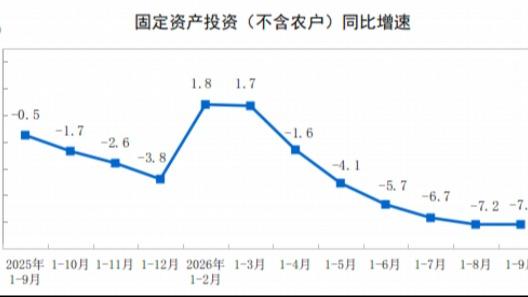
The overall capacity utilization rate of China's advantageous industries is within a reasonable range, and the matching between supply and demand continues to be optimized.
Relevant institutional data show that the median capacity utilization rate of developed and fast-growing economies is mostly in the range of 75%-80%, while the capacity utilization rate of less developed countries is generally in the range of 50%-64%.China's average capacity utilization rate from 2006 to 2022 is 77.0%.In 2025, China's industrial production capacity utilization rate above designated size will be 74.4%, and the production capacity of high-tech manufacturing, high-end equipment manufacturing, and strategic emerging industries will be more fully utilized.The capacity utilization rates of China's sub-sectors from 2023 to 2025 are basically close to the long-term average of capacity utilization rates since 2006.
In the final analysis, the correct path to maintaining the stability and smoothness of the global industrial chain is not to artificially block or restrict the flow of high-quality production capacity, but to achieve a dynamic balance of global supply and demand by expanding global effective demand, promoting high-end industrial upgrading, and improving multilateral economic and trade governance rules.All parties should maintain fair competition, reduce undue interference with global production capacity division of labor cooperation, and work together to build an open and inclusive global production and supply chain cooperation pattern.