CCTV news: The Ministry of Industry and Information Technology released statistics on my country's shipbuilding industry in the first half of 2026 on July 23.my country's three core indicators of shipbuilding completions, new orders and orders on hand have hit record highs again, continuing to lead the global market.
In the first half of this year, the shipbuilding completion volume, which represents my country's shipbuilding capacity, was 36.5 million deadweight tons, a year-on-year increase of 51.2%; the number of orders on hand, which symbolizes the long-term stability of the shipbuilding industry, was 363.25 million deadweight tons, a year-on-year increase of 54.9%; the number of new orders, which represents market competitiveness, reached 121.06 million deadweight tons, a year-on-year increase of 173.1%, exceeding the historical peak of orders for the entire year.
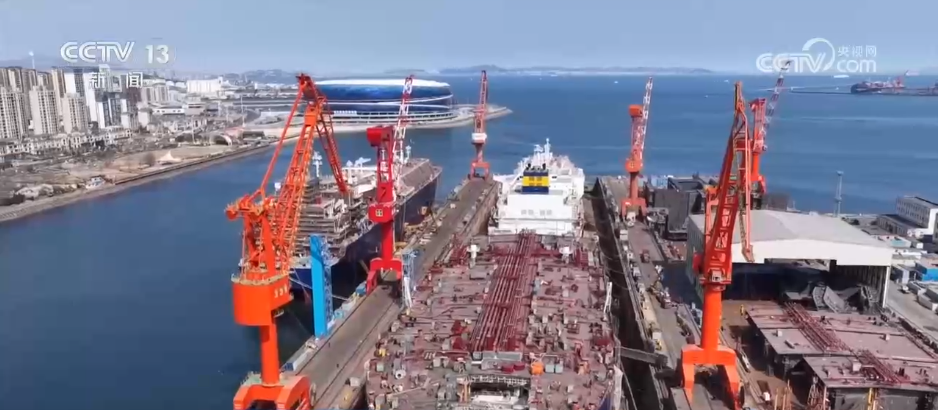
Li Yanqing, vice president of the China Shipbuilding Industry Association, said that from the first quarter of this year, the global market was booming and continued into the first half of the year. China's shipbuilding continued to shine, with the growth rate of completions and orders on hand exceeding 50%.The key is that new orders continue to boom, which is an incredible improvement.
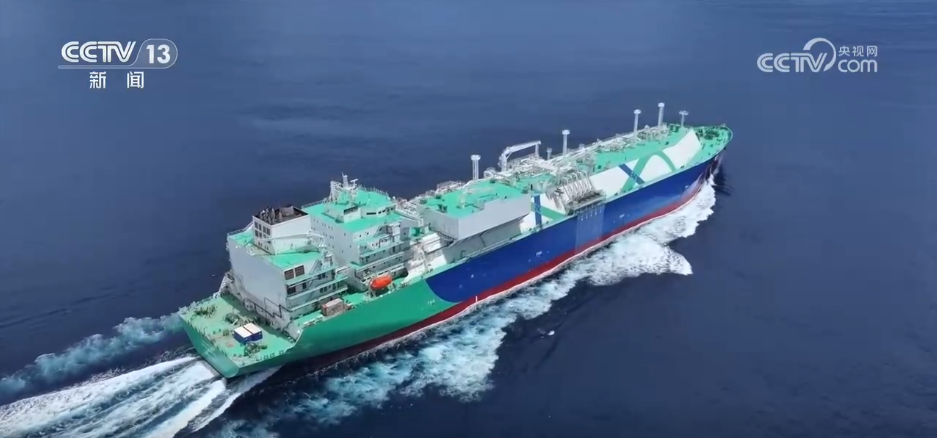
In the new order data, the reporter found that my country's new orders for the three major ship types - bulk carriers, container ships and oil tankers accounted for more than 80% of the international market share, which reflects that my country has the final assembly and construction capabilities of all ship types.At the same time, the reporter also found that green and low-carbon ships have become the core track for the transformation and upgrading of my country's shipbuilding industry.Li Yanqing said that for three consecutive years, China has always accounted for more than 68% (of the global market) of green ships (new orders).In the first half of this year, China's shipbuilding still maintained such a high proportion, and the pace of transformation to mid-to-high-end has been accelerating. China's shipbuilding plays a leading role in this aspect.
my country's shipbuilding industry is accelerating the formation of a full-chain green transformation path
The latest data shows that despite the three-year decline in global orders for green-powered ships, my country's global market share of new orders for green ships has stabilized at more than 68%.What kind of transformation code is hidden behind this counter-trend growth?Continue to read the report.
More than 85% of the energy consumption and carbon emissions of ship navigation come from engines and other power equipment. To achieve deep carbon reduction and green transformation, marine engines are the core key.Bao Dongming, deputy general manager of CSSC Power Group, a subsidiary of CSSC, said that in the first half of the year, the total number of (engine) orders on hand increased by nearly 8% year-on-year.After the domestic batch delivery of dual-fuel engines, ship carbon emissions have been significantly reduced, and orders for low-carbon and zero-carbon fuel engines have increased significantly.
Behind the increase in production is a leapfrog transformation from "introduction and digestion" to "independent innovation".Reporters at the engine building factory saw that one low-carbon marine engine continues to roll off the production line. The "heart" of these produced green ships will support national shipbuilding companies to accept large quantities of green ship orders.Bao Dongming said that CSSC Power has achieved the simultaneous assembly and commissioning of five different clean fuel main engines: LNG (liquefied natural gas), LPG (liquefied petroleum gas), ethane, methanol and ammonia, covering the current mainstream green fuel technology route.
The China Shipbuilding Industry Association stated that as the voice of my country's shipbuilding industry steadily increases, my country will assume more responsibility for leading the global maritime green transformation in the future.Li Yanqing said that the entire industry, not only shipyards, but also equipment factories, is making every effort to integrate green technologies.The first is the advantage of final assembly and construction, the second is the advantage of the local industrial chain, and the third is that Chinese shipyards have integrated the world's best supply chains in terms of digitalization (informationization) and intelligence (AI+) to accelerate their move to the higher end of the value chain.