"Large-capacity smart refrigerator, washing and drying set, 85-inch TV and three 1.5-horse first-class energy-efficient air conditioners, government subsidies plus store subsidies, and the 'four major items' has a total discount of 13,449 yuan." In a shopping mall in Chaoyang District, Beijing, a consumer calculated the "new account".
In the just-passed Spring Festival holiday, the "old-for-new" policy for consumer goods continued to be effective, and the real money discounts brought consumers a sense of gain.
In March last year, the State Council issued the "Action Plan for Promoting Large-scale Equipment Updates and Consumer Goods Trade-in"; the Central Economic Work Conference held at the end of last year proposed to increase the issuance of ultra-long-term special treasury bonds and continue to support the implementation of "two-fold" projects and "two-new" policies; in January this year, the National Development and Reform Commission and the Ministry of Finance issued the "Notice on the 2025 Expansion of the Implementation of Large-scale Equipment Updates and Consumer Goods Trade-in Policy", requiring "strengthening efforts to promote equipment updates" and "expanding support for consumer goods trade-in"... Since the implementation of the old-for-new policy, the consumption has been significantly boosted. Data from the National Bureau of Statistics shows that in 2024, the sales of related products by old-for-new products will exceed 1.3 trillion yuan.
The driving force of trade-in with new ones is due to real discounts. Before the Spring Festival, the Ministry of Commerce and five other departments issued the "Implementation Plan for New Subsidies for Purchasing Mobile Phones, Tablets, and Smart Watches (Bracelets). Individual consumers purchase three types of digital products such as mobile phones, tablets, smart watches (bracelets), and subsidies will be given at 15% of the product sales price for products with a single piece of sales price of no more than 6,000 yuan. The new measures to increase efforts to expand the implementation of the "two new" policies have stimulated people's new round of consumption enthusiasm. The implementation plans issued by various localities according to local conditions will continue to expand the benefits of the old-for-new policy, better meet the people's needs for a better life, promote the continuous expansion of consumption, and drive investment and efficiency growth in related industries.
The driving force of trade-in with the new is due to a good consumption experience. Since 2024, various regions and departments have introduced relevant measures to continuously optimize the old-for-new process and develop new models such as "Internet + second-hand". The Ministry of Commerce has launched the "National Automobile Circulation Information Management" system website and the "Car Trade-in-Old" mini program, connecting the vehicle-related data of the Ministry of Industry and Information Technology, the Ministry of Public Security and other departments to realize the subsidy application submitted in one place and reviewed in one network. Nowadays, people can receive subsidies by clicking on their mobile phones, pay directly to deduct payments, and sending new and old to the door can be completed in one-stop, making the old-for-new chain shorter, lower cost and better experience.
The driving force of trade-in with the new is due to the effective connection and coordination between policies and markets. Shanxi has established a special working group to support the exchange of old products for consumer goods in the business field and establish a unified coordination mechanism; Chongqing's districts, counties, towns, streets and enterprises are linked to form a working pattern of top-down coordination, government-enterprise linkage, and joint management; Gansu has achieved one-stop completion from the entire process of application review, subsidy issuance, progress statistics, etc. Exchange of old-for-new consumer goods is a systematic work, involving a wide range of fields and many participants. Local governments have strengthened overall coordination, and efficient coordination between policies and markets have stimulated greater vitality in the market.
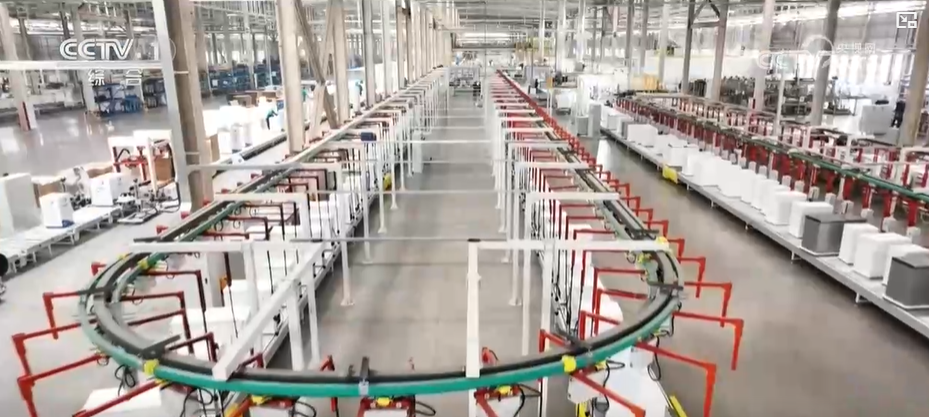
Currently, the potential for ex-new consumer goods is still huge. From the demand side to the supply side, the old-for-new policy has effectively promoted industrial upgrading and green transformation, and driven related industries to move towards intelligence and high-end. As the work of old-for-new is being advanced, more people-friendly policies are delivered to the people, and more demands are expected to be better released, providing stronger support for further boosting consumer confidence and releasing greater potential for consumption. (Wang Ke)