This year, China's aerospace will maintain high-density launches, which can be said to be "full plan and heavy missions." How will Chinese astronauts start this New Year?
2025:
China's space station will launch two manned spacecraft and a cargo spacecraft;
my country's asteroid exploration mission, Tianwen-2, will set sail;
Multi-type newly developed rockets will be fully advanced to complete key technology verification;
Multi-type commercial rockets will carry out their first flight, and reusable rocket tests will continue to advance.
On February 12, the China Manned Space Engineering Office announced that the lunar landing suit of China's manned lunar exploration mission was named "Wangyu" and the manned lunar rover was named "Exploration".
When the legend of running to the moon becomes the legend of the moon
The lunar landing suit of the Chinese manned lunar exploration mission is named "Wangyu", which means looking at the universe from afar and exploring the unknown. The manned lunar rover is named "Exploration", which means the exploration and practice of the unknown world.
China Aerospace Science and Technology Corporation Zhang Chongfeng: The manned lunar rover prototype we made has completed the experiment of simulating the lunar surface experimental field, has entered the initial sample stage, and is undergoing detailed design and subsequent engineering tests.
The Chinese people’s yearning for the sky has never stopped. The word "Chang'e" has changed from a legend of running to a moon to a lunar exploration project in fact only a few decades.
In 2004, China's lunar exploration project was officially launched.
In 2007, Chang'e-1 successfully orbited the moon.
In 2013, Chang'e-3 achieved a soft landing on the lunar surface, and the Yutu lunar rover began its exploration journey.
In 2019, Chang'e-4 achieved a soft landing of a human spacecraft on the back of the moon for the first time.
In 2020, Chang'e-5 completed lunar sampling and brought back China's first lunar sample.
In 2024, Chang'e-6 completed the sampling on the back of the moon and brought back the first sample of the back of the moon.
On February 12, the "Wangyu" lunar landing suit and the "Explore" manned lunar rover also met with everyone. According to the plan, China will land manned on the moon by 2030, complete multiple tasks such as "landing, patroling, procurement, research, and return", and form independent manned lunar exploration capabilities.
A new generation of launch vehicle family in my country has added new people
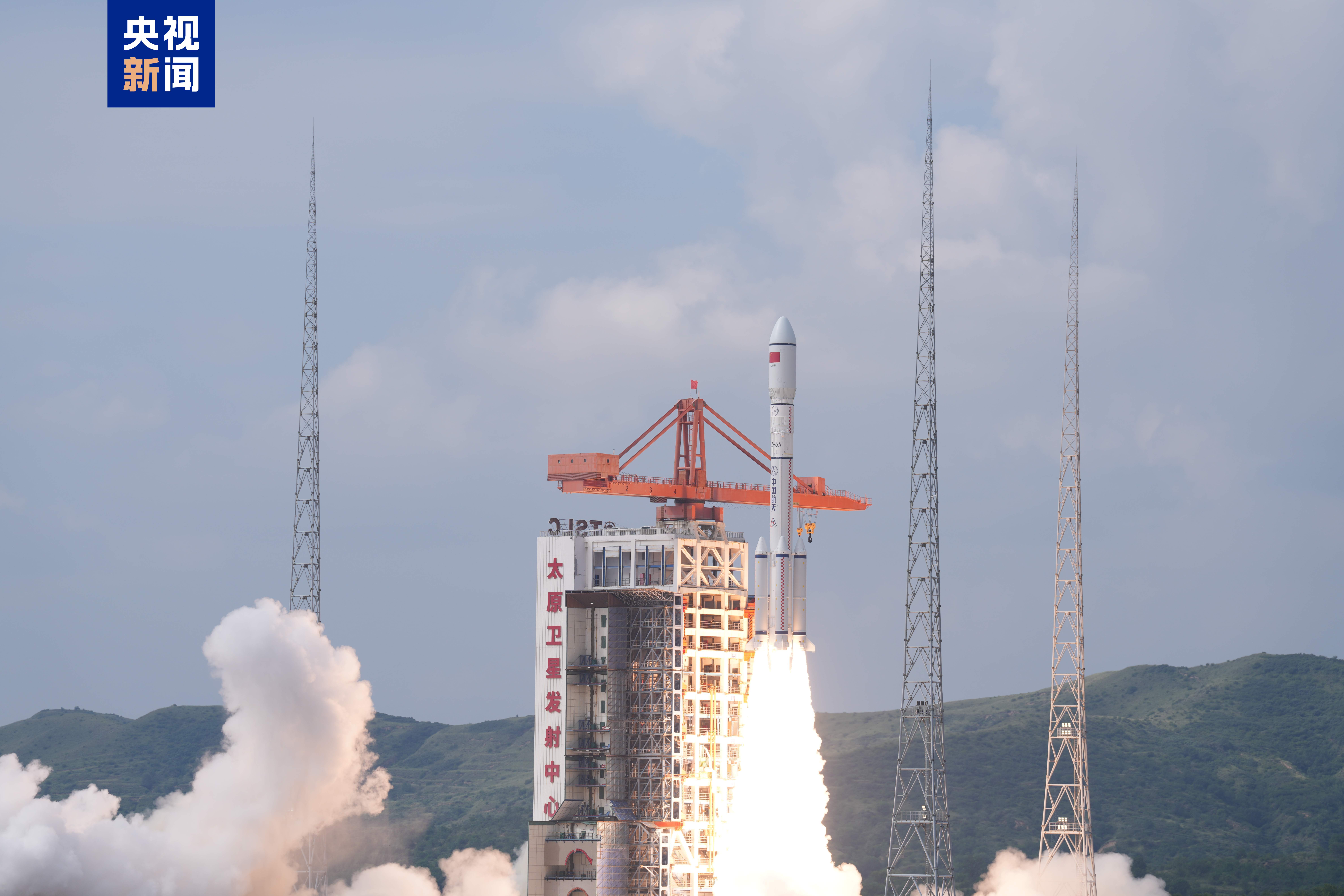
On February 11, the new rocket, Long March 8, was successfully relocated, and the starting gun for the Chinese astronauts this New Year. The Long March 8 was also called the Long March 8A rocket. Its first flight was successful, marking a new addition to the new generation of my country's new generation of launch vehicle rockets.
The height of the Long March 8 was changed exceeded 50 meters. Above is its fairing, which is where the satellite is installed, with a diameter of 5.2 meters, and the second stage of the rocket below is 3.35 meters. So it can be seen very intuitively that it is a "big head and thin neck" configuration, which is very distinctive.
A "big head and thin neck" are prone to instability during flight. In previous rocket designs, it was basically impossible to adopt.
This shows that the Rockets' design ideas have changed a lot. In the past, when designing rockets, the most important thing was to seek stability, so the design concept was relatively conservative, and a lot of carrying efficiency was sacrificed for this, so the transportation cost of the rocket was very high. However, Changbajia mainly faces commercial space demand. What are the needs of commercial aerospace? It's cheap, of course, on the premise of reliability. One way to achieve cheapness is to install more, for example, it used to be able to load 5 tons, but now it can load 7 tons. When the development costs of rockets do not increase, the transportation costs will naturally drop.
Large constellations demand traction
Many new rockets ushered in their first flight
At the end of November 2024, the Long March 12 was for the first flight, and it was less than three months before the Long Bajia first flight. According to the plan, new rockets such as Lijian 2, Zhuque 3, and Tianlong 3 will be undergoing their first flight this year.
Why are so many new rockets suddenly appearing, and the target orbit is basically low orbit. The answer is demand traction. The low-orbit Internet constellations such as Qianfan Constellations and Xingwang Constellations are all large constellations with tens of thousands of satellites.
In addition to technology, from the central government to the local government, many policies have been introduced to support the development of commercial aerospace, which plays a dual role.
There are many missions worth looking forward to in China's aerospace in 2025
This year, what are some launch missions worth looking forward to in China's aerospace?
Yang Yuguang, Chairman of the Space Transport Committee of the International Astronautics Federation: Shenzhou 20 and Shenzhou 21 need to be in orbit for half a year, very extensive scientific experiments are required. According to the past situation, there will also be cases where it is necessary to leave the cabin. At present, the Shenzhou 20 and Shenzhou 21 passenger groups have been confirmed. Whether it is the main selected passenger group or the backup passenger group, they are undergoing intense and high-intensity training.
In recent years, the entire test process of spacecraft and rocket has been continuously optimized.
This year, the Qingzhou cargo spacecraft may achieve its first flight to meet the emergency, short, flat and fast needs of China's space station in the future. We look forward to seeing the exciting scene of the Qingzhou cargo spacecraft visiting the Chinese space station.
The networking of two low-track Internet communication constellations in my country has also begun. my country's recyclable and reusable rockets have made very significant breakthroughs in single technology, which is not only crucial for building China's large constellations, but also for China's further expansion of space scale in the future.
There is another very important task this year, which is the mission of launching Tianwen-2. Tianwen-2 is an asteroid exploration mission. It needs to approach a small celestial body such as 2016 HO3 in the near Earth, then orbit and detect, find the landing point and take samples, and then send the samples back to Earth. The orbiter will evade the Earth, change its orbit further, and fly to the main belt of the asteroid belt further away between Mars and Jupiter. The whole mission is very worth looking forward to.