
Recently, the micro-documentary "Scientists in Textbooks" on the spirit of scientists, produced by the Beijing Association for Science and Technology and produced by the China Internet News Center, was officially launched.The program starts from the scientists in primary and secondary school textbooks, using historical images and animations to tell their life stories outside of the textbooks.
The protagonist of this issue, Qian Weichang, was admitted to Tsinghua University in 1931 with 100 points in Chinese and history, but only 5 points in physics.On the third day of school, the September 18th Incident broke out, and he decided to abandon literature and follow theory: "If there are no airplanes or cannons, we will build them ourselves!" The physics department only allowed him to study for a trial period for one year. He went to the Science Museum at 5 a.m. every morning to endorse, and his academic performance caught up with him.
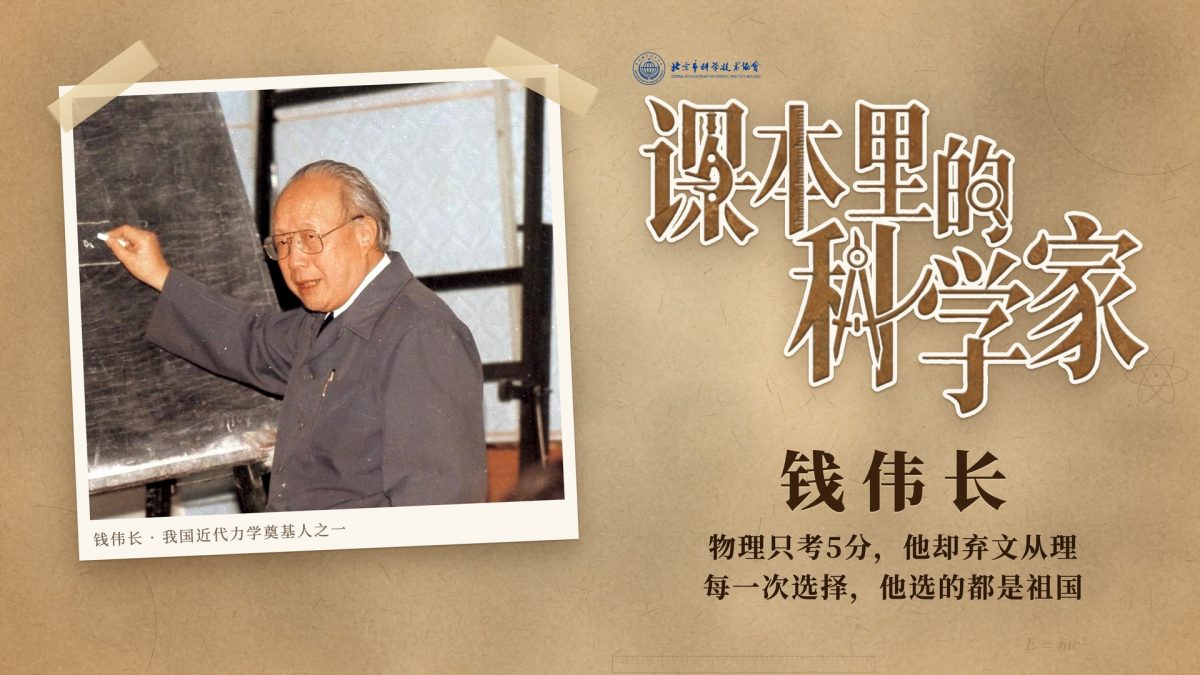
In 1946, he gave up the favorable conditions abroad and returned to Tsinghua University to teach.Previously, he was researching rockets in the United States and his career was booming.The American research institute invited him back, and the visa form asked: "If China and the United States go to war, will you be loyal to the United States?" He filled in: "No" without hesitation.
After returning to China, he did whatever the country needed: teaching mechanics, developing high-energy batteries, researching Chinese information processing, changing majors again and again.Someone asked him what major he studied?He said: "I have no major. The needs of the country are my major."
Open the textbook and see the power of science.