
Recently, the micro-documentary "Scientists in Textbooks" on the spirit of scientists, produced by the Beijing Association for Science and Technology and produced by the China Internet News Center, was officially launched.The program starts from the scientists in primary and secondary school textbooks, using historical images and animations to tell their life stories outside of the textbooks.
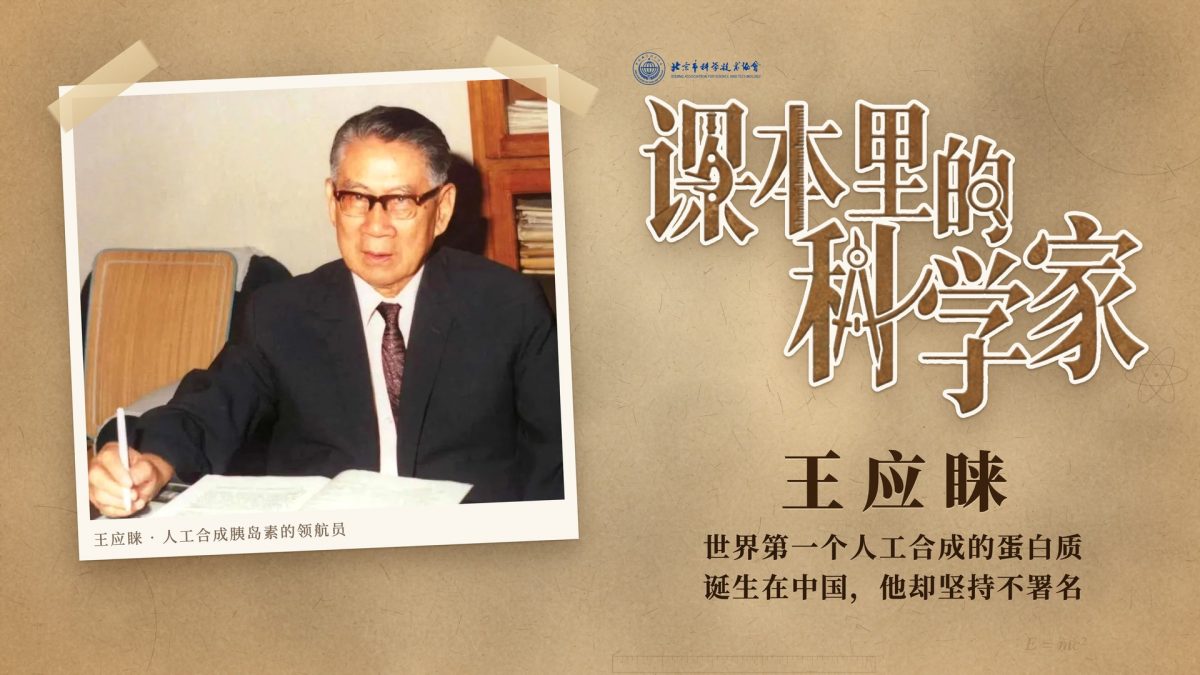
The program is based on the series of pictures and texts of the same name on the official website of the Beijing Association for Science and Technology. It selects 20 scientists who have entered the textbooks of primary and secondary schools. Each issue starts with "open the textbook - enter life - close the textbook", starting from the original text of the textbook, telling their choices, persistence and dedication.
The first issue focuses on Wang Yinglai.The textbook states that he "faced achievements and honors, thinking of the collective and others, and did not even sign his name in the scientific research report."Behind these few lines is seven years of long research: At the end of 1958, Chinese scientists decided to challenge a goal that no one had succeeded at that time - artificially synthesize insulin.51 amino acids, one wrong one, everything will collapse.In 1963, the three units joined forces to tackle key problems and agreed to "work with one heart and one mind to develop China's insulin."Seven years and more than two thousand days and nights, the shining crystal finally appeared.Among the 21 people who signed the paper, there is no Wang Yinglai, the leader of the collaboration group.Today, an asteroid numbered 355704 is named after him.
Open the textbook and see the power of science.